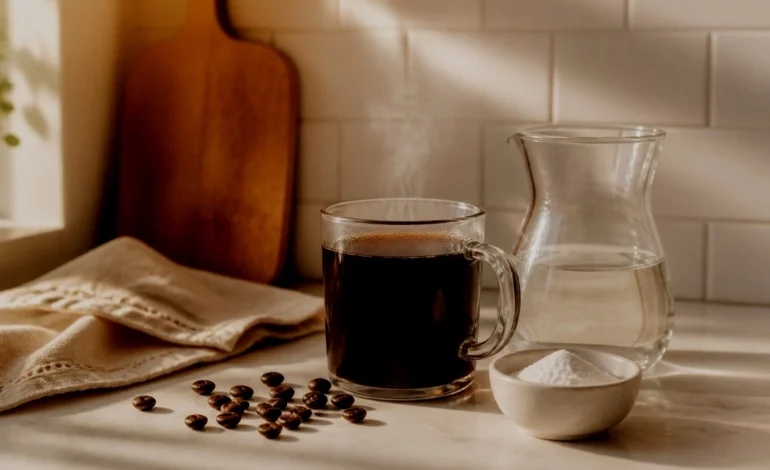
It happens to almost every coffee drinker at some point. You reach for the coffee canister on a busy morning and find that the only bag in the house is the dark, shiny one marked “espresso.” Your drip coffee maker is sitting right there on the counter. Your mug is empty. So you stand in the kitchen and ask yourself the obvious question: Can You Use Espresso Beans for Drip Coffee? or is that a waste of a good bag of beans?
Here is the good news. Yes, you can. Your coffee maker will not break. Your coffee will not be ruined. And you are not doing anything wrong.
But there is one small detail you have to get right, and it is the reason so many people try this and end up with a bitter, muddy cup that they pour down the sink. This guide explains that one detail in Simple Language, then walks through the simple steps, the caffeine numbers, and the mistakes to skip so your next cup tastes the way it should.
Quick Answer: Can You Use Espresso Beans for Drip Coffee?
Yes — you can absolutely use espresso beans in a drip coffee maker. Espresso beans are not a different type of bean. They are normal coffee beans that were roasted darker and blended with espresso brewing in mind. Put them in a drip machine and you will get real coffee.
Here is the short version you can act on right now:
- Espresso beans work fine in a drip coffee maker. Nothing is damaged, and the coffee is safe to drink.
- Because espresso beans are usually roasted darker, your drip coffee will taste bolder, deeper, and smokier than usual.
- The one thing that matters most is grind size. Drip brewing needs a medium grind. Espresso brewing needs a fine grind.
- If all you have is pre-ground espresso, it will be too fine. It can clog the filter, slow the water down, and turn the cup bitter.
- Whole espresso beans plus a medium grind gives you an excellent cup. That is the whole trick.
Espresso Beans and Regular Coffee Beans Are the Same Bean?
Let us clear up the biggest misunderstanding first, because it solves most of the confusion.
Espresso beans and regular coffee beans come from the same plant. They are the seeds of a coffee cherry, grown on a bush in the Coffea family. Harvard’s T.H. Chan School of Public Health explains this clearly in its coffee research: there are two main species, arabica and robusta, and roast levels running from light to medium to dark. The same beans that get roasted for a daily drip pot are the same beans that get roasted for espresso.
So what is “espresso” then? It is three things, and none of them is a different bean:
- A roast style. Espresso roasts are usually darker, because darker beans are more porous and release flavor more easily under pressure.
- A blend. Many espresso blends mix arabica with a little robusta, because robusta adds body and that thick golden crema layer.
- A blend. Many espresso blends mix arabica with a little robusta, because robusta adds body and that thick golden crema layer.
- A grind. Espresso coffee is ground fine so water under pressure can push through it quickly.
None of those three things is locked to an espresso machine. A roast level is just a roast level. A blend is just a blend. Only the grind has to change when you switch brewers.
So What Really Makes Espresso Beans Different?
Even though it is the same bean, espresso beans do tend to look and behave differently. Here is what changes on the shelf:
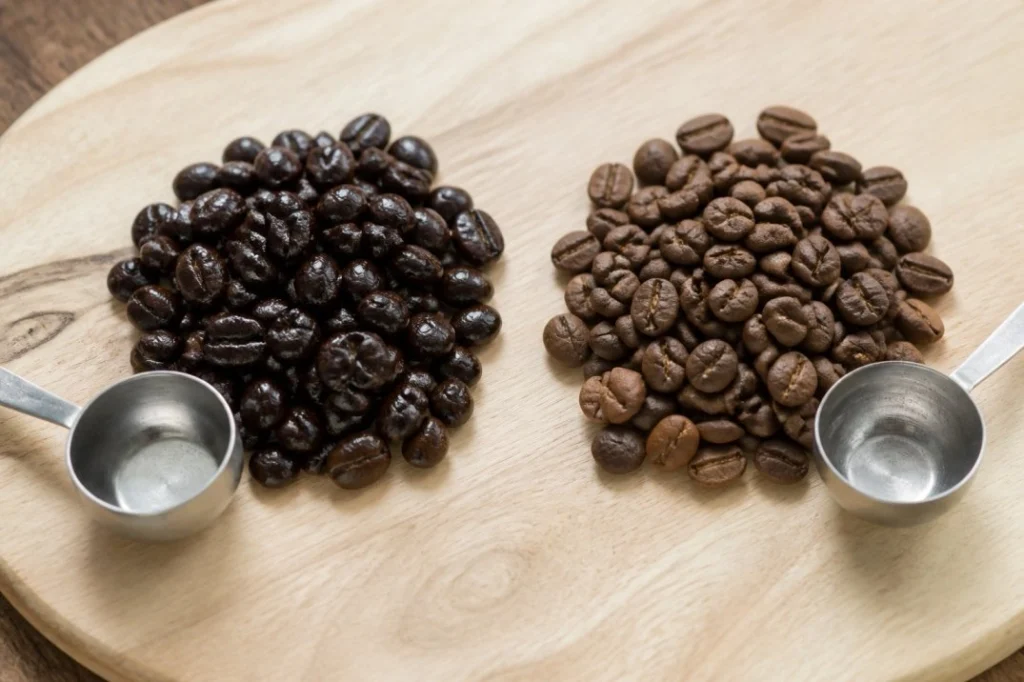
- Roast level. Most bagged espresso roast is a dark roast or a medium-dark roast. That longer, hotter roast is what gives you the deep brown color, the shiny surface, and the chocolate and toasted flavors.
- The blend. Espresso blends are put together to taste balanced when concentrated. That often means a mix of beans from different countries, plus some robusta for body.
- Oil on the surface. Dark roasts push natural oils to the surface of the bean. That is why espresso beans can look glossy while a light roast looks dry and matte.
- The flavor goal. Espresso beans are chosen to punch through milk in a latte or cappuccino. Drip beans are often chosen to taste bright and delicate on their own.
That last point matters a lot, and it explains what you will taste in a moment.
Espresso Is a Brewing Method, Not a Bean
This is the idea that makes everything click.
Espresso is not a type of coffee. It is a way of brewing coffee, and the key ingredient is pressure. An espresso machine pushes hot water through a small, tightly packed puck of finely ground coffee at roughly nine bars of pressure. The result is a small, concentrated, syrupy shot.
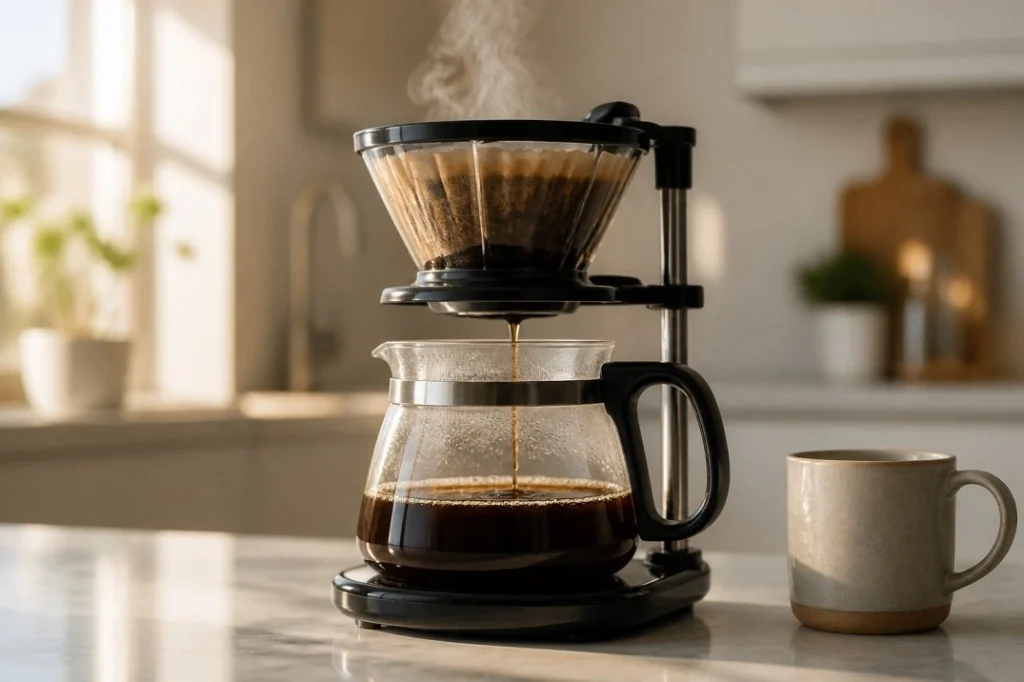
A drip coffee maker works the opposite way. There is no pump and no pressure. Gravity pulls hot water down through a bed of medium-ground coffee sitting in a paper filter. The water moves slowly, takes four to six minutes to finish, and comes out as a full, easy-drinking cup.
The One Thing That Matters Most: Grind Size
If you remember only one section of this article, make it this one.
Grind size is the single biggest factor in how your coffee tastes, and it is the reason espresso beans in a drip machine sometimes go wrong.
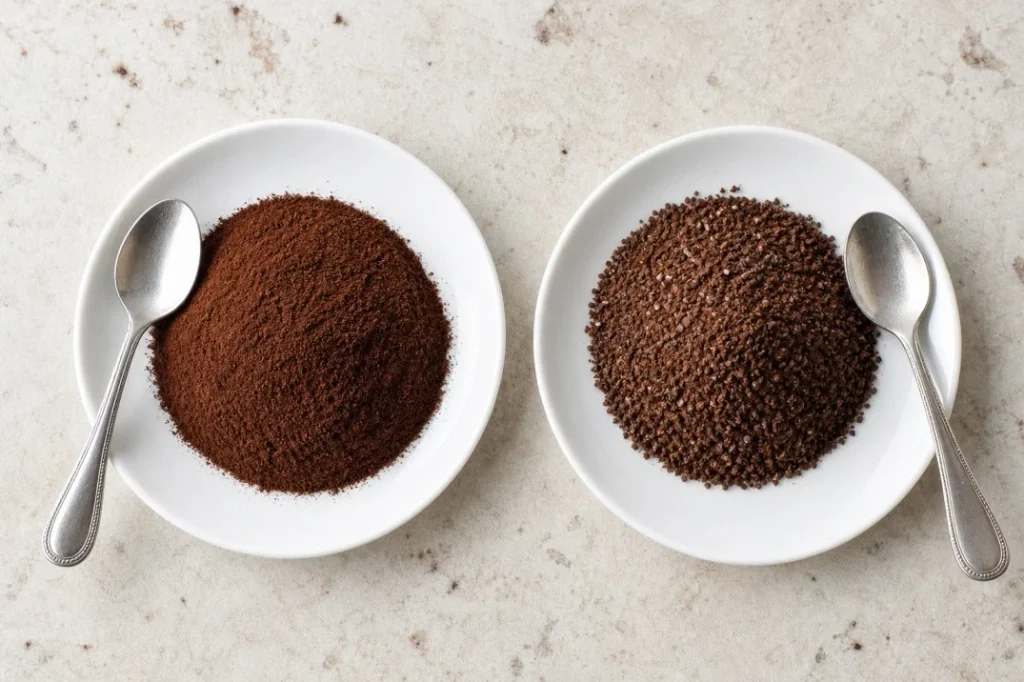
Grind size simply means how small the pieces of coffee are. Bigger pieces let water pass through quickly. Smaller pieces slow the water down and give it more surface area to pull flavor from. Grind too fine for your brewer and the water sits in the grounds far too long, pulling out bitter, harsh compounds. Coffee people call that over-extraction, and it is the most common reason a home cup tastes sharp or drying.
Here is how the grinds compare:
- Espresso grind: fine and powdery, closer to powdered sugar or fine table salt. It clumps when you squeeze it.
- Drip grind: medium, closer to coarse sand or regular table salt. It feels like soft grit between your fingers.
- Pour-over grind: medium, a touch finer than drip.
- French press grind: coarse, like raw sugar or sea salt.
When people say “espresso beans don’t work in a drip machine,” what they usually mean is that the ground espresso they bought was already milled fine for an espresso basket. Drop that into a paper filter and two things happen. First, the water slows to a crawl, which over-extracts the coffee and makes it bitter. Second, the fine particles can slip through and settle into a muddy sludge at the bottom of your mug, and in some machines they can slow the brew down so much that the filter basket overflows.
Fix the grind and the whole problem disappears. Whole espresso beans, ground medium, brew beautifully in a drip machine.
What Espresso Beans Taste Like in a Drip Brewer
Once you get the grind right, here is what to expect in the cup.
Espresso roast beans in a drip maker usually give you a heavier, darker cup than a standard breakfast blend. You will notice more roasted flavor — think dark chocolate, toasted nuts, molasses, sometimes a light smoky edge. You will notice less brightness. The fruity and floral notes that light roasts are famous for get pushed into the background by the longer roast, because heat during roasting burns off many of those delicate acids.
That trade-off is not good or bad. It depends on what you enjoy in a mug:
| What You Get | Espresso Beans in Drip | Light or Medium Drip Beans |
| Flavor focus | Chocolate, nuts, caramel, toast | Fruit, floral, citrus, honey |
| Acidity | Low and smooth | Higher and brighter |
| Body | Heavier, rounder | Lighter, cleaner |
| Best with milk | Yes, holds up well | Can get lost |
| Best black | If you like bold coffee | If you like bright coffee |
One Honest Advice: very dark, very oily espresso roast can taste flat or slightly ashy in a drip brewer. That is because so much of the bean has already been roasted away that there is little left for the water to bring out. If your first cup tastes thin and burnt at the same time, the roast is probably the issue, not your technique. Try a medium-dark espresso roast next time.
How to Use Espresso Beans for Drip Coffee: Step by Step
Here is the simple process. It takes about 3 minutes of actual work.
Start with whole beans. This is the most important step. Pre-ground espresso is milled for an espresso basket, and you cannot undo that. Whole beans let you choose the grind that suits your machine. If you truly only have pre-ground espresso, see the FAQ section below — there is a workaround.
Grind to a medium setting. Aim for the texture of coarse sand or table salt. On most home burr grinders that lands in the middle of the dial. If you use a blade grinder, pulse in short bursts and stop before the coffee turns powdery.
Measure a proper ratio. Start with about 1 gram of coffee for every 16 grams of water. In American kitchen terms, that is roughly two level tablespoons of grounds for every 6 ounces of water.
Use a paper filter. Paper catches the fine particles that a dark roast sheds, so your cup stays clean instead of muddy. A reusable metal filter works too, but expect a slightly heavier, siltier cup.
Keep your water hot, but not boiling. Anywhere from 195 to 205 degrees Fahrenheit is the sweet spot. Most drip makers do this for you. If yours runs cool, preheat the carafe with hot tap water first so the coffee does not cool down as it brews.
Taste, then adjust one thing at a time. If the cup tastes bitter or drying, grind a little coarser. If it tastes weak or sour, grind a little finer or add a touch more coffee. Change only one variable at a time so you know what worked.
Simple Coffee-to-Water Numbers for a Drip Maker
Most American drip machines are marked in cups that are actually about 5-6 ounces, not 8. Here is a quick reference that works for a standard 12-cup machine:
| What You Want to Brew | Water | Ground Espresso Beans | Scoops |
| 2 mugs (about 12 oz) | 1.5 cups | 22 grams | about 3 tbsp |
| 4 cups | 24 oz | 43 grams | about 6 tbsp |
| 6 cups | 36 oz | 64 grams | about 9 tbsp |
| 10 cups | 60 oz | 106 grams | about 15 tbsp |
| 12 cups | 72 oz | 128 grams | about 18 tbsp |
If you do not own a kitchen scale, use the scoop column and adjust to taste. A scale is worth the ten dollars, though — it makes every batch repeatable, which is how you stop guessing.
Caffeine: Do Espresso Beans Have More?
This is one of the most common questions, and the answer surprises people.
Roast level barely changes the caffeine. Caffeine is a stable compound. It does not burn off much during roasting, and it dissolves in hot water whether the bean was roasted light or dark. Harvard’s Nutrition Source puts a standard eight-ounce cup of brewed coffee at about 95 milligrams of caffeine, and the U.S. Food and Drug Administration cites 400 milligrams a day as an amount not generally linked to negative effects for most healthy adults.
Where espresso beans can carry more caffeine is the blend. Many espresso blends include robusta, which naturally contains more caffeine than arabica. A blend with robusta will give you a stronger cup than a pure arabica drip blend, even though the roast is darker.
One more myth worth retiring: darker roast does not mean less caffeine in any way you would notice. If you measure by weight, light and dark roast are very close. If you measure by scoop, dark roast actually gives you slightly less, because the beans expand and lose mass during roasting, so a scoop holds fewer of them. Either way, the difference is small enough that taste should be your deciding factor, not caffeine.
If you are watching your caffeine, use these numbers as a rough guide:
| Drink | Approximate Caffeine |
| 8 oz drip coffee, arabica | about 95 mg |
| 8 oz drip coffee, espresso-roast blend with robusta | 100 to 130 mg |
| 8 oz drip coffee, decaf | 2 to 15 mg |
| 1 oz espresso shot | about 63 mg |
| Daily guideline for most adults | up to 400 mg |
5 Mistakes That Ruin Espresso Beans in a Drip Maker
Learn these once and you will skip a lot of bad coffee.
1. Using pre-ground espresso. This is the number one cause of bitter, sludgy drip coffee. The grind is too fine for a paper filter. If this is all you have, blend it half and half with a medium grind, or use it in a moka pot or an AeroPress instead.
2. Grinding too fine. Chasing “stronger” by grinding finer usually just makes the cup bitter. Strength comes from the coffee-to-water ratio, not from powder.
3. Using too little coffee to tame the dark roast. Some people cut back on grounds hoping to soften the flavor. That actually makes it worse, because under-dosing gives you a weak, sour cup. Keep the ratio steady and switch to a gentler roast instead.
4. Letting the brew run too long. If your drip maker takes more than about eight minutes, something is wrong — usually a fine grind or a clogged filter. Over-long contact time pulls out harsh compounds every time.
5. Judging the beans after one cup. Dark roast espresso beans behave differently in every machine. Give yourself two or three brews with small grind adjustments before you decide. In our own kitchen testing, most bags landed on a good setting within two tries.
When Espresso Beans Are Not the Best Choice
Espresso beans are a great backup and a genuinely good everyday option for bold-coffee drinkers. But they are not the right pick for every kitchen.
- You love bright, fruity, floral coffee. A dark espresso roast will flatten those notes. Stick with a light or medium roast from a single origin.
- You brew single-serve pods. A drip pod or a reusable pod cup is designed around a specific grind and dose. Overfilling it with fine espresso grind creates a mess and a bitter cup.
- Your beans are old and very oily. Dark oily beans go stale faster and shed more sediment. If the bag has been open for two months, the flavor is already gone.
- You want to drink your coffee black and delicate. Espresso roast is built to stand up to milk and sugar. It can be a lot first thing in the morning.
Espresso Beans in Other Brewers
If you own more than one brewer, here is how espresso beans perform across the board.
| Brewer | Does It Work? | What to Change |
| Drip coffee maker | Yes, very well | Grind medium, use a paper filter |
| Pour-over | Yes, very well | Grind medium, pour slowly |
| French press | Yes | Grind coarse so the plunger stays smooth |
| Cold brew | Yes, excellent | Grind coarse, steep 12 to 18 hours |
| Moka pot | Yes, this is the closest to espresso | Grind fine but not powdery |
| AeroPress | Yes, excellent | Grind medium-fine, use a paper or metal filter |
| Keurig or pod machine | Only with a reusable pod | Do not overfill, and grind medium-coarse |
If you want something close to an espresso experience at home without an espresso machine, the moka pot is the classic stovetop answer. It builds a little pressure and gives you a strong, concentrated cup from the same beans.
How to Store Espresso Beans So They Stay Fresh
Espresso roasts are dark, which means they have already given up some of their liveliness in the roaster. That makes storage even more important.
- Keep beans in an airtight container, not the open bag with a folded top.
- Store them in a cool, dark cabinet, away from the stove and away from sunlight.
- Do not move them to the refrigerator. Temperature swings pull moisture into the beans.
- The freezer works only if you portion the beans into airtight bags and take out what you need without thawing and refreezing the whole batch.
- Aim to finish a bag within 2-4 weeks of opening it. Buy smaller bags more often rather than a giant one that goes stale.
Frequently Asked Questions
Can you use espresso beans for drip coffee?
Yes. Espresso beans are regular coffee beans, just roasted darker and often blended for espresso brewing. Grind them medium and they will brew a bold, full-bodied pot of drip coffee with no damage to your machine.
Do espresso beans make drip coffee stronger?
They make it taste bolder and heavier, but “strong” is really about how much coffee you use versus how much water you use. A dark roast does not automatically have more caffeine than a light roast. If you want a stronger cup, add more grounds, not a finer grind.
Can I use pre-ground espresso in a drip coffee maker?
You can, but expect problems. Pre-ground espresso is milled very fine, so it slows the water down, over-extracts, and can clog a paper filter or cause the basket to overflow. Blending it half and half with a medium grind is the easiest fix. A moka pot or AeroPress handles fine grind much better.
What grind setting should I use for espresso beans in a drip machine?
Use a medium grind — the texture of coarse sand or table salt. If your machine is a standard basket drip brewer, stay in the middle of your grinder’s range. If the cup tastes bitter or dry, go one step coarser. If it tastes weak, go one step finer.
Do espresso beans cost more than regular coffee beans?
Not usually because of the label. Price tracks quality, origin, and roast, not the word “espresso” on the bag. A dark roast drip blend and a dark roast espresso blend from the same roaster are typically priced in the same range.
Can you use espresso beans in a Keurig?
Only with a reusable pod. Keurig’s own guidance is to follow the manual for your model, and standard K-Cups are pre-filled and sealed. With a reusable pod, use a medium-coarse grind and do not overfill it, or the water will struggle to pass through.
Will espresso beans break my coffee maker?
No. A standard drip coffee maker handles dark roast beans without any issue. The only real risk is a clogged filter basket from using a grind that is too fine, which is a five-second cleanup, not a repair.
Final Thoughts
Can you use espresso beans for drip coffee? Yes, and once you know the grind rule, it is one of the easiest upgrades you can make to a normal weekday pot.
The whole thing comes down to this: espresso beans are the same bean, roasted darker, blended for pressure, and usually ground fine. When you move them into a drip machine, you only need to change one of those things. Grind them medium, keep your ratio steady, use a paper filter, and you will get a bold, smooth, satisfying cup.
So the next time the only bag in the cupboard says “espresso,” do not skip your coffee. Grind it medium, brew it like you always do, and enjoy the fact that your backup plan just turned into a favorite.
About This Guide
This article was written from hands-on home brewing experience across basket drip machines, pour-over setups, French presses, and moka pots, combined with published guidance from the coffee industry’s leading technical bodies. Every claim about grind, roast, extraction, and caffeine is checked against the sources rather than repeated from other blog posts. Where the science is not settled — such as how much roast level shifts caffeine by weight — this guide says so instead of overstating the case.
Our aim is simple: give you advice you can act on today, with the numbers and reasons behind it, so you can make a better cup without buying anything you do not need.
Related Article : Is There a Difference Between Coffee Beans and Espresso Beans