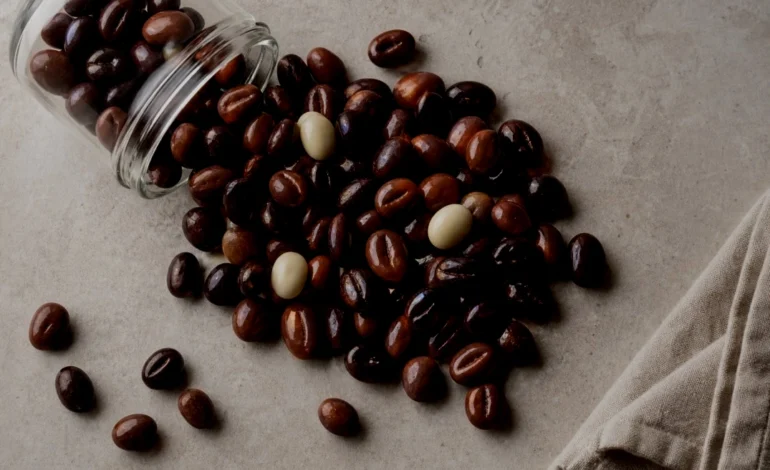
Chocolate covered coffee beans look like candy. They taste like candy. And that is exactly why so many people eat them by the handful without ever thinking about caffeine. Then, an hour later, they feel jittery, wired, or wide awake at bedtime, and they wonder what happened.
The answer is simple once you know the numbers. Every one of those little beans carries real caffeine, and a small handful adds up fast. This guide gives you the honest numbers, shows where they come from, and helps you work out your own safe limit in about a minute.
How Much Caffeine in Chocolate Covered Coffee Bean? The Short Answer
One chocolate covered coffee bean holds about 5 to 12 milligrams (mg) of caffeine.
A fair number to keep in your head is 7 mg per bean for milk chocolate covered beans, and 12 mg per bean for dark chocolate covered beans.
For scale: a normal 8-ounce cup of brewed coffee has about 96 mg of caffeine. So it takes roughly 8 to 14 chocolate covered coffee beans to match one cup of coffee.
What Is a Chocolate Covered Coffee Bean?
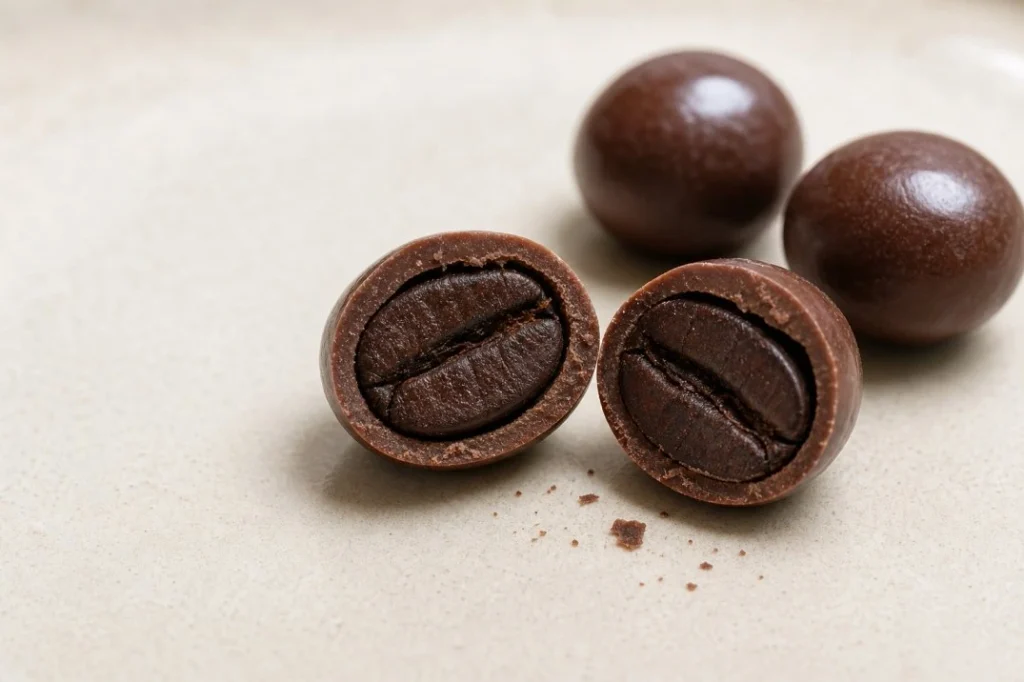
A chocolate covered coffee bean is a whole roasted coffee bean wrapped in a thin shell of chocolate. That is it. Two ingredients, one small bite.
Most bags sold in the United States are made with arabica beans roasted dark, the same style of bean used for espresso. The beans are then tumbled in chocolate until each one is fully coated, and the chocolate sets into a hard, glossy shell.
Two details matter for caffeine:
- The bean is whole. It has not been ground, brewed, or thrown away. Nothing has been filtered out of it. You are eating the entire source of the caffeine.
- The chocolate adds a little more. Chocolate comes from cocoa, and cocoa holds a small amount of caffeine on its own.
So each bean is a double dose: caffeine from the coffee, plus a top-up from the chocolate. That is why a chocolate covered coffee bean usually carries more caffeine than a plain roasted bean of the same size.
How much caffeine is in a plain Coffee Bean?
A single roasted arabica bean holds roughly 1 to 2 mg of caffeine. Robusta beans, which are stronger and more bitter, carry about double that amount.
That sounds tiny. It is tiny. But notice the jump: a plain roasted bean gives you about 1 to 2 mg, while a chocolate covered bean gives you 5 to 12 mg. The bigger number is not only about the bean.
There are two reasons for that gap. First, the beans used in candy are often roasted dark and may include robusta, which is naturally higher in caffeine. Second, the chocolate shell adds caffeine of its own, and the shell can be thicker than the bean inside it.
How Much Caffeine Is in One Chocolate Covered Coffee Bean?
Here are the numbers, all in one place.
| Type of Chocolate Covered Bean | Caffeine Per Bean |
| Milk chocolate covered | About 5-10 mg |
| Dark chocolate covered | About 6-11 mg |
| Dark chocolate covered (USDA reference value) | 12 mg |
| High-caffeine brands | Can be higher |
The average across those ranges is about 7 mg per bean. and the official U.S. government reference value works out to 12 mg per bean.
Why do the two numbers not match? Because they are measuring different things. The 12 mg figure is a single “reference” entry that stands in for a whole category of candy. The 5 to 11 mg range comes from testing many real products, which vary a lot. Both are useful. If you want one careful, conservative number to plan around, use 12 mg per bean.
How to read the USDA number yourself
The USDA entry for dark chocolate coated coffee beans lists 336 mg of caffeine in a serving of 28 pieces.
Do the math: 336 divided by 28 is 12. That is where the 12 mg per bean figure comes from, and it is the number used by most food databases and nutrition apps in the U.S.
You can check it yourself on the USDA nutrient data list for caffeine, or look up any packaged food in the USDA FoodData Central database.
Why the Number Is Different in Every Bag
So how much caffeine in a chocolate covered coffee bean really lands on your plate? That depends on four things, and two bags that look identical can hold very different amounts. Here is what changes the number.
1. The Bean Inside
Arabica beans and robusta beans do not carry the same caffeine. Robusta holds roughly twice as much. A candy maker who uses a robusta blend will make a stronger bean than one who uses pure arabica, even if the beans look the same size.
2. The Type of Chocolate
This part surprises people. Dark chocolate has more caffeine than milk chocolate, because dark chocolate contains more cocoa solids and less sugar and milk.
According to USDA data, dark chocolate with 60 to 69 percent cacao holds about 24 mg of caffeine per ounce. Milk chocolate holds only about 4 to 6 mg per ounce. White chocolate, which contains no cocoa solids at all, has almost none.
So a bean coated in dark chocolate will always come out a little higher than the same bean coated in milk chocolate, and a white chocolate covered bean will be lower than both.
3. How thick the Chocolate Shell is
A thick shell means more chocolate, and more chocolate means more caffeine. It also means more sugar and more fat. Two beans of the same size can carry different amounts simply because one has a heavier coat.
4. The Bean Size and the Brand
Bigger beans weigh more, and weight is what carries caffeine. Small-batch candy makers and large brands also roast and blend differently. This is why the honest answer to “How much Caffeine in one bean” is a range, not one perfect number.
How Many Chocolate Covered Coffee Beans Equal One Cup of Coffee?
This is the question that actually matters when you are standing at the kitchen counter. So here is the same information as a simple chart.
| Drink | Caffeine | Beans needed (at 7 mg each) | Beans needed (at 12 mg each) |
| Brewed coffee, 8 oz | 96 mg | About 14 beans | About 8 beans |
| Espresso, 1 oz | 63 mg | About 9 beans | About 5 beans |
| Black tea, 8 oz | 48 mg | About 7 beans | About 4 beans |
| Cola, 8 oz | 33 mg | About 5 beans | About 3 beans |
| Decaf coffee, 8 oz | 1 mg | Less than 1 bean | Less than 1 bean |
| Energy shot, 2 oz | 200 mg | About 28 beans | About 17 beans |
The caffeine values for the drinks come from the Mayo Clinic caffeine chart, which is updated regularly and is one of the clearest public sources available.
In plain terms:
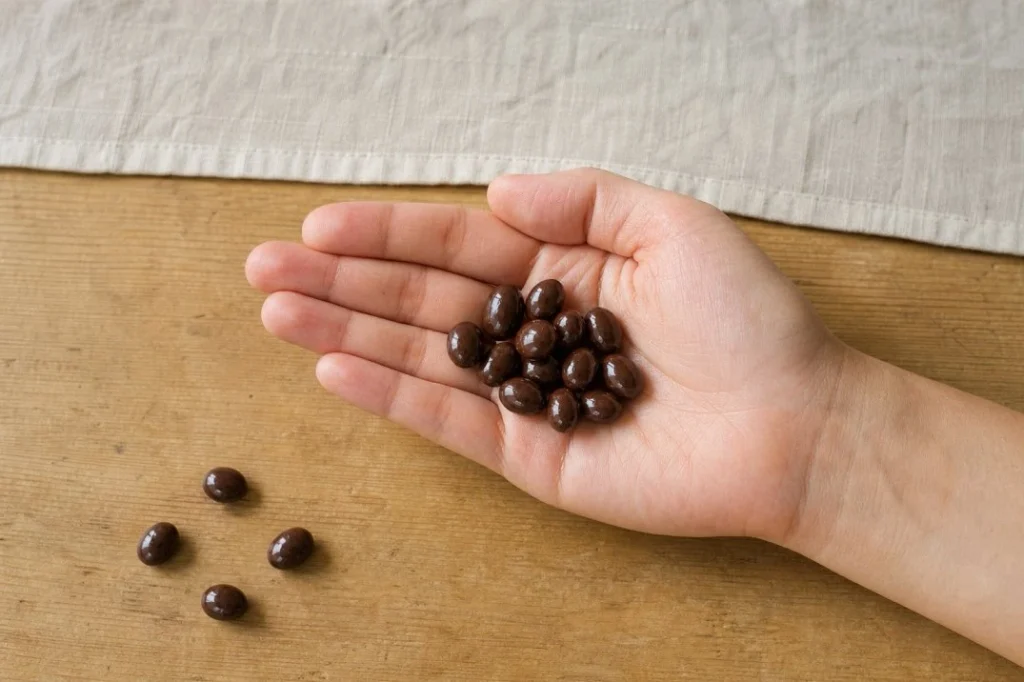
- One small handful of about 10 beans is close to one cup of coffee.
- A whole 2-ounce bag can easily pass 300 mg, which is most of a day’s caffeine for an adult.
- Decaf beans are a completely different story. More on that below.
What It Feels Like: One Handful, One Hour Later
Numbers are useful, but the real test is how it feels. Here is a simple experiment anyone can repeat at home.
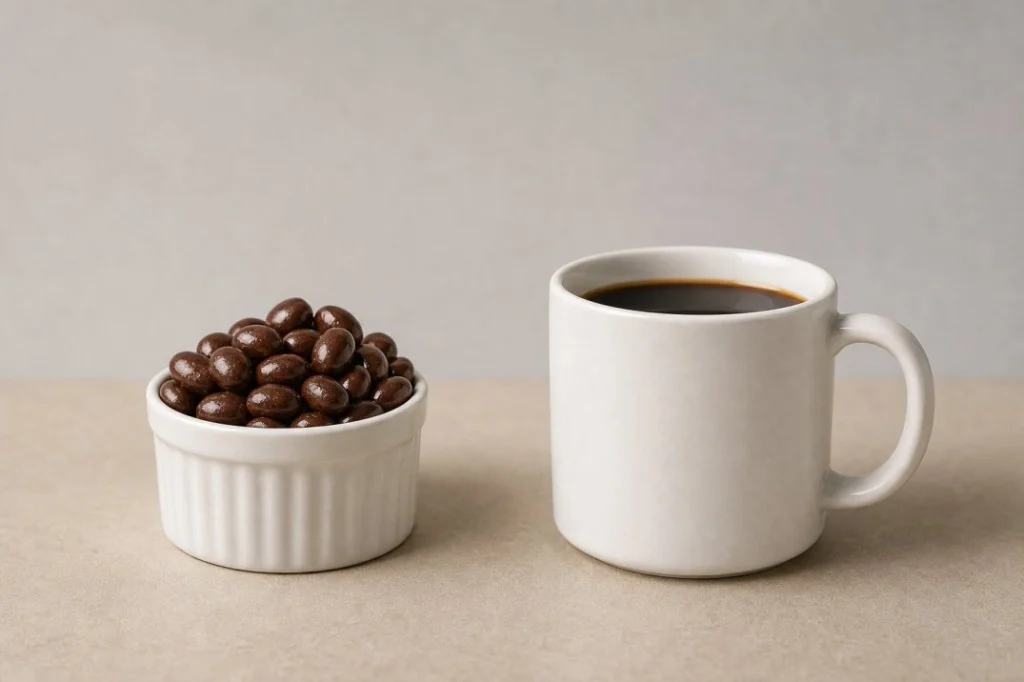
Eat 10 milk chocolate covered beans with a glass of water. Then wait one hour and pay attention. Caffeine reaches its peak level in your blood within about an hour of eating according to MedlinePlus.
For most healthy adults, ten beans is a mild, steady lift, somewhere near one cup of coffee. You may notice a small boost in focus and a slight lift in mood, and probably no racing heart.
Now picture the same snack eaten a different way: a full bag, or dark chocolate beans eaten quickly on an empty stomach. That is when people describe the familiar set of feelings. A restless, edgy mood. A fast heartbeat. A slightly upset stomach. Trouble settling down at night. Nothing dramatic for most people, but enough to notice.
The difference between those two experiences is not willpower. It is simply the milligrams. That is the whole point of knowing the number. You can enjoy these beans as a treat and still stay in control of your caffeine.
How Much Is Too Much? The 400 mg Line
The U.S. Food and Drug Administration says that for most adults, 400 mg of caffeine a day is an amount not generally linked with dangerous negative effects. That guidance is explained in Simple Language on the FDA page about caffeine.
That 400 mg is a daily total, and it counts everything: coffee, tea, soda, energy drinks, chocolate, and yes, chocolate covered coffee beans.
| Your daily caffeine budget | Roughly how many chocolate covered beans (at 12 mg each) |
| 100 mg | About 8 beans |
| 200 mg | About 16 beans |
| 300 mg | About 25 beans |
| 400 mg | About 33 beans |
Compare that to a typical bag. If a 2-ounce bag holds about 30 to 40 beans, then finishing the whole bag in one sitting can use up your entire day’s caffeine before you have had a single cup of coffee.
A quick sanity check: if you had a large coffee in the morning and then snack on 30 beans in the afternoon, you are almost certainly past 400 mg for the day. Signs of too much caffeine include a fast or fluttering heartbeat, restlessness, nervousness, an upset stomach, trouble sleeping, and a headache. If you feel any of those, stop the caffeine for the rest of the day and drink water.
Who Should Be Extra Careful?
Beyond that, keep these groups in mind:
- Children and teenagers. Their bodies are smaller, so the same number of beans delivers a bigger dose. Health organizations advise much lower daily limits for kids than the 400 mg adult figure.
- People who are caffeine sensitive. If one cup of coffee makes you jittery, a handful of these beans will hit you harder than it hits your friend.
- Anyone with anxiety, sleep problems, or a heart condition. Caffeine can make a racing heart or a restless night worse. Check with a doctor if you are unsure.
- Evening snackers. The most common mistake with these beans is eating them after dinner.
Best Time to Eat Them, and How Late Is Too Late
Here is the part almost everyone gets wrong.
Caffeine does not leave your body the moment you stop feeling it. It is cleared slowly, and about half of a dose can still be in your system several hours later. That is why a late-afternoon snack can quietly cost you sleep, even if you do not feel wired at 6 p.m.
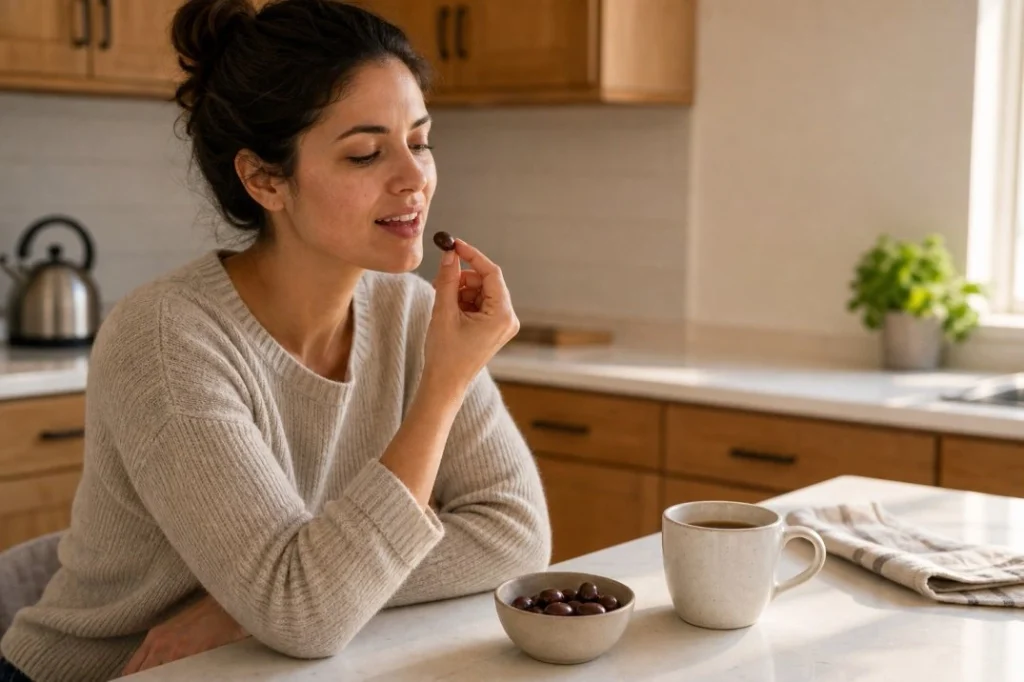
A simple rule that works for most people: treat these beans like coffee, not like candy. If you would not drink a cup of coffee at that hour, do not eat a handful of beans at that hour either. For most adults, that means keeping them to the morning or early afternoon.
If you want the taste later in the day, switch to a decaf or white chocolate version. The details are below.
3 Ways to Lower Your Caffeine Without Giving Up the Snack
You do not have to stop eating chocolate covered coffee beans. You just have to choose which ones.
1. Choose milk chocolate over dark chocolate. The chocolate itself adds less caffeine, and milk chocolate shells are often thinner.
2. Choose white chocolate or decaf versions. White chocolate has almost no caffeine. Chocolate covered decaf beans let you keep the look and the crunch while cutting most of the caffeine.
3. Count a portion instead of eating from the bag. Pour 8 to 10 beans into a small dish, put the bag away, and eat from the dish. This one habit solves the whole problem, because the risk with these beans was never the first bean. It was the tenth.
Chocolate Covered Coffee Beans vs Other Sweet Caffeine Sources
| Snack or drink | Caffeine | How it compares |
| Chocolate covered coffee beans (10 beans) | 50 to 120 mg | Similar to one cup of coffee |
| Dark chocolate bar (1 oz, 70% cacao) | About 23 mg | Far lower, unless you eat the whole bar |
| Milk chocolate bar (1 oz) | About 5 mg | Very low |
| Chocolate covered raisins | 0 mg | No coffee bean inside |
| Brewed coffee (8 oz) | 96 mg | The familiar benchmark |
The surprise on this list is usually the gap between a chocolate bar and a handful of beans. A whole ounce of dark chocolate has less caffeine than about two chocolate covered coffee beans, because the chocolate is mostly cocoa butter, sugar, and milk, not cocoa solids. The beans are where the real caffeine lives.
Do Decaf and White Chocolate Versions Have Less Caffeine?
Yes, and the difference is large.
Decaf coffee beans have most of the caffeine removed before roasting. A cup of decaf brewed coffee has about 1 mg of caffeine, compared with about 96 mg for regular. Chocolate covered decaf beans are a genuinely different product when it comes to caffeine, which makes them a good choice for evening snacking.
White chocolate contains no cocoa solids, so it adds essentially no caffeine of its own. A white chocolate covered coffee bean still carries the caffeine from the bean inside, but nothing extra from the coating.
One Caution: neither “decaf” nor “white chocolate” usually appears on the front of a candy bag in large letters. Read the ingredient list. If it lists regular roasted coffee beans, the caffeine is there.
Your Own Caffeine Math, in Three Steps
You can work out any bag in under a minute.
- Find the serving size. Look at the nutrition panel on the back of the bag. It will give a serving size in pieces or in grams.
- Divide the caffeine by the pieces. If the label says 28 pieces hold 336 mg, that is 12 mg per bean. If it says the whole bag has 200 mg and the bag holds 25 beans, that is 8 mg per bean.
- Compare it to your own daily line. Most healthy adults can use 400 mg as their ceiling. If you are a teen, or caffeine sensitive, your line is lower, so work with your doctor on the number that fits you.
If the bag has no caffeine information at all, use 12 mg per bean as a safe planning value.
How We Verify Our Calorie Counts
Every caffeine figure in this article comes from a public source: the USDA nutrient database entry for dark chocolate coated coffee beans (336 mg per 28-piece serving), the FDA guidance on 400 mg per day, the Mayo Clinic caffeine chart for drinks. We list the sources so you can check them yourself. This guide is general information, not medical advice. Ask your doctor about your own caffeine limits.
Frequently Asked Questions
How much caffeine in a chocolate covered coffee bean, in one line?
About 5 to 12 mg per bean, with 7 mg as a fair average and 12 mg as the official USDA reference value.
How much caffeine is in 10 chocolate covered coffee beans?
About 50 to 120 mg, depending on the bean and the chocolate. Using the USDA reference value of 12 mg per bean, 10 beans come to 120 mg. That is more caffeine than a 1-ounce espresso and a little more than a standard cup of brewed coffee (about 96 mg).
Do chocolate covered coffee beans have more caffeine than a cup of coffee?
One bean does not. A handful might. A single bean carries about 5 to 12 mg, while a cup of coffee has about 96 mg. So it takes roughly 8 to 14 beans, one small handful, to match a full cup.
How many chocolate covered coffee beans is 400 mg of caffeine?
About 33 beans at the 12 mg per bean, or about 57 beans at 7 mg per bean. Either way, a full 2-ounce bag can use up a large share of an adult’s daily caffeine.
Is the caffeine absorbed the same way as in coffee?
Yes, for practical purposes. Caffeine is caffeine, whether it arrives in a drink or in a chocolate coated bean. It reaches its peak level in your blood in about an hour, and your body clears it slowly over the following hours.
Are chocolate covered coffee beans bad for you?
Not on their own. The caffeine is the part to watch, and so are the sugar and fat from the chocolate. A small portion is a fine treat. A whole bag eaten quickly is a lot of caffeine and a lot of sugar at once.
Can you eat a coffee bean without chocolate?
Yes. People do chew plain roasted beans, and they hold roughly 1 to 2 mg of caffeine each if they are arabica. The catch is flavor. A plain roasted bean is hard, dry, and very bitter. The chocolate is what makes these beans popular.
Bottom Line
A chocolate covered coffee bean is a small, sweet, easy-to-eat package with a real amount of caffeine inside it. So how much caffeine in a chocolate covered coffee bean? The honest range is about 5 to 12 mg per bean, with 7 mg as a fair average.
Remember the three numbers:
- 1 bean equals about 7 to 12 mg of caffeine
- 10 beans equal about 1 cup of coffee (roughly 96 mg)
- 33 beans equal about 400 mg, the daily amount the FDA considers safe for most healthy adults
Enjoy them the way you would enjoy a strong cup of coffee: as a treat, earlier in the day, and in a portion you actually chose rather than a portion you accidentally finished. Check the label when you can, count your handful when you cannot, and treat the bag like the caffeine source it really is.
Related Article : How Many Calories in Cup of Coffee with Cream?
Related Article : How Much Caffeine Is in Half Caff Coffee?