Walk down the coffee aisle at any grocery store and you will see the problem. There are bags marked “Colombia” in light brown, medium brown, and almost black. Some say “Colombian Roast.” Some say “Dark Roast Colombian.” A few just say “100% Colombian” and nothing else. Which one is actually right?
Here is the short answer: Colombian coffee is not a dark roast. Colombia is a country, not a roast level. Coffee grown there can be roasted light, medium, or dark, exactly like coffee from anywhere else. Most Colombian coffee sold in the United States is roasted medium.
But that is only half the story, and the other half is the reason this question comes up so often. This guide explains it in Simple language, shows you why the confusion exists, teaches you how to read a coffee label in about 10 seconds, and helps you pick the roast that fits the way you actually brew.
Quick Answer: Is Colombian Coffee a Dark Roast?
Mostly no. Here is the honest breakdown:
- Colombian coffee is an origin, not a roast. “Colombian” tells you where the beans grew. “Dark roast” tells you how long they were roasted. They are two different things.
- The most common Colombian coffee in U.S. stores is a medium roast. Starbucks Single-Origin Colombia, for example, is labeled a medium roast by the company, with notes of toasted walnut and herbs. Folgers Colombian is also sold as a medium roast.
- Dark roast Colombian coffee does exist. Many roasters sell a “Colombian Dark Roast” or a “French Roast Colombian.” Those are real products, and they are dark.
- Light roast Colombian coffee exists too. Specialty roasters sell it often, because a light roast shows off the fruity and sweet flavors of the beans.
- So the label on the front of the bag matters more than the word “Colombian.”
If you want one sentence to remember: Colombian decides how the coffee tastes, and the roast level decides how dark and smoky it tastes on top of that.
Why Everyone Gets Confused: Country vs. Roast
This mix-up happens for one simple reason. Coffee bags put two completely different pieces of information right next to each other, in the same big letters.
One is the origin. That is where the coffee came from: Colombia, Brazil, Ethiopia, Sumatra, Guatemala.
The other is the roast. That is how the beans were cooked: light, medium, dark.
When a bag says “Colombian” in huge type and says nothing about roast, your brain quietly fills in the blank. And because Colombian coffee has a reputation for being rich, a lot of people assume it means dark. It does not. Bold flavor and dark roast are not the same thing.
There is a marketing side to this too. For decades, the Colombian coffee growers’ trade group has done a great job teaching Americans that “Colombian” means good coffee. That worked so well that the word became a shortcut for a rich, smooth taste. So roasters put “Colombian” on the front and tuck the roast level into small print on the side.
What Roast Level Actually Means
Roasting is cooking. Green coffee beans come off the tree soft, grassy, and smelling a little like hay. They have no coffee smell at all until heat changes them.
Inside a roaster, beans are tumbled in hot air, usually around 400 degrees Fahrenheit. As they heat up, they lose moisture, their sugars brown and sweeten, and hundreds of flavor compounds form. Around the nine or ten minute mark, the beans make a soft popping sound. Roasters call this “first crack.” That is the moment roast level starts becoming a choice.
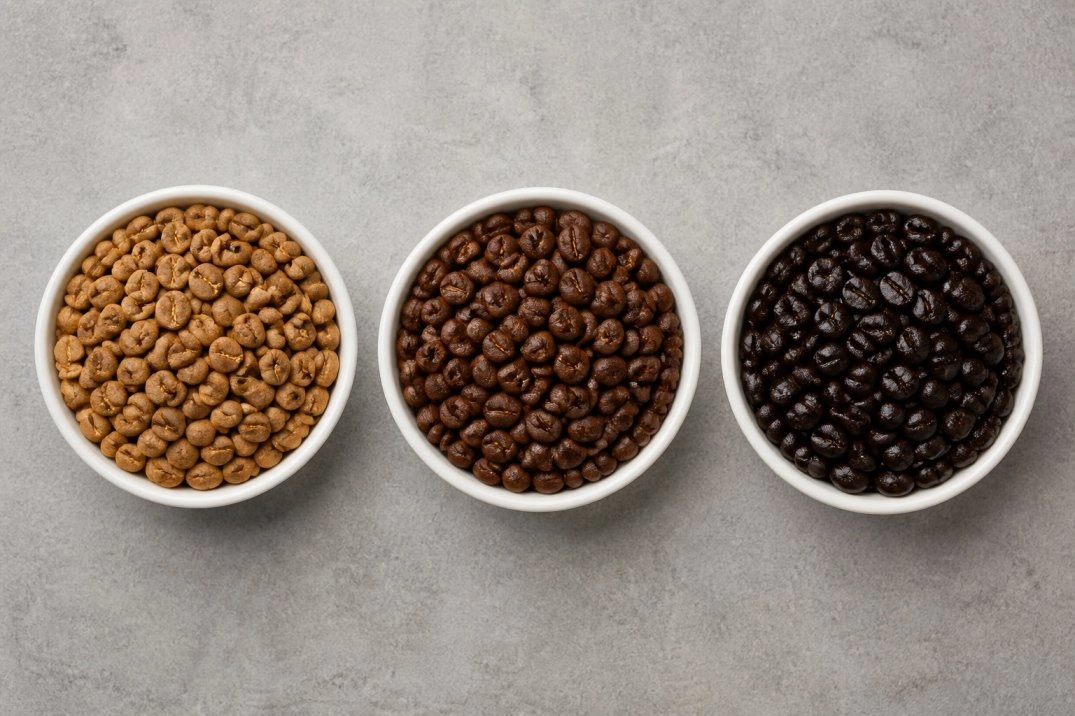
The longer the beans stay in, the darker they get, and the more the natural flavor of the bean gets replaced by the flavor of the roast itself. Here is roughly how the three main levels compare:
- Light Roast: about 10 to 11 minutes. Light brown, dry surface, no oil. Keeps the most of the bean’s original fruit and acidity. Tastes bright and a little tangy.
- Medium Roast: about 12 to 13 minutes. Medium brown, still dry. Balanced, with chocolate and nut flavors and a soft, mellow acidity.
- Dark Roast: about 14 to 16 minutes. Dark brown to nearly black, often shiny with oil on the surface. Bold, smoky, and low in acidity, with the original origin flavors mostly covered up.
That shiny oil is the easiest way to spot a dark roast in the store. It is also a hint that the bean has been roasted far enough that the roast taste is now in charge.
What Colombian Coffee Really Is?
Now the other half of the equation. When you buy Colombian coffee, what is actually in the bag?
Colombia is one of the world’s top three arabica coffee exporters. Arabica is the milder, more flavorful type of coffee bean. Almost all Colombian coffee is arabica, and almost all of it is washed, which means the fruit is removed from the bean soon after picking instead of drying in the sun. Washed coffee tends to taste clean and clear.
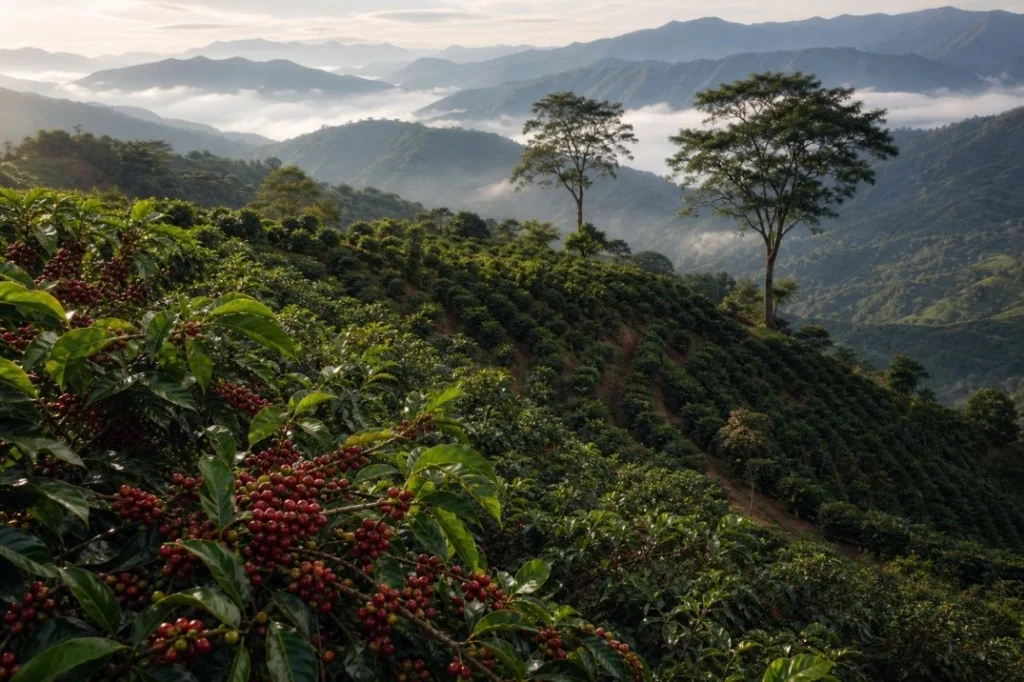
Most of it comes from small family farms on steep mountain slopes. World Coffee Research reports that coffee is grown in 23 of Colombia’s 32 departments, and that more than 550,000 families depend on it for their living.
Those mountains matter. Most Colombian coffee grows between roughly 1,200 and 1,800 meters above sea level, which is about 4,000 to 5,900 feet. Cool air at high altitude slows the cherries down. They ripen slowly, and slow ripening builds more sugar and more flavor in the bean. That is the real reason Colombian coffee tastes so good. It is the altitude and the careful picking, not the roast.
You may also see the words Supremo and Excelso on bags. Here is a helpful secret: those words describe bean size, not quality and not roast. Supremo means the beans passed through a larger screen; Excelso means a slightly smaller screen. A big bean is not automatically a better tasting bean, and neither word tells you anything about how dark the coffee was roasted.
So What Roast Is Most Colombian Coffee?
For everyday coffee, medium roast wins by a mile.
Think about the big names. Starbucks sells its single-origin Colombia as a medium roast, describing it as balanced with notes of toasted walnut and herbs. Folgers sells Colombian as a medium roast. The store-brand “Colombian” bags on the bottom shelf are usually medium roast as well.
There is a good reason for this. A medium roast is the safe middle ground. It keeps enough of Colombia’s natural sweetness and gentle acidity to taste like something special, while adding a smooth chocolate and nut flavor that most peoples already love. It also works in almost any coffee maker, from a basic drip machine to a French press.
If you buy a bag that only says “100% Colombian” and nothing about roast, there is a very good chance you are drinking a medium roast. That is the industry default.
When Colombian Coffee Really Is a Dark Roast
Now the honest part. Plenty of dark roast Colombian coffee exists, and if that is what you like, there is nothing wrong with it.
Here are the situations where Colombian coffee really is a dark roast:
- The bag says so. “Colombian Dark Roast,” “Colombian French Roast,” and “Dark Roast Colombia” are all common products. Trust the label over the country name.
- It is a Latin-style espresso coffee. The bold, finely ground coffees sold for stovetop espresso makers and small home espresso machines are usually dark roasted on purpose, because that style of brewing calls for a strong, heavy flavor.
- It is an espresso blend. Espresso blends often push the roast darker so the coffee can stand up to milk and sugar. A “Colombian Espresso” is usually darker than a “Colombian Drip.”
- It is a winter or holiday release. Roasters often bring out smoky, dark Colombian coffees in colder months when people want something heavier.
- It tastes burnt or ashy to you. That is a sign of a very dark roast, sometimes called a French roast or Italian roast. It is not a flaw in the beans. It is just a roast taken further than the beans needed.
Here is the key point. A Colombian bean is not born dark. A roaster decides to make it dark. Change roasters and you change the roast, even though the country on the bag stays the same.
How to Tell What Roast You Are Holding
You can figure this out in about 10-seconds, even standing in the aisle.
- Look for the roast word first. Ignore the giant “COLOMBIA” and find the small print that says light, medium, or dark. No roast word anywhere means assume medium.
- Look at the beans if the bag has a window. Dry and light brown means light. Dry and medium brown means medium. Shiny and dark means dark.
- Check the flavor notes. Words like bright, citrus, floral, and apple point to a lighter roast. Chocolate, caramel, and brown sugar point to medium. Smoky, charred, and bold point to dark.
- Taste it black, once. This is the fastest test of all. Smoky with almost no fruit or sweetness means dark. Chocolate with a little zip at the end means medium. Bright and almost tea-like means light.
One warning: the word “bold” on a bag means almost nothing. It is a marketing word. Some bold coffees are dark roasts, and some are just brewed stronger.
Light vs. Medium vs. Dark Colombian Coffee at a Glance
| What You Notice | Light Roast | Medium Roast | Dark Roast |
| Color of beans | Light brown, dry | Medium brown, dry | Dark, shiny with oil |
| Main taste | Fruity, bright, sweet | Chocolate, nuts, caramel | Smoky, roasted, bold |
| Acidity | High | Medium | Low |
| Body | Light to medium | Medium | Heavy |
| How much you taste Colombia | A lot | Some | Very little |
| Best brewing method | Pour-over, drip | Drip, French press | French press, espresso |
The darker the roast, the less you taste the country. If you are buying Colombian coffee specifically because you love that flavor, a very dark roast is working against you. You are paying for Colombian beans and mostly tasting the roaster’s fire.
Does the Roast Change the Caffeine?
This is the most argued-about question in coffee, so here is the Simple answer: roast level barely changes the caffeine in your cup.
Caffeine is stable under heat and survives roasting almost untouched. Research published in 2024 measured caffeine in coffee brewed under identical conditions and found levels were generally a little lower in dark roasts than in light and medium roasts, but the gap was small.
The reason is not that caffeine burned away. It is that a dark roasted bean weighs less, because it lost more water and gases during the longer roast. So scooping by volume gives you slightly less coffee per scoop.
The takeaway: do not pick a roast to control your caffeine. If you want less, use less coffee, brew a smaller cup, or switch to decaf. Roast level is the wrong dial.
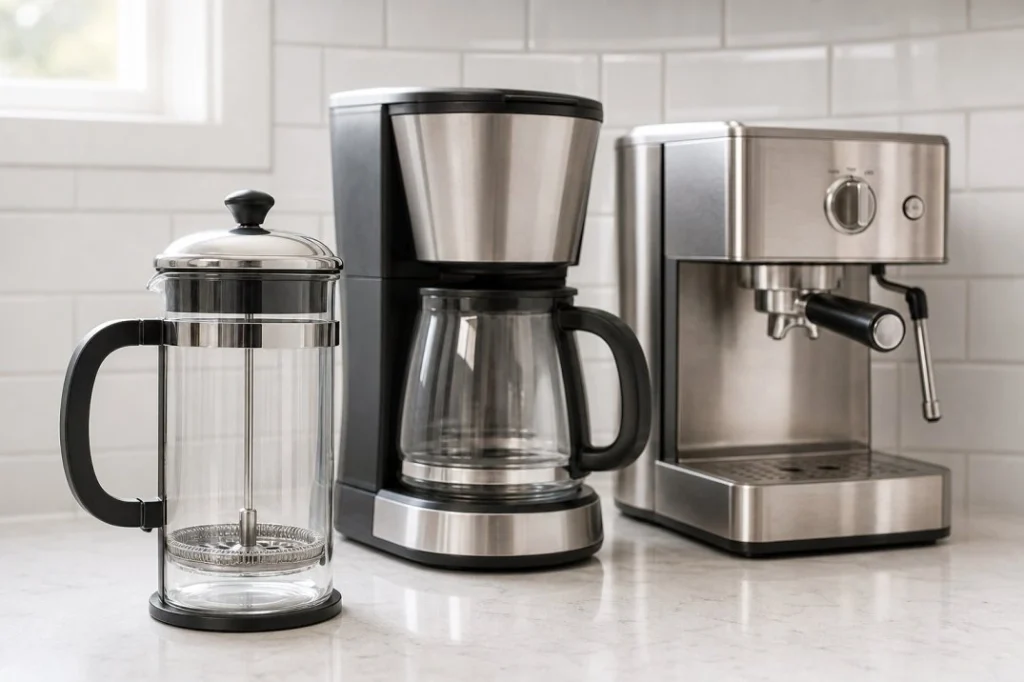
Which Roast Works Best With Your Brewer?
Your coffee maker should help you decide, because the wrong roast in the wrong brewer can taste thin or harsh.
- Basic drip coffee maker: Medium Roast. It is what the machine was basically designed around. Smooth and hard to get wrong.
- Pour-over: Light or Medium Roast. Pour-over gives you a clean, clear cup, and light roasts shine here.
- French press: Medium or Dark Roast. The metal filter lets more oils through, which adds body. Dark roast gets pleasantly heavy.
- Espresso machine or moka pot: Dark Roast. The strong, concentrated brew needs a bold coffee that can stand up to it.
- Cold brew: medium or dark roast. Cold water pulls flavor slowly, so a dark roast gives you a smooth, chocolatey, low-acid concentrate
- Instant coffee: whatever you enjoy. Roast level matters much less here because the flavor was set during manufacturing.
If you remember one line from this section: match the roast to the brewer, not to the country on the bag.
My Own Taste Test at Home
I did not want to just repeat what labels say, so I ran a simple test in my own kitchen. I bought two bags of Colombian coffee from the same roaster, from the same growing region, on the same day. One was a medium roast. One was a dark roast. Same beans, same farm, different fire.
I brewed both in a drip machine, same amount of coffee, same amount of filtered water, same grind setting. Then I let them cool for two minutes, tasted them side by side, and wrote down what I noticed.
The medium roast was the one that tasted like Colombia to me. There was chocolate up front, a soft sweetness in the middle, and a light tangy finish that made me want a second sip. The dark roast was smooth and easy, but it was a different drink. The fruit was gone, replaced by roasted, slightly smoky flavor with a heavier feel in the mouth.
Here is the part that surprised me. The dark roast did not taste stronger in caffeine or in coffee flavor. It just tasted darker. My Friend preferred it with cream, and I preferred the medium roast black. Both cups were good. They were simply doing different jobs.
That test changed how I shop. I used to grab whatever bag said Colombia and trust it. Now I flip the bag over first and look for the roast word. Two seconds of reading has saved me from buying the wrong coffee more times than I can count.
Frequently Asked Questions
Is Colombian coffee stronger than dark roast?
They are not the same kind of strong. Colombian coffee can be strong in flavor without being dark roasted, and a dark roast can be dark without being especially strong. If you want a stronger cup, use more coffee per ounce of water, not just a darker roast.
Is Colombian Supremo a dark roast?
No. Supremo is a bean size grade, not a roast level. A Supremo bean can be roasted light, medium, or dark. The word tells you nothing about how dark the coffee is.
Is Colombian coffee light or medium roast?
Most Colombian coffee sold in American grocery stores is medium roast. Light roast Colombian coffee is common from specialty roasters, and dark roast Colombian coffee is common in espresso-style and Latin-style products.
Why does Colombian coffee taste so smooth?
Two reasons. It is usually washed arabica grown at high altitude, which gives it natural sweetness and gentle acidity. And it is usually roasted to medium, which smooths out the bright edges without covering up the flavor.
What is the best roast for Colombian coffee?
It depends on how you brew it. Medium is the best all-rounder and the safest choice for drip coffee. Light roast is best if you want to taste the fruit and sweetness of the beans. Dark roast is best for espresso, moka pots, and anyone who loves a smoky, low-acid cup.
Is dark roast Colombian coffee less healthy?
No. Coffee from both roasts contains similar amounts of caffeine. Very dark roasting does reduce some of the natural acids in the bean, which some people find easier on their stomach. That is a comfort difference, not a health difference.
Does Colombian coffee have to be dark because of the way it is grown
Not at all. How the coffee is grown affects flavor. How it is roasted affects color and roast taste. A roaster can take the same Colombian beans in completely different directions, and many do.
Final Thoughts
So, is Colombian coffee a dark roast? No, and now you know why the question is fair anyway.
Colombia tells you where the coffee came from and what it should taste like: sweet, smooth, gently bright, a little chocolatey. The roast level tells you how much of that flavor survived the roaster. Most Colombian coffee in the United States is medium roasted, because medium keeps the flavor of the country while adding a comfortable chocolate and nut smoothness that most people love.
Dark roast Colombian coffee is real, and it is a great choice for espresso, cold brew, French press, and anyone who likes a smoky cup with less acidity. Just do not assume you are getting it. Check the bag.
The next time you are standing in the coffee aisle, skip the big letters. Find the little ones that say light, medium, or dark. That is the word that decides what is actually in your cup.
Related Article : Is There a Difference Between Coffee Beans and Espresso Beans?