

Your morning coffee does not have to taste like a compromise just because you gave up dairy. I know that feeling well. For the first few weeks after I switched, my coffee was a mess. The soy milk split into little white specks. It looked grainy. It tasted thin and a bit flat. I came very close to giving up and going back to cow’s milk.
Then I worked out what was actually going wrong, and it turned out to be 3 small habits. Once I fixed those, my coffee turned smooth, creamy, and honestly better than the dairy version I used to drink.
That is what this guide is about. It shows you exactly how to make coffee with soy milk at home, in 5 easy ways, using a normal kitchen and normal tools. You will also learn the real reason soy milk curdles, how to stop it for good, and which carton on the shelf will actually froth for you.
No fancy equipment. Just the method, written the way I wish someone had explained it to me.
Quick answer: Warm your soy milk before it touches the coffee, pour it slowly, and never let it boil. If you can, choose a barista-style soy milk. Those three habits are all it takes to get a smooth, creamy cup of coffee with soy milk every single time.
Why Soy Milk Is One of the Best Milks for Coffee
If you have tried a few plant milks, you already know they are not all the same. Almond milk is thin. Rice milk is watery. Oat milk is creamy but light.
Soy milk is different. It has more protein than most plant milks, and protein is what gives milk its body. That is the reason soy milk froths into real foam and makes a latte that actually tastes like a latte.
Here is how fortified soy milk compares with 2% dairy milk per one-cup serving.
| Nutrient | Soy milk (fortified) | Dairy milk (2%) |
| Protein | About 7 to 8 g | About 8 g |
| Calcium | About 300 mg | About 300 mg |
| Vitamin D | About 120 IU | About 120 IU |
| Saturated fat | Low | Higher |
| Lactose | None | Yes |
Typical values for fortified soy milk and 2% dairy milk sold in the United States. Always check your own carton, because brands vary.
So if you are cutting back on dairy, soy milk is the closest match on the shelf. It is also the plant milk whose protein level comes nearest to cow’s milk, which is why it behaves so well in hot drinks.
One more thing I love about soy milk: the flavor is mild. It does not take over your coffee the way almond or coconut milk can. A good medium roast still tastes like a good medium roast.
Good to know: Most soy milk sold in the United States is fortified with calcium and vitamin D. That is exactly why the numbers above look so close to dairy. Check the label on the carton you buy.
What You Need Before You Start
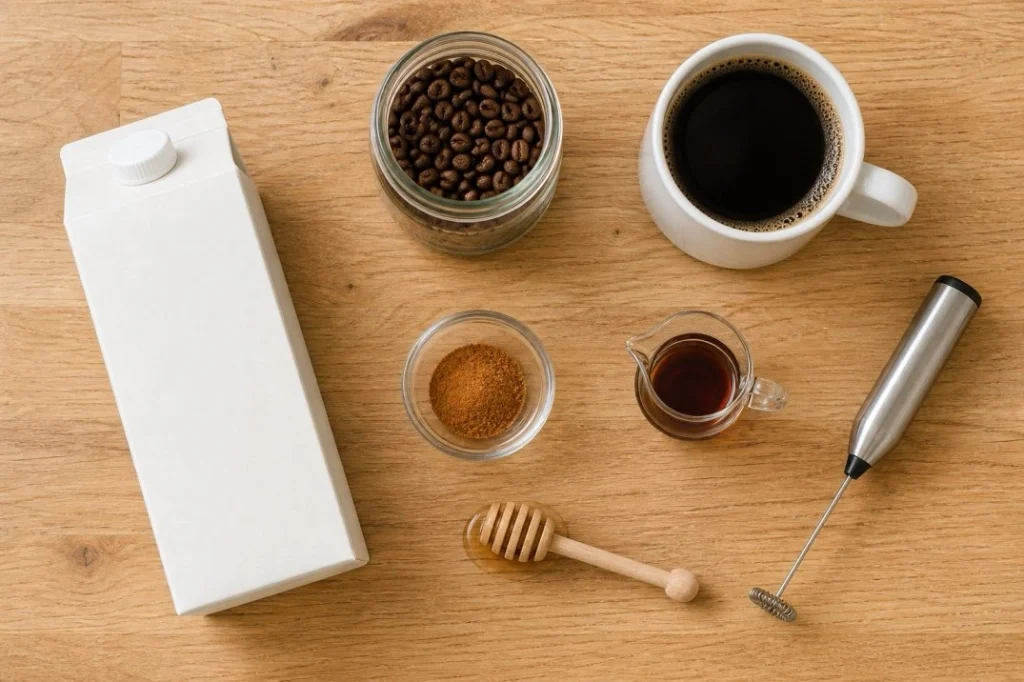
You do not need fancy equipment. Here is the short list.
Ingredients
- Soy milk, plain or unsweetened
- Coffee, whether ground coffee, espresso, or instant
- Water or your usual brewing setup
- Optional extras: sugar, honey, maple syrup, cinnamon, vanilla
Equipment, pick what you already have
- A mug
- A small saucepan or a microwave-safe cup to warm the milk
- A whisk, a French press, or a small electric milk frother
- A spoon
That is the whole kit. I made my first good soy latte with a six-dollar handheld frother from a big-box store, and it worked beautifully.
Why Does Soy Milk Curdle in Coffee?
This is the question I see more than any other, so let us get it out of the way.
Soy milk curdles because of two things working together: heat shock and acid.
Coffee is acidic. Soy milk proteins are sensitive to acid. When you pour cold soy milk straight into hot, acidic coffee, the proteins clump together and form those little white specks. It looks like the milk has gone bad, but it has not. It simply reacted.
The fix is surprisingly simple, and I tested all five of these points myself:
- Warm the soy milk first. Cold milk plus hot coffee equals shock. Warm milk plus hot coffee equals smooth. Heat it to about 140 to 150 degrees Fahrenheit, which is hot to the touch but not boiling.
- Pour slowly. A fast dump causes more clumping than a slow, steady pour.
- Do not boil it. Boiling breaks the milk down and makes it separate. Small bubbles at the edge of the pan are your signal to stop.
- Try adding the coffee to the milk instead of the other way around. It sounds odd, but the acid hits the milk more gently.
- Pick a barista-style soy milk. These are made with added stabilizers that help them stand up to heat and acid. It is the easiest fix of all.
In my kitchen, warming the milk solved the problem on its own almost every time. The barista blend became my backup plan for mornings when I was in a rush.
Quick tip: If your coffee is quite acidic, which light roasts usually are, a medium or dark roast will behave better with soy milk.
How to Make Coffee With Soy Milk: 5 Easy Methods
Method 1: Simple Soy Milk Coffee With Drip or Pour-Over
Time: about 3 minutes.
This is my everyday cup.
- Brew your coffee as usual. Aim for a mug that is about three-quarters full.
- While it brews, pour about one quarter to one third of a cup of soy milk into a small saucepan or a microwave-safe cup.
- Warm it gently. On the stove, use low heat and stir now and then. In the microwave, go 20 seconds at a time and stop before it bubbles.
- Pour the warm soy milk slowly into your coffee, stirring as you go.
- Taste it, then add a little more milk if you like your coffee lighter.
That is it. Smooth, warm, and no flecks.
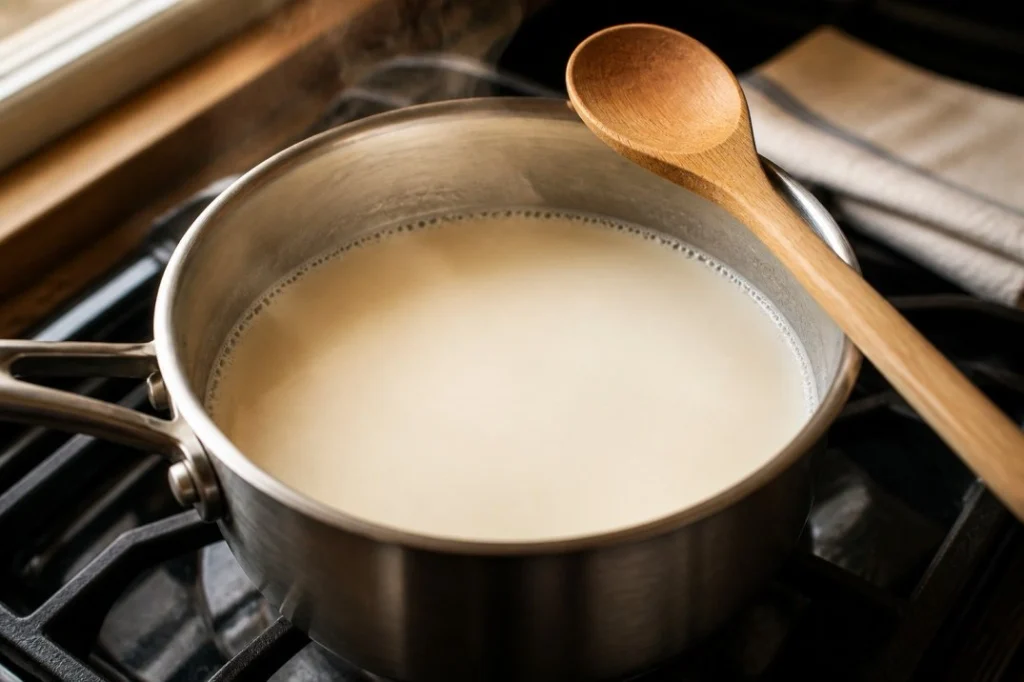
Method 2: Stovetop Soy Milk Latte
Time: about 6 minutes
A latte is simply coffee with plenty of milk and a little foam.
- Make a strong shot of coffee. Espresso is ideal, but a strong moka pot or a concentrated pour-over works too.
- Warm three quarters of a cup of soy milk in a saucepan over low heat, stirring gently until you see steam.
- Whisk the milk hard for 20 to 30 seconds to build foam. A simple balloon whisk does the job.
- Tap the pan on the counter a couple of times to knock out the big bubbles.
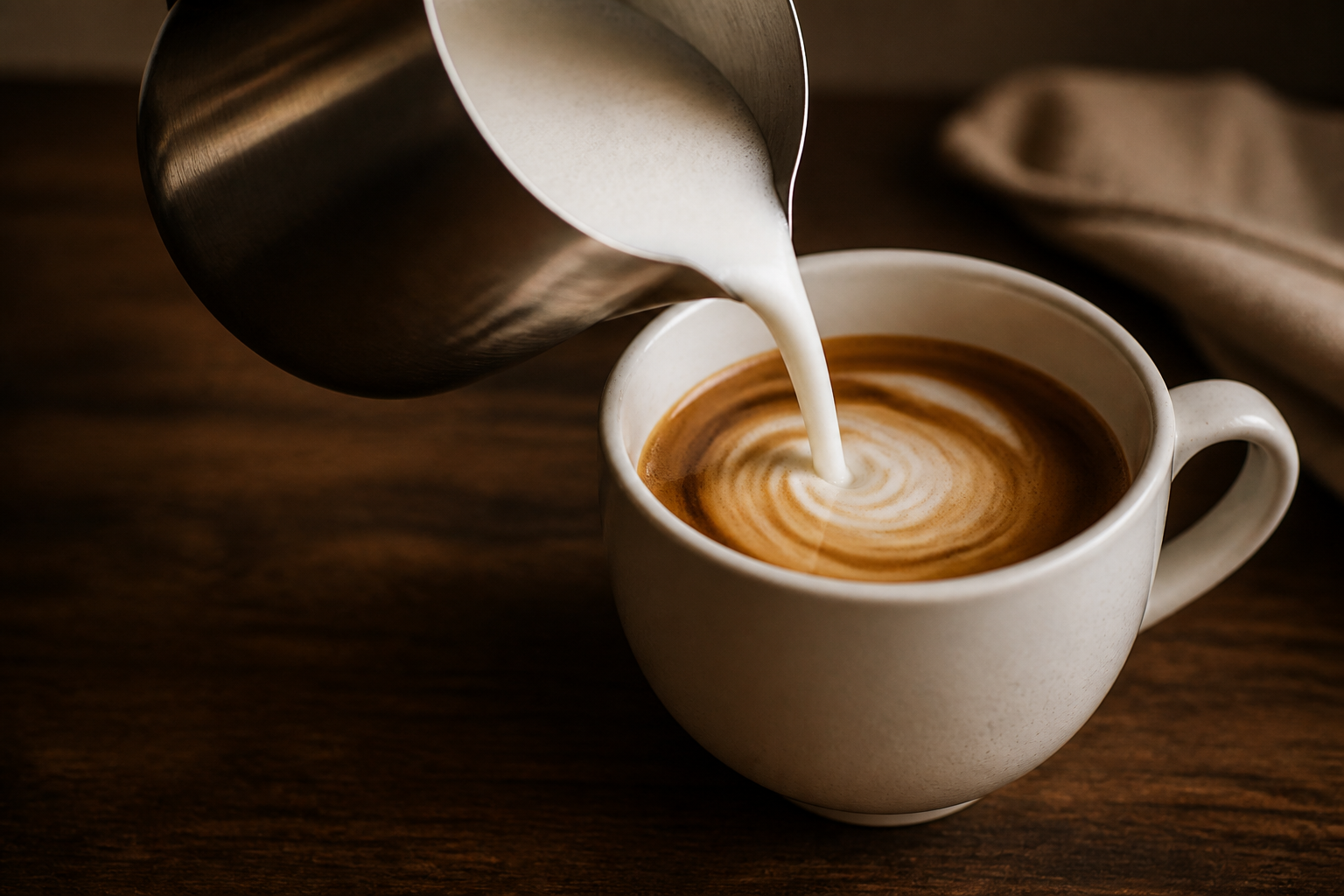
- Pour the coffee into your mug first, then pour the milk in slowly. Spoon the foam on top at the end.
My note: pour the milk from a little higher at the start, then lower your hand as you finish. That is the trick baristas use to leave a clean layer of foam sitting on top.
Method 3: Frothy Soy Milk Cappuccino With a French Press or Electric Frother
Time: about 4 minutes
A cappuccino needs thicker foam, and soy milk delivers.
- Warm about half a cup of soy milk, no hotter than 150 degrees Fahrenheit.
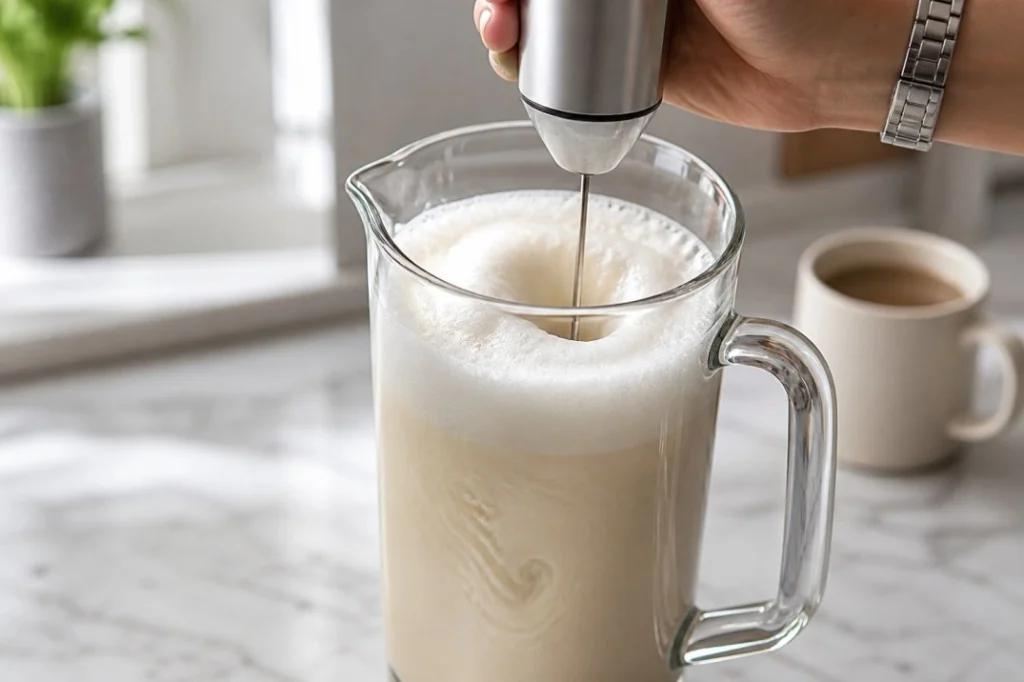
- With a French press, pour the warm milk in and pump the plunger quickly for about 30 seconds. It will roughly double in volume.
- With an electric frother, hold it near the bottom of the cup and move it in slow circles for 20 to 30 seconds.
- Let the foam rest for 30 seconds so it settles and firms up.
- Pour a shot of coffee into your mug, add the milk, then spoon the foam on top.
I use this method when I want a coffee that feels like a treat. It takes four minutes and tastes like something from a coffee shop.
Method 4: Iced Soy Milk Latte
Time: about 3 minutes
Cold drinks are easier than hot ones because there is no heat shock involved.
- Fill a tall glass with ice.
- Pour in about two thirds of a cup of cold soy milk.
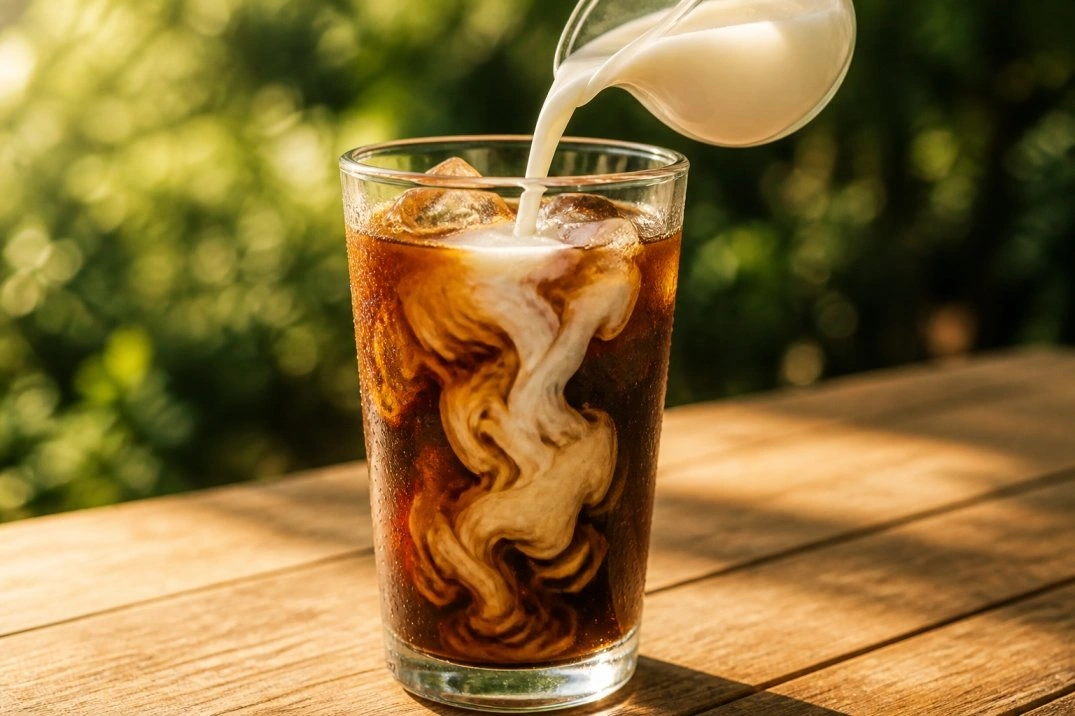
- Slowly pour a shot of cooled espresso or strong coffee over the top. It will swirl into pretty layers on its own.
- Stir before drinking, and add a little vanilla or maple syrup if you want it sweet.
My note: if you pour the coffee first and the milk second, you get cleaner layers. If you want it blended together, stir it right away.

Method 5: Instant Coffee With Soy Milk
Time: about 2 minutes
This one is for rushed mornings.
- Stir one to two teaspoons of instant coffee into two tablespoons of hot water.
- Warm your soy milk separately.
- Combine the two slowly, stirring as you pour.
- Sweeten to taste.
Instant coffee is more acidic than brewed coffee, so warming the milk really matters here. Skip that step and you will likely see curdling.
Choosing the Best Soy Milk for Coffee
Not every soy milk is built for coffee. Here is how to choose, based on what I found testing brands at home.
Look for the word barista. Barista-style soy milks are made with extra stabilizers and a little more fat, which helps them foam and resist curdling. If your store carries one, start there.
Check the protein. More protein means more body. Anything around 7 to 8 grams per cup will froth well.
Start with plain or unsweetened. Sweetened vanilla soy milk is delicious, but the sugar can taste burnt if you overheat it. You can always add sweetness later.
Skip the lite or low-fat versions for frothing. Less fat means less foam. Save those for your cereal.
Read the ingredient list. Shorter is usually better, but do not fear stabilizers such as gellan gum. Those are exactly what keep your latte smooth.
One thing I learned the hard way: brands vary a lot. The carton that makes a perfect latte for me might behave differently for you. If one brand curdles, try another before you give up on soy milk entirely.
Sweeteners and Flavors That Work Well
Soy milk is mild, which makes it a great base for flavors.
- Cinnamon. A pinch on top, or stirred into the milk while it warms.
- Vanilla extract. About a quarter teaspoon per cup.
- Maple syrup. One teaspoon, excellent in iced drinks.
- Honey. One teaspoon. Not vegan, but very good.
- Cocoa powder. Makes a quick mocha without much effort.
- A tiny pinch of salt. This sounds strange, but it makes coffee taste less bitter and more full-bodied.
Sweeten the milk while it is warm, not after. Sugar dissolves far better that way.
Mistakes I Made, So You Do Not Have To
I will be honest about my failures, because they are the reason this guide is any good.
1. I boiled the milk. Twice. Both times it separated into a grainy mess. Soy milk needs gentle heat, not a rolling boil.
2. I used cold milk in hot coffee. Every single time I did this, I got flecks. Warming the milk is not optional.
3. I poured too fast. A slow pour really does make a difference, and it looks nicer too.
4. I used a light roast. Light roasts are brighter and more acidic, which gave me more curdling. Medium roasts worked noticeably better with soy milk in my kitchen.
5. I gave up on one brand too early. My first carton was a low-protein lite soy milk, and it never frothed. The very next brand worked perfectly.
None of these mistakes ruined a cup completely. Most were still drinkable. But fixing them turned soy coffee from something I tolerated into something I actually look forward to.
Troubleshooting: Quick Fixes
| Problem | What is happening | What to do |
| White flecks in the coffee | Curdling from heat shock or acid | Warm the milk first and pour slowly |
| Milk tastes grainy | The milk got too hot | Keep it under 150 degrees Fahrenheit |
| No foam at all | Low protein or low fat milk | Use a barista or higher protein soy milk |
| Thin, watery latte | Not enough milk, or milk not warm enough | Use more milk and warm it properly |
| Burnt or bitter taste | Overheated milk or an over roasted coffee | Lower the heat and try a medium roast |
| Foam disappears fast | The foam sat too long | Pour within 30 seconds of frothing |
Frequently Asked Questions
Can you put soy milk in hot coffee?
Yes. Just warm the soy milk first and pour it in slowly. It is cold soy milk going into hot coffee that causes those little white flecks.
Why does soy milk curdle in coffee?
Coffee is acidic and soy proteins are sensitive to acid. When cold soy milk hits hot, acidic coffee, the proteins clump together. It is a chemical reaction, not spoilage, so the milk is still perfectly safe to drink.
Does soy milk froth?
Yes. It is one of the best plant milks for frothing because it is high in protein. Barista-style soy milk froths the best of all.
What temperature should soy milk be for coffee?
Around 140 to 150 degrees Fahrenheit. It should be hot and lightly steaming, but never boiling.
Is soy milk healthy in coffee?
For most people, yes. Fortified soy milk gives you protein, calcium, and vitamin D without the saturated fat and lactose of dairy. Just keep an eye on the added sugar in flavored versions.
Which soy milk tastes best in coffee?
In my experience, unsweetened or plain barista-style soy milk. It is creamy and mild enough to let the coffee flavor come through.
Can I use soy milk in a coffee maker?
No. Do not put soy milk in a coffee maker’s water tank or carafe to brew with. It will burn and clog the machine. Brew the coffee with water, then add the soy milk afterward.
How do I make a soy latte without a frother?
Use a French press or a simple whisk. Warm the milk, then pump or whisk hard for about 30 seconds. It works surprisingly well.
Final Thoughts
Making coffee with soy milk comes down to 3 habits: warm the milk, pour it slowly, and keep it below a boil. Do those 3 things and you will get a smooth, creamy cup almost every time.
The rest is personal preference. Some mornings I want a foamy cappuccino. Other mornings I am running late and just want a splash of warm soy milk in my mug. Both are good, and both take less than 5 minutes.
If you only try one thing from this guide, make it this: warm your soy milk before you pour it. That single step fixed the curdling problem for me, it will fix it for you too.
About This Guide
I wrote this guide after one too many sad cups of coffee.
You probably know the ones. You pour cold soy milk into hot coffee and suddenly there are little white flecks floating on the surface. That is curdling, and for a long time I assumed soy milk simply did not work in coffee.
Then I decided to fix it properly. I tested five different ways of making coffee with soy milk, tried several brands from my local grocery store, and went through more cartons of soy milk than I want to admit. Every tip on this page comes from those mornings in my own kitchen, and I have included my mistakes along with the things that worked.
Who wrote this : William is a home coffee drinker who has been making dairy-free coffee for years. Every method in this guide was tested in an ordinary home kitchen.
One honest note: I am not a barista and I am not a doctor. I am a home coffee drinker who wanted a good cup without dairy, and I tested this the way you would test it.
Related Topics: Can You Put Heavy Whipping Cream in Coffee?