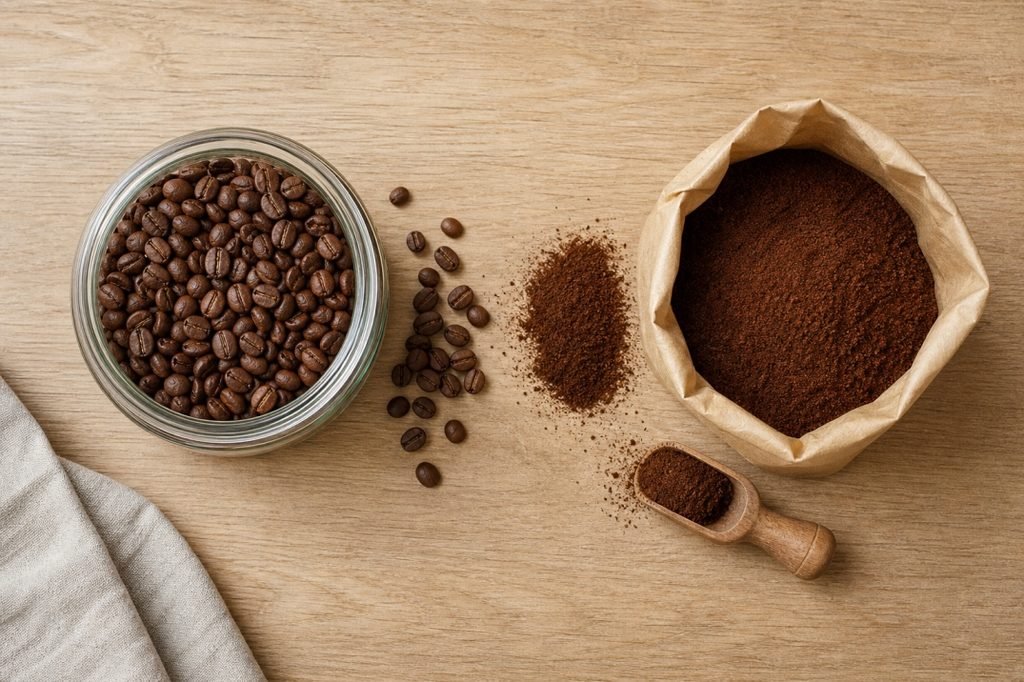
If you’ve ever stood in the coffee aisle at Target, Kroger, or Costco with a bag of glossy whole beans in one hand and a familiar can of pre-ground in the other, you’ve probably asked yourself the exact same question: are coffee beans cheaper than ground coffee? It seems like it should be a simple yes or no. It isn’t.
The honest answer is that whole bean coffee usually costs slightly more per pound than ground coffee from the same brand — but that single shelf price doesn’t tell you what your wallet actually cares about. The real numbers are the cost per cup, the amount you throw away, and how long the coffee stays drinkable. In this guide, we break down real-world prices, do the math for you, and give you a clear verdict for every type of coffee drinker, from the daily three-cup brewer to the occasional weekend sipper.
The Short Answer
Here’s the quick version before we dig into the numbers:
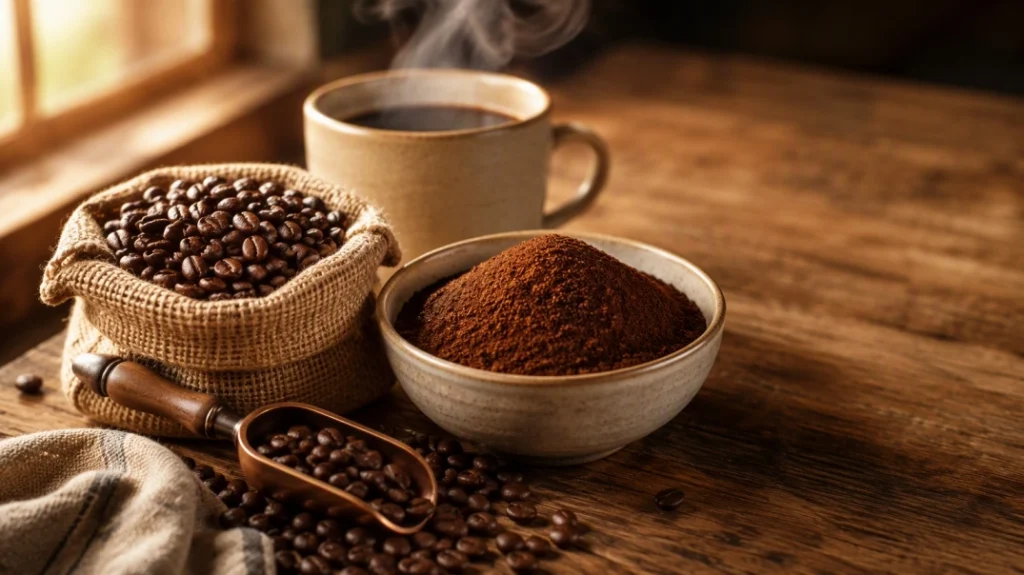
- Per pound, whole bean coffee is typically $1 to $6 more expensive than ground coffee of the same brand.
- Per cup, the difference is small — usually just a few cents — and whole beans often come out ahead once you factor in freshness and waste.
- Whole beans stay fresh for weeks; ground coffee loses its flavor in days. Coffee you end up throwing away because it went stale is the most expensive coffee you will ever brew.
- If you drink coffee daily, whole beans plus a grinder almost always wins on both cost and taste over time. If you drink a cup a couple of times a week, pre-ground is the practical choice.
In short: beans aren’t cheaper at the register, but they’re often cheaper where it actually counts — in the cup, and over the course of a year.
What the Price Tags Actually Say
Let’s start with the sticker price, because that’s what most people compare first. Looking at typical U.S. retail averages from 2025 and 2026, pre-ground coffee generally runs $6 to $12 per pound, while whole bean coffee runs $10 to $18 per pound. Those are averages across brands and store types, so individual products will fall outside that range in both directions — but the pattern is consistent: ground coffee is usually cheaper by the pound.
Why? A few reasons. Ground coffee is a higher-volume commodity product — supermarkets sell far more of it, so it gets aggressive pricing. It’s also often made from slightly lower-grade beans (or a blend that includes some older crop), because the grinding process masks imperfections in the cup. Whole bean coffee, by contrast, is marketed to a more discerning buyer, roasted in smaller batches, and carries a “premium” positioning that the price reflects.
That doesn’t mean it’s always more expensive. Some specialty roasters charge exactly the same price for whole bean and ground versions of the same coffee — they simply grind your bag for you at no extra charge. And when store brands run sales, the gap often narrows to a dollar or two. But as a rule of thumb, when you see the same brand’s whole bean and ground side by side, expect the beans to carry the higher tag.
Same Brand, Same Roast, Different Grind
The fairest comparison is the one you can actually do in the store: same brand, same roast, same bag size, one whole bean and one ground. Real-world shopper comparisons show this gap clearly. In one widely shared example from 2026, a national brand’s 12-ounce bag of whole beans rang up at $8.99 while the identical coffee, pre-ground, was $6.99 — a $2 difference, or about 16 cents more per cup once brewed.
That two-dollar gap is the norm for national brands. It shrinks to almost nothing at warehouse clubs (where Costco’s in-house Kirkland whole beans are famously cheaper per pound than most brands’ ground coffee) and at some grocery store labels. It can also flip entirely at specialty roasters, where a 12-ounce bag might cost $16 to $22 whether you buy it whole or ground — the grind is free, and you’re paying for the coffee itself.
The takeaway: don’t assume. Read the per-ounce price on the shelf tag rather than comparing bag prices, and check whether the brand charges extra for grinding. You might be surprised how often the answer is “no.”
The Price-per-Cup Math That Actually Matters
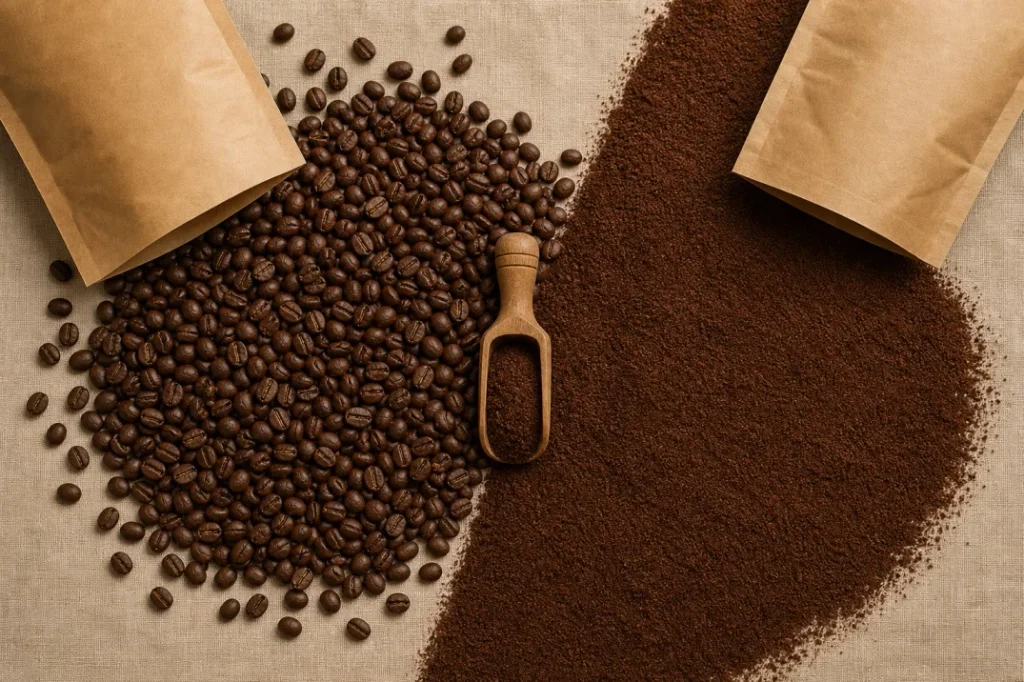
Here’s the number that should drive your decision: what you pay per cup. The shelf price matters less than you think, because a pound of coffee goes a long way.
The standard home brew ratio is roughly 1 to 2 tablespoons of ground coffee per 6-ounce cup, which works out to about 10 grams of coffee per cup. A 12-ounce bag (340 grams) therefore makes roughly 24 to 30 cups, depending on how strong you like it. That means even a “premium” $15 bag works out to around 50 to 60 cents per cup, while a budget $7 bag lands around 25 to 30 cents.
Run the same math on the whole bean versus ground question and the gap practically disappears:
| Bag (12 oz) | Typical price | Est. cost per cup* |
| Ground — store brand | $5.99–$7.99 | $0.25–$0.33 |
| Ground — national brand | $8.99–$10.99 | $0.37–$0.46 |
| Whole bean — store brand | $6.99–$9.99 | $0.29–$0.42 |
| Whole bean — specialty/roaster | $12.99–$15.99 | $0.54–$0.67 |
Based on ~24 six-ounce cups per 12 oz bag at standard strength. These are typical 2025–2026 U.S. retail ranges, not quotes for any specific store.
Now put that in context. A cafe latte costs $4 to $6. A $0.45 cup of premium whole-bean coffee at home is still about a tenth of the price — and it’s fresher than anything a cafe is pouring for you by the time it reaches your mug. The per-cup difference between ground and whole bean is literally pennies. The difference between brewing at home and buying out is dollars.
Where Whole Bean Coffee Quietly Saves You Money
Per-cup math aside, whole beans have several quieter advantages that add up over a year of daily brewing:
1. Less waste from staleness. Ground coffee stales fast — more surface area means more oxidation — and a 12-ounce bag of pre-ground can taste flat before you finish it. Whole beans keep their character for three to four weeks after the roast date. If you’re the kind of person who tosses the last quarter of a bag of ground coffee because it went bitter and lifeless, you’re paying full price for coffee you never drink. Beans stop that leak.
2. You grind only what you need. Every cup starts from a freshly ground batch, which means maximum flavor from every bean you buy. You’re getting the full potential of the coffee you paid for — which is the closest thing to a discount there is.
3. Bigger bags, better price. Whole bean coffee is far more likely to be sold in 2- to 3-pound bags (Costco and other warehouse stores being the obvious example), and per-pound pricing drops steeply at those sizes. It’s hard to find ground coffee in large-format bags, because it would go stale before you got through them. Beans let you buy in bulk — and bulk is where the real savings live.
4. Fewer trips to the cafe. This is the big one. Fresh, flavorful home coffee is the single best way to break a $5-a-day cafe habit. If grinding your own beans is the thing that finally makes your home brew taste like the coffee shop’s, the “savings” aren’t a few cents a cup — they’re hundreds of dollars a year.
The Hidden Cost Nobody Talks About: The Grinder
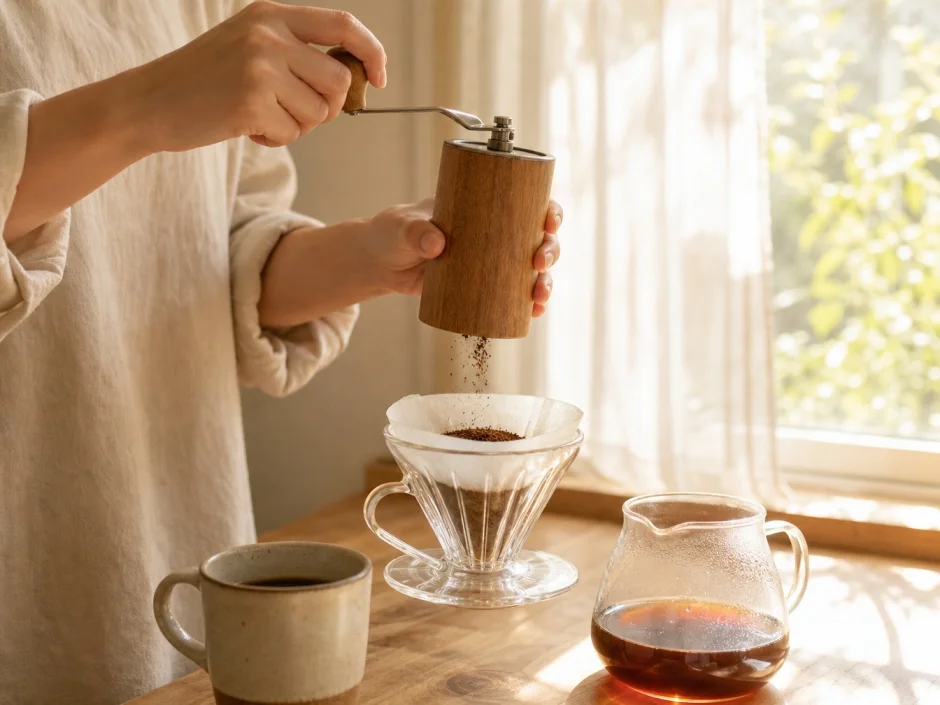
Here’s the honest catch: whole beans are only worth it if you can actually grind them, and a grinder isn’t free. This is the cost most cost-comparison articles conveniently skip.
The good news is that the entry price is lower than most people assume. A basic blade grinder runs $15 to $25 and will absolutely get you from beans to brew. The much better option — a burr grinder, which grinds evenly and consistently — starts around $35 to $60 for an entry-level model, with enthusiast-grade models running $100 to $200 and beyond.
Spread that cost across a year of daily coffee and it becomes trivial:
| Grinder type | One-time cost | Per-cup cost over 1 year* | Per-cup cost over 2 years* |
| Blade grinder | $15–$25 | ~$0.01–$0.02 | ~$0.01 |
| Entry burr grinder | $35–$60 | ~$0.03–$0.06 | ~$0.02–$0.03 |
| Mid-range burr grinder | $100–$200 | ~$0.09–$0.18 | ~$0.05–$0.09 |
Assumes 3 cups per day, 365 days a year.
Even a $200 grinder adds less than 20 cents to the cost of your first-year cups, and that number keeps shrinking every year after. Compare that to the $2 to $4 more you’d spend on any single cafe drink, and the grinder pays for itself embarrassingly fast. If you’re weighing the cost of whole beans versus ground coffee, the grinder shouldn’t scare you off — it should be treated as a one-time investment in every future cup you brew.
Freshness: The Factor No Price Tag Can Show
Here’s the uncomfortable truth about pre-ground coffee: by the time you open the bag, the clock is already ticking loudly. Grinding exposes the coffee’s inner surface to oxygen, and oxidation is what destroys flavor. A bag of pre-ground coffee is noticeably past its best within a week or two of opening. Whole beans, by contrast, hold their flavor for three to four weeks — sometimes longer if you store them properly in an airtight container away from light and heat.
That matters for your wallet in a way that’s easy to miss. If you drink one cup a day, a 12-ounce bag lasts you nearly a month. A month-old bag of ground coffee tastes stale — flat, bitter, and hollow. You have three options: drink bad coffee, dump the rest of the bag and buy a new one (throwing money in the trash), or buy whole beans so the last cup tastes as good as the first.
There’s a reason roasters put roast dates on whole bean bags but rarely on ground coffee: freshness is the whole point. When you compare costs honestly, a bag of coffee you actually finish is cheaper than a bag you throw half away — regardless of the sticker price.
When Ground Coffee Is the Smarter Buy
For all the praise of whole beans, there are perfectly legitimate reasons to keep buying ground coffee — and doing so doesn’t make you a coffee heathen:
- You drink coffee occasionally. If a 12-ounce bag lasts you two or three months, beans will go stale in your cupboard before you finish them. Ground coffee’s shorter life doesn’t matter much if you’re buying small bags and using them up quickly.
- You don’t want a grinder on your counter. No judgment — a $20 blade grinder is an option, but if you have zero interest in another appliance, pre-ground is the practical choice.
- You’re brewing at work or traveling. Keeping a small bag of pre-ground at the office beats carrying beans and a grinder around.
- You’re buying cheap coffee for cold brew. Cold brew is famously forgiving of lower-grade beans, and the long steep time smooths out the flaws. Budget ground coffee does the job fine.
- You’re on a strict grocery budget right now. If the choice is between a $7 bag of ground and a $9 bag of beans, buy the ground and don’t feel bad about it. The cost difference per cup is pennies.
The point isn’t that whole beans are always better. It’s that you should choose deliberately based on how much you drink, how fast you use a bag, and whether freshness matters to you.
The Verdict: Are Coffee Beans Cheaper Than Ground Coffee?
Time for the answer you came for. Here’s the honest, complete verdict:
At the register, no. Whole bean coffee is usually $1 to $6 more expensive per pound than the same brand’s ground coffee, and the average retail price per pound is higher across the board.
Per cup, it’s close to a tie. The difference is a few cents per cup — not nothing, but rarely decision-making money.
Over a year of daily brewing, whole beans usually win. You waste less coffee to staleness, you can buy in cheaper bulk sizes, your home brew tastes good enough to keep you out of the cafe, and the cost of a grinder shrinks to a rounding error with every cup you make. If you drink coffee every day — and especially if you currently buy coffee out — whole beans are the cheaper choice in the long run.
If you drink occasionally, ground coffee wins. Buy small bags, use them fast, and you’ll never notice the freshness gap.
So the real answer to “are coffee beans cheaper than ground coffee” is: it depends on how you drink coffee, but for most daily American coffee drinkers, the beans end up cheaper where it counts — in the cup, and over the course of the year.
Frequently Asked Questions
Is it cheaper to buy whole beans and grind them yourself?
Over time, usually yes — not because beans are cheaper per pound, but because you waste less, can buy larger bags at better per-pound prices, and brew coffee at home that’s good enough to replace cafe trips. The grinder cost fades to pennies per cup after the first year.
Why is whole bean coffee more expensive than ground?
Ground coffee is a high-volume commodity with aggressive supermarket pricing, and it’s often made from lower-grade beans since grinding hides imperfections. Whole beans are positioned as a premium, fresher product, roasted in smaller batches and sold to buyers who notice the difference.
Does grinding your own coffee actually save money?
In direct per-pound terms, no — ground is usually cheaper at the shelf. But factoring in reduced waste, bulk-buying options, and the cafe trips you won’t need, grinding your own coffee almost always comes out ahead for daily drinkers.
How many cups does a 12 oz bag of coffee make?
Roughly 24 to 30 cups, depending on your strength preference. At the standard ratio of about two tablespoons per six-ounce cup, a 12-ounce bag (340 grams) uses roughly 10 to 12 grams per cup.
Do I need an expensive grinder?
No. A $20 blade grinder will get you brewing, and a $35 to $60 burr grinder is the sweet spot most home brewers should target. Spend more only if you’re chasing espresso-level consistency.
Is ground coffee worse than whole bean?
It’s not “worse” — it’s just on a shorter clock. Pre-ground coffee goes stale within a week or two of opening, while whole beans stay fresh for three to four weeks. If you use a bag quickly, ground coffee is perfectly fine.
The Bottom Line
Standing in the aisle, you’ll almost always see ground coffee win on price per pound. That’s the sticker price talking. But the question “are coffee beans cheaper than ground coffee” deserves an answer based on the full picture: the few cents per cup you might save with ground coffee gets eaten up by stale waste, smaller bag sizes, and cafe runs that better home coffee would have prevented. For the daily drinker — which is most American coffee consumers — whole beans plus a decent grinder is the cheaper habit in the long run, and it tastes better while it saves you money. Buy the beans. Buy the grinder. Enjoy the math.
Related Topic : How Do You Make Coffee With Coffee Beans