Is Cold Brew Stronger Than Regular Coffee? The Honest Answer

The Short Answer is Yes But It Depends, cold brew can be stronger than regular coffee — but only if you drink it as a concentrate. The strength depends on two very different things: how much caffeine is in your cup, and how intense the flavor tastes. By the time you finish this guide, you’ll know exactly why your cold brew seems to hit harder, how to read caffeine numbers like a pro, and how to make your cup exactly as strong as you like it.

What Does “Stronger” Even Mean? Caffeine vs. Flavor
Here’s the first thing that confuses almost everyone: “strong coffee” can mean two totally different things.
1. Strong in caffeine (energy). This is the strength that wakes you up. It’s measured in milligrams (mg) of caffeine. More caffeine = more energy (and more jitters if you overdo it).
2. Strong in flavor (taste). This is the strength you taste. Strong-tasting coffee is usually more bitter, more intense, and more “in your face” than mild coffee.
Here’s the twist: a coffee can be strong in one way but not the other. A dark, bold-tasting cup of hot coffee might only have a normal amount of caffeine. And a smooth, easy-drinking cold brew that barely tastes bitter can actually pack a serious caffeine punch.
When people ask “is cold brew stronger than regular coffee?”, they’re usually really asking about both — and the answer is different for each one. Let’s break both down.
The Short Answer: Yes — But It Depends
If you compare the same amount of cold brew concentrate to regular brewed coffee, cold brew wins on both caffeine and taste intensity. Here’s the simple version:
- Caffeine: A typical 8-ounce cup of regular brewed coffee has about 95 mg of caffeine. An 8-ounce cup of cold brew concentrate can have 200 mg or more — more than double.
- Flavor: Cold brew concentrate is made with a much higher coffee-to-water ratio, so it tastes richer, deeper, and more intense than regular coffee.
- BUT: Most people don’t drink straight concentrate. They dilute it with water, milk, or pour it over ice. Once you dilute it, the caffeine and flavor drop to a level that’s often similar to regular coffee — sometimes even less.
So the honest answer is: cold brew is stronger than regular coffee only when you drink it concentrated. Ready-to-drink cold brew is usually about the same as regular coffee — sometimes weaker.
Cold Brew vs. Regular Coffee: The Caffeine Face-Off
Let’s put the numbers side by side so you can see the difference at a glance. These are averages from government food databases, and real cups vary by brand and recipe — but they give you a rock-solid idea of what you’re drinking.
| Drink | Serving Size | Caffeine | How Strong? |
| Regular brewed coffee | 8 oz | ~95 mg | Baseline — the standard |
| Cold brew concentrate | 8 oz | ~200 mg or more | Strong — up to double |
| Cold brew, diluted (ready-to-drink) | 8 oz | ~100–150 mg | Similar to regular coffee |
| Iced coffee (hot-brewed, chilled) | 8 oz | ~95 mg | Same as hot coffee |
| Espresso | 1.5 oz | ~63 mg | High per ounce, small total |
| Decaf coffee | 8 oz | ~2–5 mg | Nearly caffeine-free |
What this table tells you:
- Cold brew concentrate is the strongest by a wide margin — about twice the caffeine of regular coffee in the same cup size.
- Diluted cold brew (what you buy bottled at the store or get at a coffee shop) lands at roughly the same caffeine level as regular coffee.
- Iced coffee is not cold brew. It’s regular hot coffee poured over ice — so it has the same caffeine as hot coffee.
Cold Brew vs. Iced Coffee: Don’t Confuse Them
A lot of people mix these up because both are cold drinks served over ice. But they are made completely differently:
- Iced coffee is made by brewing coffee hot (the normal way, with hot water) and then cooling it down and pouring it over ice.
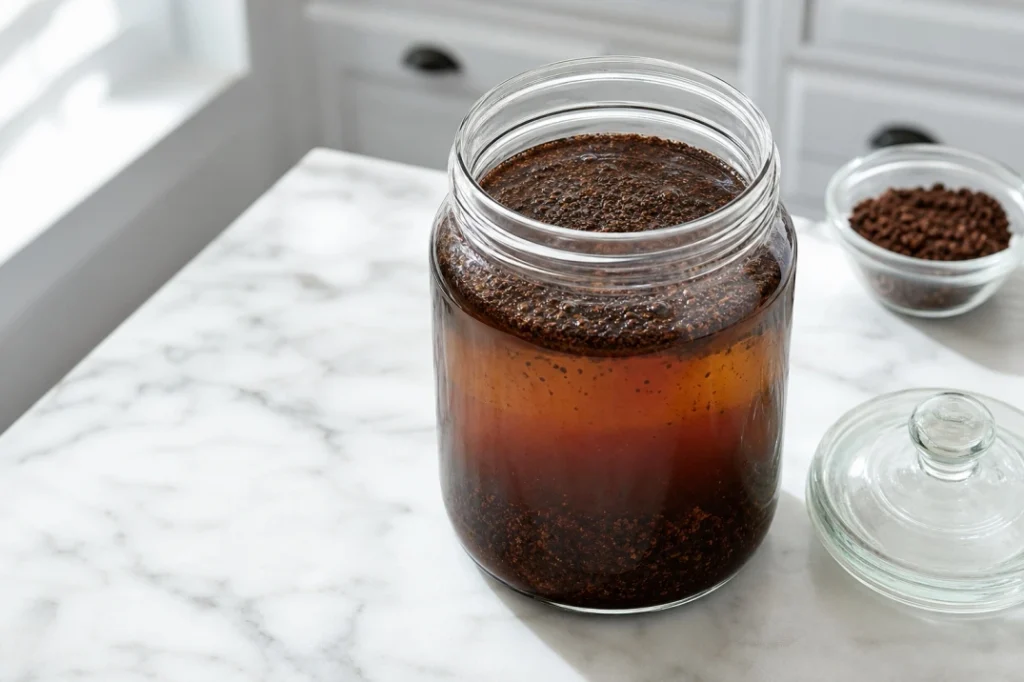
- Cold brew is made by soaking coarse coffee grounds in cold or room-temperature water for 12 to 24 hours. No heat at all.
That long, slow soak changes everything. Because the water is cold, it pulls different flavors out of the coffee bean — and it pulls them out slowly. The result is a coffee that’s smoother, less bitter, and slightly sweeter than hot-brewed coffee, even when it has more caffeine.
You can spot the difference on any coffee shop menu. “Cold brew” is its own item, steeped for hours and often served black. “Iced coffee” is usually just the shop’s regular hot coffee poured over ice — often in a matter of minutes. Same beans, totally different drinks.
This is why cold brew often “tricks” people: it goes down so easily that you don’t realize how much you’re drinking.
Why Cold Brew Feels Stronger
Here’s the sneaky part. Even when the caffeine numbers are similar, cold brew can feel stronger. There are four reasons:
1. The concentrate factor. Cold brew is usually brewed as a concentrate — meaning the maker uses way more coffee per cup of water (ratios like 1:4 or 1:5, versus 1:15 or 1:16 for regular coffee). Undiluted, that’s a caffeine bomb. If you drink it straight or only add a splash of milk, you’re getting double-strength coffee without realizing it.
2. Smooth flavor = faster drinking. Cold brew lacks the bitterness that makes most people sip hot coffee slowly. You can chug a glass of cold brew in a few minutes without wincing. Same caffeine, but delivered to your body all at once instead of over 20 minutes.
3. Bigger servings. Iced drinks are usually served in 12, 16, or even 20-ounce cups. A “large” cold brew can easily contain the caffeine of two or three cups of regular coffee.
4. Cold caffeine hits differently. Some people find that caffeine feels stronger when consumed quickly in a cold drink on an empty stomach — especially in summer, when cold brew replaces breakfast.
Add all four together, and you get the classic experience: “I drank one glass of cold brew and now my heart is doing gymnastics.” Sound familiar?
One more factor: caffeine doesn’t leave your body instantly. On average, it takes your body about five hours to clear half of the caffeine you drink. So if you have a big cold brew at 3 p.m., a good chunk of that caffeine is still hanging around at dinnertime — which is why an afternoon cold brew can quietly mess with your sleep more than you’d expect.
The Dilution Secret: Concentrate vs. Ready-to-Drink
This is the single most important thing to understand about cold brew strength: cold brew almost always comes in two forms, and they are not equal.
Cold brew concentrate is the strong stuff. It’s brewed extra-strong on purpose, so you can add water or milk to it. It’s usually sold in small bottles with instructions like “mix 1 part cold brew with 1 part water or milk.” Straight concentrate can have 200+ mg of caffeine per 8 ounces — stronger than any regular coffee.
Ready-to-drink cold brew is already diluted for you. Most bottled cold brew at grocery stores and gas stations is this kind. It’s typically watered down to a regular-coffee caffeine level (about 100–150 mg per 8 oz) — sometimes even less if milk or cream is added.
Here’s the practical rule of thumb: if you mix your cold brew concentrate half-and-half with water or milk, you cut the caffeine roughly in half. That means a 1:1 diluted cup of concentrate lands at about the same strength as regular coffee. The “is cold brew stronger” answer literally depends on which bottle you grabbed.
How Much Caffeine Is Too Much?
Now that we know cold brew can sneak up on you, let’s talk limits. The U.S. Food and Drug Administration (FDA) says up to 400 mg of caffeine per day is generally safe for healthy adults — that’s about four 8-ounce cups of regular coffee. For kids and teens, experts recommend much less: around 100 mg or fewer per day, depending on age.
Here’s the math problem: one 20-ounce cold brew from a coffee shop can contain anywhere from 200 to 300+ mg of caffeine — before you add anything. Drink two of those, and you’re already at (or past) the daily limit. That’s why cold brew is the drink most likely to give people the shakes.
Signs you’ve had too much caffeine: a racing heart, feeling jittery or anxious, trouble sleeping, headaches, or that weird “wired but tired” feeling. If that happens, switch to water, take a break from caffeine for a day or two, and go easier next time.
How to Control the Strength of Your Cold Brew
The best part about cold brew is that you are in control. Here’s how to dial in exactly the strength you want:
- Change the ratio. Use more water and less coffee for a milder brew, or more coffee for a stronger one. A good starting point is 1 part coffee to 5 parts water — adjust from there.
- Shorten or lengthen the steep. Steeping for 12 hours gives a lighter brew; 18–24 hours pulls out more caffeine and flavor. Longer = stronger.
- Grind it right. Cold brew needs a coarse grind — about the size of breadcrumbs. Too fine, and your brew gets bitter and muddy.
- Dilute to taste. Start with a 1:1 mix of concentrate and water or milk, then taste. Too weak? Add less water next time. Too strong? Add more.
- Watch your serving size. If you’re drinking from a 20-ounce cup, remember you’re getting about two and a half “standard cups” of coffee.
- Go decaf after dinner. If you love the taste of cold brew at night, decaf cold brew tastes almost identical — without stealing your sleep.

How to Make Cold Brew at Home?
You don’t need fancy equipment to make cold brew — just coffee, cold water, a big jar, and patience. Here’s the simple recipe thousands of home brewers use:
- Mix: Put 1 cup of coarse-ground coffee (about 100 grams) into a large jar or pitcher.
- Add: Pour in 4 cups of cold water and stir until all the grounds are wet.
- Wait: Cover it and leave it in the fridge for 12 to 18 hours. Longer = stronger.
- Strain: Pour it through a coffee filter, a fine strainer, or a clean kitchen towel to catch all the grounds.
- Store: Keep the concentrate in a sealed container in the fridge. It stays good for up to two weeks — way longer than regular brewed coffee.
That’s it. One batch gives you a week of coffee, and you control the strength from the very first step. Mix it 1:1 with water or milk for a regular-strength cup, or drink it straight if you’re feeling brave (and you’ve read the caffeine section above).
Cold Brew vs. Regular Coffee: Which Should You Choose?
Here’s a quick guide:
Choose cold brew if you:
- Want a smoother, less bitter cup that’s easy to drink
- Like making a batch on Sunday and having coffee ready all week (cold brew keeps in the fridge for up to two weeks)
- Want maximum caffeine per sip (go with concentrate)
- Drink coffee on hot days and want something refreshing
Choose regular coffee if you:
- Love the classic hot coffee ritual (and the smell)
- Want to control caffeine precisely — one standard cup at a time
- Prefer the bold, roasty, slightly bitter flavor of hot-brewed coffee
- Need a quick cup — cold brew takes 12+ hours to make
Honestly, most coffee lovers end up using both. Hot coffee for mornings, cold brew for afternoons and summer days. No wrong answers here.
Frequently Asked Questions
Is cold brew stronger than iced coffee?
Usually, yes. Iced coffee is just hot-brewed coffee poured over ice, so it has about the same caffeine as regular coffee (~95 mg per 8 oz). Cold brew is steeped with a much higher coffee-to-water ratio, so concentrate can hit 200+ mg per 8 oz. Even diluted, bottled cold brew usually has slightly more caffeine than iced coffee — plus a smoother, less bitter taste.
Does cold brew have more caffeine than hot coffee?
It can. An 8-ounce cup of cold brew concentrate can contain about twice the caffeine of an 8-ounce cup of hot brewed coffee. But ready-to-drink cold brew is usually diluted down to a similar level as hot coffee — around 100–150 mg per 8 ounces. So: concentrate beats hot coffee; bottled cold brew is roughly a tie.
Why does cold brew hit me harder than regular coffee?
Three reasons: (1) it’s often a concentrate with double the caffeine, (2) it’s served in bigger cups, and (3) it’s so smooth that you drink it fast — delivering all that caffeine to your body in a few minutes instead of slowly sipping for half an hour. It’s not your imagination.
Is cold brew easier on your stomach?
Many people say yes. Because cold brew is less acidic than hot-brewed coffee, it’s gentler on sensitive stomachs. That said, caffeine itself can still upset an empty stomach — so if you’re sensitive, eat something with your cold brew.
Can I drink cold brew every day?
Yes, as long as you stay within the safe caffeine limit (up to 400 mg per day for healthy adults, much less for teens). A standard 8-ounce serving of diluted cold brew is totally fine daily. Just be careful with large sizes and straight concentrate — those add up fast.
The Bottom Line
So, is cold brew stronger than regular coffee? Only when you drink it as a concentrate. Undiluted cold brew can pack roughly double the caffeine and a much more intense flavor than a regular cup of coffee. But the cold brew you buy ready-to-drink at the store is usually diluted to about the same strength as regular coffee — and iced coffee isn’t cold brew at all.
The takeaway: know what you’re drinking. Check whether it’s concentrate or ready-to-drink, watch your serving size, and mix it to the strength you actually want. Do that, and you’ll get all the smooth, delicious energy of cold brew — without the surprise jitters.
Caffeine values are averages based on USDA food data and may vary by brand and recipe. Daily caffeine guidance is from the FDA. This article is for general information only and is not medical advice — talk to your doctor if you have questions about caffeine and your health.
Related Topic : How to Make Coffee Taste Less Bitter Without Sugar


1 Comment
[…] Related Article : Is Cold Brew Stronger Than Regular Coffee? […]