How Much Caffeine Is in Half Caff Coffee? The Straight Answer
The Short Answer: How Much Caffeine Is in Half Caff Coffee? A standard 8-ounce cup of half caff coffee contains roughly 45 to 50 milligrams of caffeine — almost exactly half of what you’d get from a regular cup of brewed coffee, which averages about 95 mg per 8 ounces. To put that in perspective, decaf coffee delivers only about 2 to 5 mg per cup, so half caff is not “a little less caffeine.” It’s a true middle ground: enough to still feel like coffee, but gentle enough for people who want to cut their intake in half without giving up the ritual.
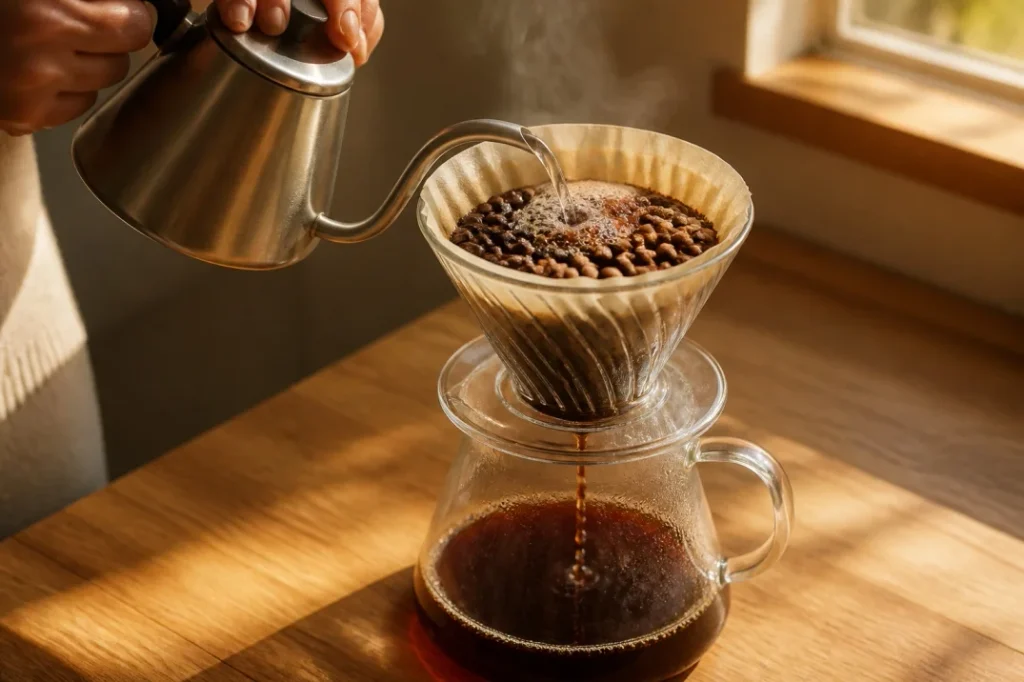
Here’s how the three most common cups stack up:
| Coffee type (8 oz cup) | Average caffeine | Typical range |
| Regular brewed coffee | ~95 mg | 70–140 mg |
| Half caff coffee | ~47 mg | 40–55 mg |
| Decaf coffee | ~3 mg | 2–5 mg |
The numbers above come from USDA FoodData Central and manufacturer data, and they line up across most major brands. Folgers Half Caff, for example, reports about 58 mg per 6-fluid-ounce cup — right in the same ballpark once you adjust for serving size. Whether you’re ordering a half-caf latte at your local shop or brewing a bag of pre-blended half caff at home, the rule of thumb is simple: you’re getting roughly half the caffeine of regular coffee.
What Exactly Is Half Caff Coffee?
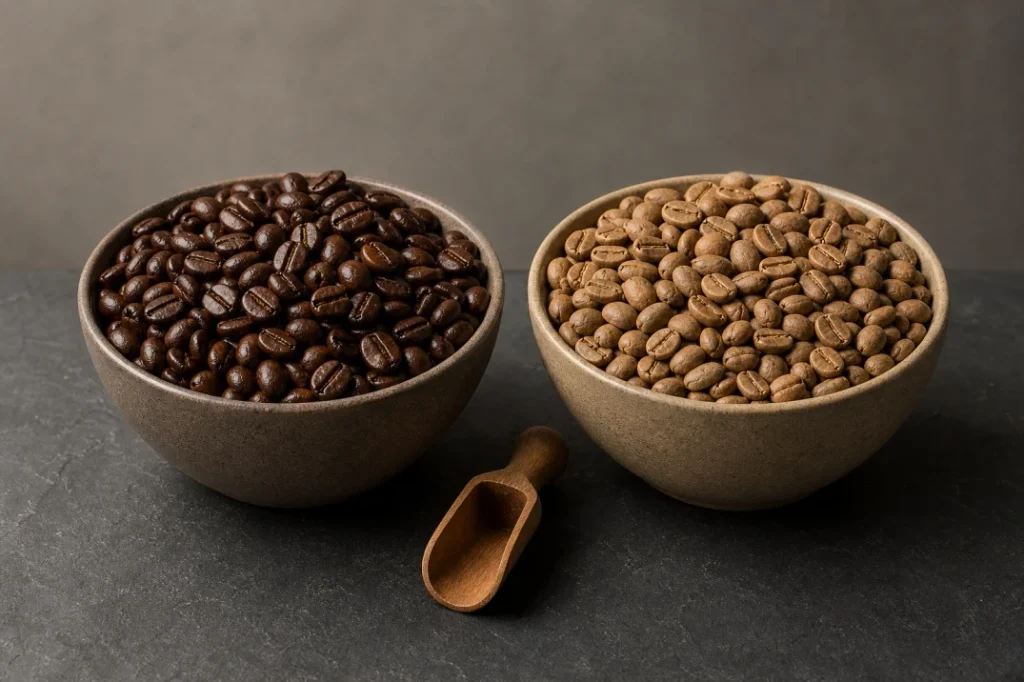
Half caff coffee is exactly what the name suggests: a blend of 50% regular caffeinated coffee and 50% decaffeinated coffee, usually blended at the bean level before roasting, or mixed as ground coffee in a 1-to-1 ratio. There’s no special “half caff” coffee plant, no exotic processing trick, and no mystery ingredient — it’s the same coffee you already drink, just with half the beans’ caffeine removed.
Two common ways half caff gets made:
- Pre-blended bags: Roasters and grocery brands like Folgers, Maxwell House, and Green Mountain combine regular and decaf beans (or grounds) in equal parts, then package them as a single product. Open the bag, brew it like any other coffee, and the caffeine is already cut in half.
- Cafe “half-caf” orders: Many coffee shops will make you a half-caf drink on request — usually one regular shot and one decaf shot in espresso drinks, or a 50/50 split of brewed coffee from their regular and decaf pots.
The appeal is straightforward. Regular coffee gives many people everything they want: flavor, ritual, energy, comfort. But a full cup can also bring jitters, racing thoughts, afternoon crashes, and sleep trouble. Half caff keeps the experience nearly identical while removing the part that doesn’t work for everyone. For people who drink three or four cups a day, switching to half caff can cut 150 to 250 mg of caffeine out of their routine — often without them noticing any difference in taste.
The Math: Where That 50 mg Actually Comes From
If you’re wondering how we arrive at “about 47 mg,” the calculation is refreshingly simple. Caffeine content is essentially additive:
1. Start with the regular half. An 8-ounce cup of regular brewed coffee averages about 95 mg of caffeine (though it can range from 70 to 140 mg depending on the bean and brew).
2. Add the decaf half. Decaf coffee isn’t actually caffeine-free — the decaffeination process removes about 97% of the caffeine, leaving roughly 2 to 5 mg per cup.
3. Average the two. (95 mg + 3 mg) ÷ 2 ≈ 49 mg per 8-ounce cup.
That’s why “half caff” doesn’t mean “half of zero” — it means half of regular plus a trace of caffeine from the decaf side. The math works the same way at the espresso bar. A typical latte uses two espresso shots totaling around 126 mg of caffeine; order it half-caf and you’ll get one regular shot and one decaf shot, bringing the total to roughly 63 mg.
One important caveat: the “half” in half caff is only as precise as the two coffees going into the blend. If your regular coffee is unusually strong (say, 140 mg per cup) and your decaf is unusually low (2 mg), your half caff could come out closer to 70 mg. If you’re brewing a light, mild cup of regular coffee (around 80 mg), your half caff might be closer to 40 mg. The 45-to-50 mg figure is a reliable planning number, but it’s an estimate, not a guarantee.
Why the Exact Number Varies From Cup to Cup
Caffeine is a natural compound, and coffee is a natural product — so no two cups are chemically identical. If you’re tracking your intake closely, these are the factors that move the needle:
- Serving size. The single biggest variable. A 6-ounce diner mug of half caff has roughly 35 mg; a 12-ounce travel mug has about 70 mg. Always compare apples to apples.
- Brew method. Drip and pour-over coffees extract similar amounts of caffeine, but espresso is more concentrated (about 63 mg per single shot), and cold brew — which steeps for 12 to 24 hours — can extract considerably more caffeine per ounce than hot-brewed coffee.
- Bean type. Robusta beans contain roughly twice the caffeine of arabica beans. A half-caff blend made from robusta-heavy beans will land at the high end of the range, while an arabica blend will sit at the low end.
- Roast level. Many people assume dark roast is stronger, but the opposite is often true by weight: light roasts retain slightly more caffeine than dark roasts because the roasting process breaks some of it down. The difference is modest, but it’s real.
- Brand formulas. Commercial half-caff blends aren’t all identical. Folgers Half Caff clocks in around 58 mg per 6 ounces; some specialty roasters blend at 60/40 or even 70/30 ratios and label them “half caff” loosely. When in doubt, check the bag or the brand’s published caffeine data
Half Caff vs. Decaf vs. Regular: Which Should You Choose?
Choosing between regular, half caff, and decaf comes down to one question: how much caffeine do you actually want? Here’s an honest comparison to help you decide:
| Factor | Regular | Half caff | Decaf |
| Caffeine (8 oz cup) | ~95 mg | ~47 mg | ~3 mg |
| Flavor | Full, unchanged | Nearly identical to regular | Very similar; slightly muted |
| Energy lift | Strong, noticeable | Gentle, mild | Negligible |
| Jitters / anxiety risk | Higher | Low | Very low |
| Best for | Morning kick, heavy drinkers | Cutting back gradually, afternoon cups | Evening, caffeine-sensitive people, late-day cravings |
Decaf gets a bad reputation for taste, but modern decaffeination methods — Swiss Water Process, carbon dioxide, and ethyl acetate processing — preserve much more flavor than the harsh solvent-based methods of decades past. Still, if you’re someone who genuinely loves coffee’s flavor and ritual, half caff is the compromise that costs you almost nothing. Most blind taste tests can’t reliably tell a half-caff cup from a regular one, because the blend contains the same beans — just a decaffeinated portion.
Why People Switch to Half Caff (And Who Should Try It)
Half caff is one of the most underrated tools in the coffee world, and it’s not just for people who are “sensitive.” Here are the most common reasons Americans are making the switch:
- Tapering off caffeine without withdrawal headaches. Cold-turkey quitting causes headaches, fatigue, and irritability. Replacing one regular cup with half caff each week lets you step down gradually and comfortably.
- Protecting sleep. Caffeine has a half-life of about 5 to 6 hours, meaning half of what you drink at 3 p.m. is still in your system at 8 or 9 p.m. Switching to half caff for afternoon and evening cups keeps the taste without keeping you wired.
- Managing anxiety and jitters. Caffeine can amplify anxiety, raise heart rate, and trigger that shaky feeling. Half caff delivers a smooth, subtle lift that many anxious coffee lovers tolerate much better.
- Pregnancy and breastfeeding. The American College of Obstetricians and Gynecologists (ACOG) considers up to 200 mg of caffeine per day safe during pregnancy. A cup of half caff at roughly 47 mg fits comfortably under that limit — though you should always confirm with your own doctor, since guidance varies by individual.
- Medication interactions and medical conditions. Some medications, heart conditions, and sleep disorders come with caffeine restrictions. Half caff lets people stay within their limits without giving up coffee entirely.
- Saving the “real” cups for when they matter. A common strategy: drink half caff all day, and save your one or two full-caffeine cups for the morning or before a workout, where the energy boost actually helps.
None of this means half caff is “coffee for people who can’t handle coffee.” It’s a practical, grown-up way to manage a stimulant you enjoy — the same way a beer drinker might reach for a light beer or an occasional non-alcoholic option.
How to Order or Make Half Caff Coffee
Getting half caff is easy whether you’re at a cafe or in your own kitchen.
At the coffee shop: Just ask for “half caf.” At most shops, a half-caf espresso drink means one regular shot and one decaf shot — so a tall (12 oz) half-caf latte ends up around 63 mg instead of 126 mg. For drip coffee, ask if they’ll blend regular and decaf pots. Some shops charge a small fee for the extra decaf shot; a few do it free. It never hurts to ask, and specialty cafes are almost always happy to oblige.
At home, two simple methods:
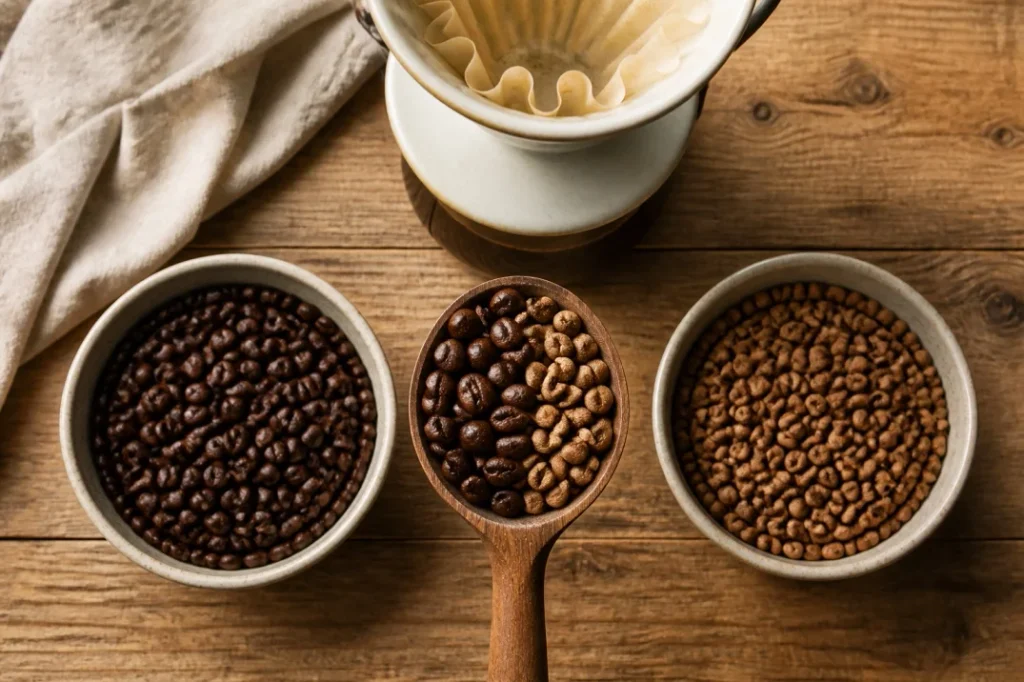
- The two-bag method. Buy a bag of your favorite regular beans and a bag of decaf from the same roaster (this keeps flavor consistent), then blend them 50/50 in your grinder, or scoop half of each into the filter. This gives you total control — you can dial the ratio to 60/40 or 70/30 if you want a little more kick.
- Pre-blended half caff. Brands like Folgers Half Caff, Maxwell House Half Caff, Green Mountain Half Caff, and dozens of specialty roasters sell ready-to-brew half caff. It’s the zero-effort option: same scoop, same brew time, half the caffeine.
A few practical tips: blend whole beans before grinding for the most even distribution, store decaf and regular in separate airtight containers if you’re using the two-bag method, and remember that half caff brews exactly like regular coffee — no special grind size, water temperature, or brewing time required.
Is Half Caff Safe? How It Fits Into the FDA’s 400 mg Limit
The FDA has cited 400 milligrams of caffeine per day as a safe limit for most healthy adults — roughly the amount in four regular cups of brewed coffee. Here’s where half caff fits into that picture:
- A full day of half caff: Six 8-ounce cups of half caff (about 285 mg) still stays under the FDA’s 400 mg guideline.
- Compared with other drinks: A 12-ounce cola has about 34 mg, an 8-ounce cup of black tea around 47 mg, and energy drinks typically range from 80 to 200 mg or more. Half caff’s ~47 mg per cup actually puts it in the same league as black tea.
- Caffeine sensitivity is individual. Some people feel effects from 50 mg; others can handle 400 mg without blinking. Your genetics, body weight, medications, and tolerance all play a role. The FDA limit is a general guideline, not a personal prescription — if you feel jittery, anxious, or sleepless, your body is telling you to cut back, and half caff is the gentlest way to do it.
It’s also worth noting what half caff is not: it is not a caffeine-free beverage. If you’re strictly avoiding caffeine — for medical reasons, during a doctor-ordered detox, or after 6 p.m. for deep sleep — choose decaf or a caffeine-free herbal alternative instead. If you just want less caffeine, half caff is your drink.
FAQ: Half Caff Coffee Caffeine Questions
Is half caff coffee really half the caffeine of regular coffee?
Yes — roughly. An 8-ounce cup of half caff averages about 45 to 50 mg of caffeine, compared with about 95 mg in regular coffee. Because decaf beans retain a small amount of caffeine (2 to 5 mg), the math lands a touch above exactly half, but “half” is an accurate practical description.
Does half caff coffee have any caffeine at all?
Yes. Half caff typically delivers about 47 mg per 8-ounce cup — roughly half the caffeine of regular coffee. It’s a substantial reduction, not caffeine elimination.
Will half caff coffee keep me awake?
It depends on your sensitivity and when you drink it. A 47 mg cup is about the same caffeine as a cup of black tea, so for most people it’s gentle enough for an afternoon cup but not ideal right before bed. If you’re very sensitive to caffeine, decaf (2 to 5 mg) is the safer evening choice.
Is half caff better than decaf for cutting back on caffeine?
For most people, yes. Half caff lets you reduce gradually with barely any change in flavor or ritual, which makes it far easier to stick with than jumping straight to decaf. Decaf is the better endpoint if your goal is to eliminate caffeine entirely.
Can I drink half caff coffee while pregnant?
ACOG considers up to 200 mg of caffeine per day safe during pregnancy, and a single cup of half caff (about 47 mg) fits well under that threshold. That said, every pregnancy is different — check with your healthcare provider before making caffeine decisions.
Does half caff taste different from regular coffee?
In blind taste tests, most people can’t reliably tell the difference. Because half caff is made from the same beans as regular coffee — just with a decaffeinated portion — the flavor profile is nearly identical, especially in darker roasts where the roast character dominates.
Is half caff more expensive than regular coffee?
Slightly, in some cases. Pre-blended half caff usually costs the same as regular supermarket coffee, but decaf beans tend to cost a bit more at specialty roasters, so a cafe may charge extra for a decaf shot. At home, mixing your own regular and decaf averages out to roughly the same cost per cup.
The Bottom Line
Half caff coffee is the quiet workhorse of the coffee world: roughly 45 to 50 mg of caffeine per 8-ounce cup — about half of regular, but a real amount that still gives you the ritual, the flavor, and a gentle lift. Whether you’re cutting back for sleep, managing anxiety, reducing your daily intake, or just want to enjoy coffee later in the day without consequences, half caff delivers nearly everything regular coffee offers with a fraction of the stimulation.
The takeaway is simple. Order it at your favorite cafe (“half caf, please”), grab a pre-blended bag from the grocery store, or blend your own 50/50 at home. Half the caffeine, almost none of the compromise — that’s a trade worth making.
Related Articles : How Many Cups of Coffee in 12 oz Bag
2 Comments
[…] Related Article : How Much Caffeine Is in Half Caff Coffee? […]
[…] Related Article : How Much Caffeine Is in Half Caff Coffee? […]