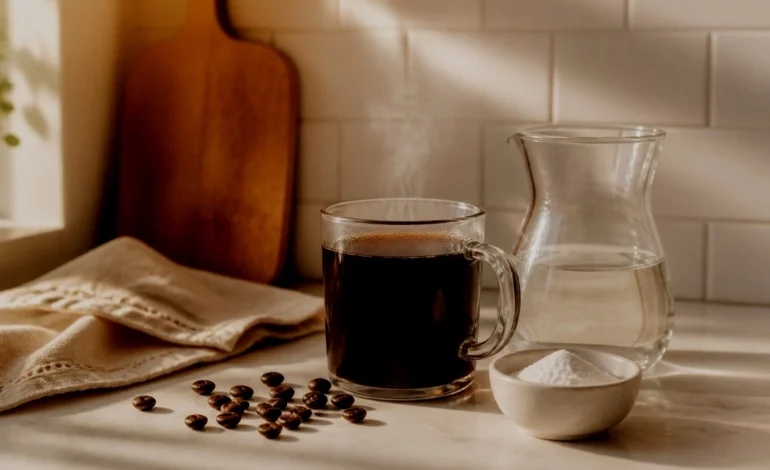
You have probably stood in the water aisle and looked at a big jug of distilled water, wondering if it would make your coffee taste cleaner. It sounds logical. Distilled water is pure, pure sounds better, and better water should make a better cup.
Here is the surprising part: distilled water is safe, it heats up just fine, and it will brew coffee. But it usually makes your coffee taste flat, thin, and a little lifeless. It can also cause headaches with some coffee makers.
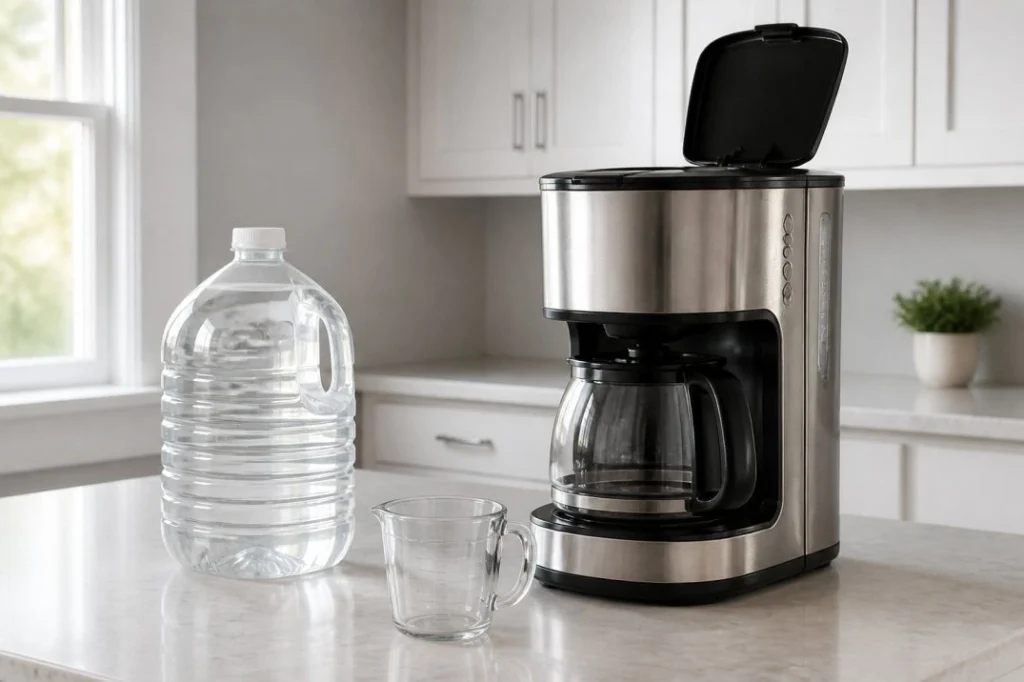
This guide explains in Simple English what distilled water does to your coffee, when it is a smart choice, when it is a bad idea, and the easy tricks that turn a plain jug of distilled water into excellent brewing water.
Quick Answer: Can You Use Distilled Water to Make Coffee?
Yes, you can use distilled water to make coffee. It is safe, it will boil, and it will give you a dark drink that looks like coffee. The catch is that distilled water has almost no minerals left in it, and those minerals are what pull flavor out of your coffee grounds and give the drink its body and sweetness.
So the honest answer looks like this:
- You can brew with it, but you probably should not brew with 100 percent distilled water.
- If distilled water is all you have, add minerals back first. It takes about 30 seconds.
- In a drip maker or pour-over, distilled water is a taste problem, not a safety problem.
- In espresso machines and pod machines, check the manual first. Some makers say do not use it at all.
What Distilled Water Really Is?
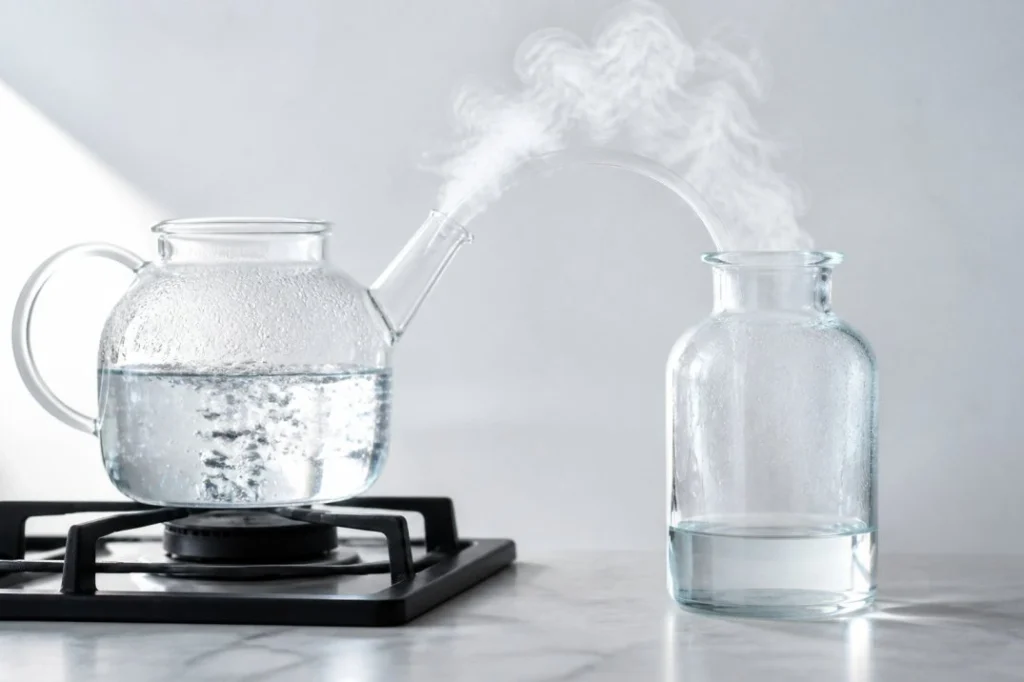
Distilled water is made by boiling water into steam and then cooling that steam back into liquid. Steam leaves minerals, salts, and other solids behind, so what drips into the collection jar is almost nothing but water. That is why distilled water has a total dissolved solids (TDS) level close to zero.
That is wonderful for irons, humidifiers, and car batteries, because minerals are what create crusty buildup in those machines. It is also exactly why distilled water tastes so plain. There is nothing in it to taste.
It helps to know how the water choices on the shelf compare:
- Distilled water: boiled into steam, then condensed. Minerals are removed.
- Purified water: filtered or treated to remove contaminants. Minerals may or may not stay in.
- Spring water: bottled from a natural spring. Minerals stay in.
- Tap water: whatever comes out of your sink. Mineral levels vary a lot from city to city.
- Reverse osmosis water: pushed through a fine membrane. Also very low in minerals.
Two of those, distilled and Reverse Osmosis, are the ones that create the flat coffee problem.
Why Coffee Needs Minerals in the Water
A cup of coffee is about 98 percent water. So water is not a background ingredient. It is the main ingredient, and it does most of the work.
Water acts as a solvent. As hot water moves through the coffee grounds, it dissolves sugars, acids, and aromatic oils. Two groups of minerals in that water change how well it does that job.
1. Hardness minerals, mainly calcium and magnesium. These are the flavor helpers. In a well-known 2014 study published in the Journal of Agricultural and Food Chemistry, chemists Christopher Hendon and Maxwell Colonna-Dashwood found that magnesium and calcium in water help pull certain flavor compounds out of coffee. Magnesium is linked to the bright, fruity, and sweet notes people love in lighter roasts.
2. Alkalinity, mostly bicarbonate. This is the balance knob. Alkalinity buffers acid. Too little and your coffee can taste sharp and sour. Too much and your coffee tastes dull and chalky, as if the flavor has been wiped away.
The Specialty Coffee Association, the main trade group for the specialty coffee industry, publishes water guidelines for brewing. Its target ranges are roughly:
| What It Measures | Target Range for Brewing |
| Total dissolved solids (TDS) | 75 to 250 ppm |
| Calcium hardness | 50 to 175 ppm (as CaCO3) |
| Total alkalinity | 40 to 70 ppm (as CaCO3) |
| pH | 6.0 to 8.0 |
Distilled water scores zero on hardness, zero on alkalinity, and near zero on TDS. It sits far outside the range on every single line. That one table explains most of what happens next.
What Happens When You Brew Coffee With Distilled Water
If you brew a normal batch of coffee with distilled water, here is what most people notice:
- The cup tastes flat and empty. The flavors are technically there, but they feel quiet, like a song playing at low volume.
- The body feels thin. Coffee brewed with mineral-rich water has a rounder, heavier feel on the tongue. Distilled water gives you something closer to brown water.
- Sweetness fades. You may reach for more sugar than usual, which is a strange result for water that is supposed to be purer.
- The finish can turn harsh. With no alkalinity to buffer the coffee’s natural acids, the aftertaste can feel sharp or drying instead of clean
- The brew can be uneven. Very low mineral water does not dissolve coffee solids as evenly, so one sip tastes weak and the next tastes odd.
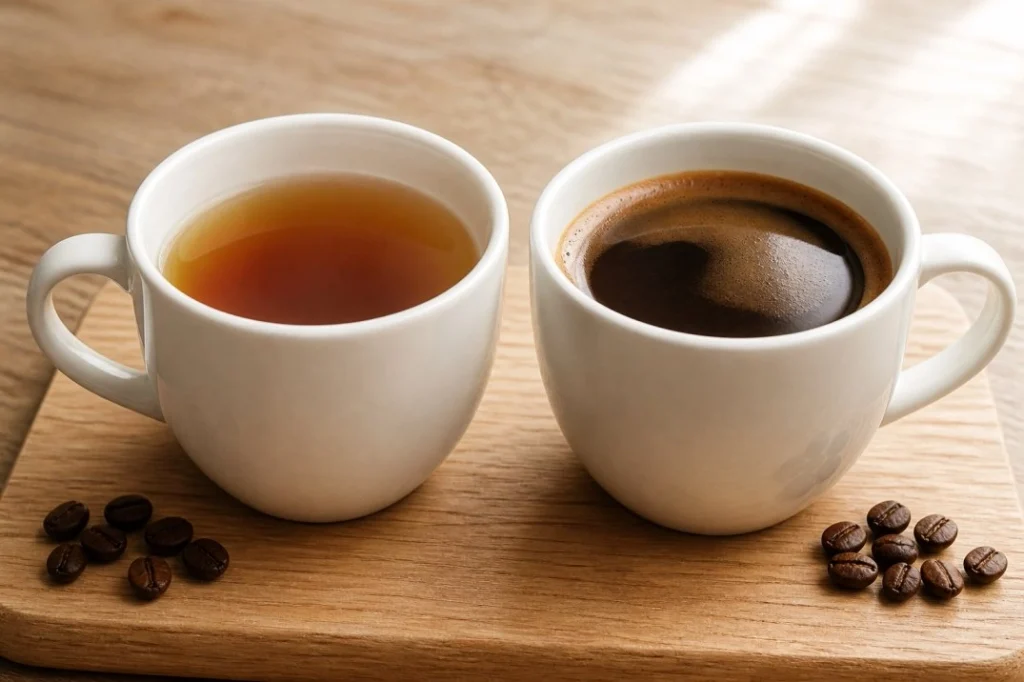
Here is the important part: distilled water does not ruin your beans, and it is not dangerous. Coffee made with distilled water is safe to drink. It just does not taste very good. You are not doing anything wrong with your grind or your technique. The water is simply missing the tools it needs to do its job well.
If you have been blaming your beans, your grinder, or your own brewing skills for a dull cup, and you have been using distilled water the whole time, you just found your answer.
Is Distilled Water Safe to Drink?
This is a common worry, so let us clear it up. Yes, bottled distilled water is safe to drink. In the United States, the FDA regulates distilled water as a type of bottled water, and it has to meet the same safety standards as other bottled water.
There is one long-term detail worth knowing. Distilled water has no calcium or magnesium, and those minerals are part of what many people get from their drinking water. The World Health Organization has published a report on nutrients in drinking water that looks at what happens when people drink water with very low mineral content for a long time. The concern is not that distilled water is toxic. The concern is that it adds nothing, so your mineral intake has to come entirely from food.
For most healthy people who eat a normal diet, drinking distilled water now and then is not a problem. For coffee lovers, the bigger issue is taste, not safety. And if you do not enjoy the taste of plain distilled water, that is a small clue about how it will treat your coffee.
Will Distilled Water Hurt Your Coffee Maker?
Here the answer splits, because the machine matters as much as the water.
Start with the good news. Distilled water cannot leave limescale. Scale is made of calcium and magnesium, and distilled water has almost none of either. If hard water is the reason you descale your machine every month, distilled water sounds like a dream.
The catch is that zero minerals can cause other issues. Coffee equipment experts warn that water with very little dissolved content can be more aggressive toward metal parts, especially inside hot boilers under pressure. Low mineral water can also change how heat moves through a boiler or heating element, which can put extra stress on pumps and seals over time. Some espresso machine makers also note that using the wrong water may affect your warranty. You can read a detailed breakdown from 1st-line Equipment, a major espresso dealer, and a separate explanation from Espresso Outlet on why this matters in real machines.
There is also an everyday problem that surprises people. Some machines use electrical conductivity to sense how much water is in the tank. Distilled water barely conducts electricity, so the machine may think the tank is empty, refuse to start, or throw a fill water error even when the tank is full. That is not damage. It is just confused electronics.
Pod machines are the clearest example of a maker saying no. Keurig’s own support instructions tell owners to fill the reservoir with fresh water and not to use distilled water. When a company puts that line in its how-to guide, it is worth following for that machine.
A simple way to think about it:
- A basic drip coffee maker: distilled water will not wreck it, but the coffee will taste flat.
- Pour-over, French press, AeroPress, and cold brew: completely safe. Flavor is the only downside.
- Espresso machines with boilers and sensors: follow the manual. Many say no.
- Pod and single-serve machines: check the manual. At least one major brand says no.
Rule of thumb: any machine with a water tank, a pump, and electronics is a machine that wants mineral water, not empty water.
3 Easy Ways to Fix Distilled Water for Coffee
Here is the fun part. Distilled water is not the enemy. It is actually a great blank canvas. Add a little of the right minerals and you get full control over how your coffee tastes. Try one of these three options.
1. Use a coffee mineral packet. This is the easiest route. Companies such as Third Wave Water sell small packets of magnesium, calcium, and bicarbonate blended for brewing. You pour one into a gallon of distilled water, shake it, and brew. You end up with water that lands in the range coffee people consider ideal, and you never have to think about it again.
2. Blend it with tap water. If your tap water tastes fine but runs a little hard, mix it half and half with distilled water. This cuts the mineral level in half without stripping everything out. It is free, and it works well for most people.
3. Add a small pinch of minerals yourself. For one gallon of distilled water, start with about 1/8 teaspoon of food-grade Epsom salt (magnesium sulfate) and a small pinch of baking soda, roughly 1/16 teaspoon. Stir until fully dissolved, then taste. These are rough starting amounts, not lab numbers, so adjust slowly. A little goes a long way, and more is not better.
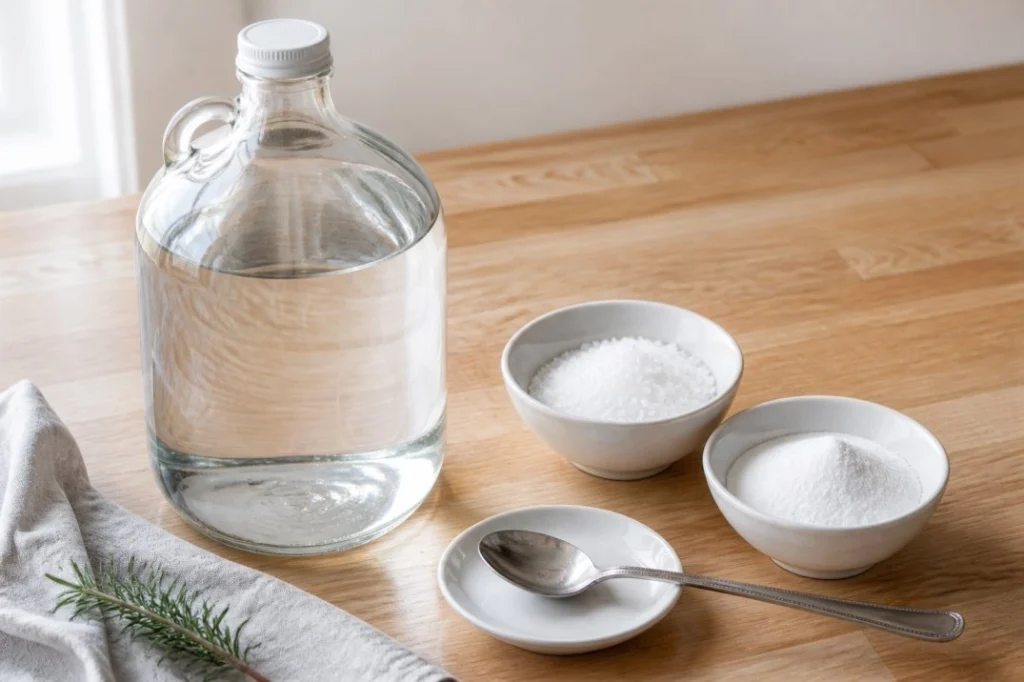
A quick comparison of the three methods:
| Method | Effort | Best For |
| Coffee mineral packet | Very low | Anyone who wants a repeatable, accurate result |
| Half distilled, half tap | Very low | People with decent but hard tap water |
| DIY pinch of minerals | Low | Tinkerers who like to taste and adjust |
One warning: a mineral blend made for filter coffee is not automatically right for an espresso boiler. If you own an espresso machine, follow the water specs in its manual first, then choose your minerals.
How to Brew a Better Cup With Distilled Water: 6 Easy Steps
1. Heat your water to 195 to 205 degrees Fahrenheit. That is the sweet spot for most coffee. Water straight off a rolling boil can scorch the grounds and add bitterness.
2. Add your minerals to the water first, not after brewing. Stir for 20 to 30 seconds, until you cannot see any grains left at the bottom.
3. Measure your coffee. A good starting point is 2 tablespoons of ground coffee per 6 ounces of water, or a 1 to 16 ratio by weight if you use a scale.
4. Grind fresh, and grind for your brewer. Medium for drip, medium-coarse for French press, fine for espresso. Freshly ground coffee simply has more flavor to give.
5. Taste before you change anything else. If the cup is thin and sour, your grind may be too coarse. If it is bitter and dry, your grind may be too fine. Fix the grind before you blame the water.
6. Write down what you did. Dose, water, minerals, and brew time. The next great cup is much easier to repeat when you wrote down the recipe.
Try This Simple Taste Test at Home
You do not have to take anyone’s word for it. This test takes about 15 minutes and two cups.
1. Brew two cups using the same beans, the same grind, the same amount of coffee, and the same brew time.
2. Use distilled water for one cup and your normal filtered tap water for the other.
3. Let both cool for two minutes, then sip them side by side. If you want to be fair, have someone else label the cups so you do not know which is which.
4. Pay attention to four things: smell, body, sweetness, and the finish.
In my own side-by-side test, the distilled cup looked perfectly normal but tasted like a faded version of the other one. The aroma was weaker, the body was thinner, and the finish disappeared quickly. The mineral cup tasted sweeter with no sugar added. It was one of the clearest coffee experiments I have run, and it changed how I think about the water I use every morning.
Try it once. After you taste the difference for yourself, this question stops being a mystery.
Which Water Should You Actually Use?
For most American kitchens, the answer is simple:
- Filtered tap water is the best everyday choice. It keeps the useful minerals and removes chlorine and odd flavors. If your tap water already tastes good, it will probably make good coffee.
- Spring water is a fine backup. It usually has a balanced mineral level, which is why it brews well.
- Distilled or reverse osmosis water works great once you add minerals back.
- Distilled water on its own is the weakest choice for flavor.
- Very hard tap water needs a filter or a mix with distilled water. Hard water mutes flavors and builds scale.
One note: if your tap water smells strongly of chlorine or leaves white crust on your faucets, do not pour it straight into your coffee maker. Filter it, or mix it with distilled water to soften it.
5 Myths About Distilled Water and Coffee
Myth 1: Pure water makes the purest coffee. Purity helps irons and humidifiers, not flavor. Coffee needs a little mineral content to taste like coffee.
Myth 2: Distilled water is the best way to protect your machine. It does stop limescale, but it can create other problems, including corrosion risk and water sensor errors. No scale does not automatically mean good for the machine.
Myth 3: Distilled water will destroy your coffee maker instantly. Not true for most simple brewers. It is more accurate to say that zero mineral water is not what many machines were built to handle, so check the manual.
Myth 4: You need expensive bottled water to make great coffee. No. A basic carbon filter, a half-and-half blend, or a small mineral packet gets you most of the way there.
Myth 5: Everyone can taste distilled water on its own. Most people cannot tell plain distilled water from plain filtered water. The same people can absolutely taste the difference in coffee. That is how much water matters in the cup.
Frequently Asked Questions
Can you use distilled water in a drip coffee maker?
Yes, and it will not damage a simple drip machine. But the coffee will taste flat and thin. If you use distilled water, add coffee minerals first, or mix it half and half with filtered tap water.
Does distilled water change the caffeine in coffee?
No. Caffeine dissolves in water whether or not minerals are present. Distilled water may extract slightly less evenly overall, but your cup will still have about the same amount of caffeine.
Does distilled water make coffee taste bitter?
It usually makes coffee taste flat, thin, and sometimes sour or harsh. Bitterness is more often a sign of too fine a grind, water that is too hot, or too long a brew time.
Can you use distilled water in a Keurig?
Keurig’s own support guides tell users to fill the reservoir with fresh water and not to use distilled water. Follow the manual for your specific model.
How do I add minerals to distilled water for coffee?
Use a mineral packet made for brewing, mix in filtered tap water, or add a small pinch of food-grade Epsom salt and baking soda per gallon and adjust to taste.
Is bottled water better than distilled water for coffee?
Usually yes. Spring water and mineral water keep some minerals and brew well. Distilled water is the one bottled option that removes everything, so it needs help before it goes into your brewer.
Final Thoughts
Can you use distilled water to make coffee? Yes, and now you know exactly what happens when you do.
Distilled water is safe, it boils, and it brews. But it strips out the calcium and magnesium that pull flavor from your grounds and give your coffee body and sweetness. The result is a cup that looks right and tastes like a shadow of what it should be. Add those minerals back, and distilled water becomes one of the best tools you have, because you can tune it exactly the way you like.
So keep the jug. Just do not brew with it alone. Warm it up, add a little mineral love, and give your coffee the water it deserves. Happy Brewing!
Related Article : How to Prepare Coffee Using a French Press