Does Coffee Lose Caffeine Over Time? The Honest Answer for Every Cup
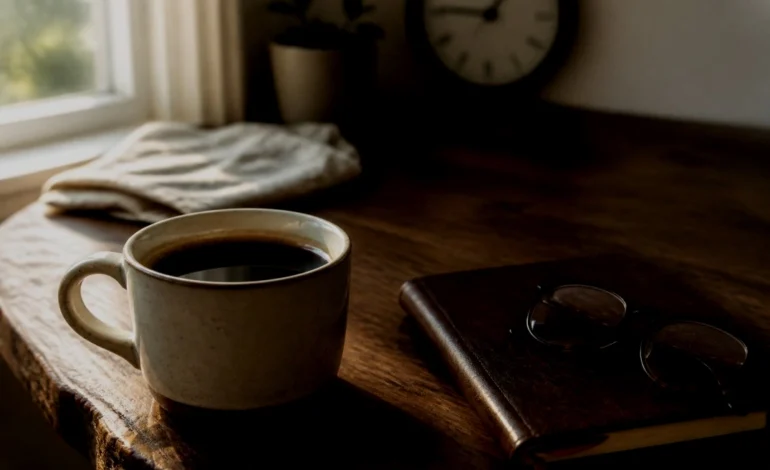
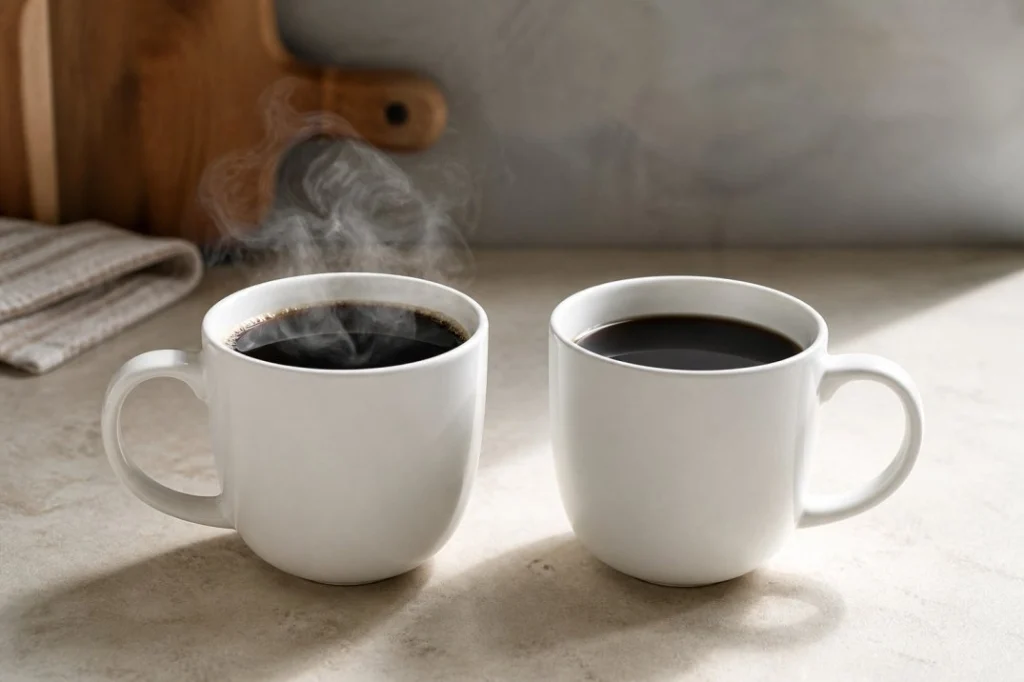
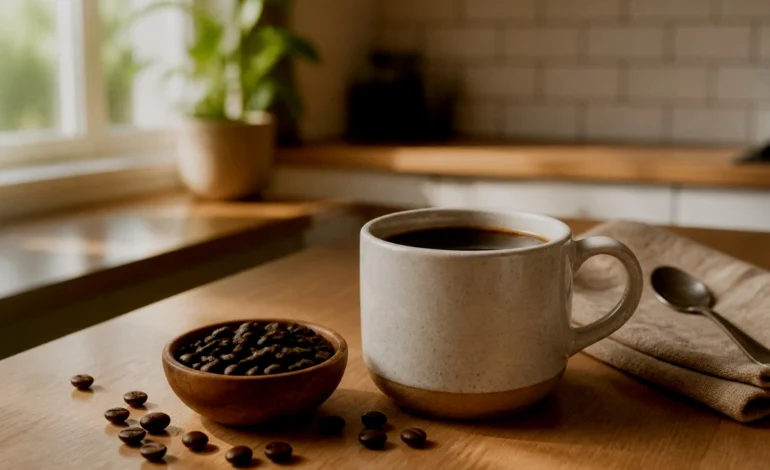
It is 7:40 on a Tuesday morning. You pour a full mug of coffee, take two sips, get pulled into a work call, and forget about it. At 4 p.m. you find the mug sitting exactly where you left it. The coffee is cold, it looks flat, and it tastes like almost nothing.
So you pour it out and wonder if it is even worth drinking. You also wonder something bigger: Does Coffee Lose Caffeine Over Time while it sat there all day?
This is one of the most common questions people ask about coffee, and the answer is surprisingly simple once you know how caffeine behaves. The short version: time does not steal the caffeine from your coffee. It steals the flavor. Those are two different things, and understanding the difference will change how you store coffee, how you shop for it, and how you feel about that forgotten mug on your desk.
Let’s walk through what really happens, one step at a time.
Does Coffee Lose Caffeine Over Time? Straight Answer
Almost none — not in the ways most people worry about.
A cup of coffee left on your desk overnight still has basically the same caffeine it had when you poured it. Coffee beans sitting in your pantry for three months still hold their caffeine too. Caffeine does not leave with the steam, and it does not break down at normal kitchen temperatures.
There is one real exception: raw green coffee beans stored for many months before roasting. In a 12-month study, those lost about 40% of their caffeine. But that happens in warehouses and shipping containers, not in your kitchen.
For every cup you actually drink, the caffeine stays. What fades is the taste.
The Short Answer at a Glance
Different forms of coffee age in very different ways. Here is the whole picture in one table.
| What you have | Does caffeine drop over time? | What actually changes |
| A brewed cup on your desk | No | Flavor, aroma, and warmth |
| Brewed coffee in the fridge | No | Some flavor; texture flattens |
| Roasted whole beans in your pantry | No, not in any amount you would notice | Aroma and taste fade first |
| Ground coffee in an open bag | No | It goes stale and flat much faster |
| Instant coffee in a jar | No | It clumps and loses aroma |
| Green (unroasted) beans stored for 12 months | Yes — about 40% in one study | Caffeine and flavor compounds both decline |
Notice the pattern. Everything on that list that you would actually brew and drink holds on to its caffeine. The one real drop happened to beans that were never roasted and sat in storage for a full year.
Why Caffeine Is Such a Stubborn Molecule
To understand why coffee keeps its caffeine, it helps to know one fact about caffeine itself: it is a very tough little molecule that hates to turn into a gas.
The International Chemical Safety Card for caffeine, published by the World Health Organization and the International Labour Organization, lists its melting point at 235°C. That is about 455°F. It also notes that evaporation at room temperature is negligible. In Simple words, caffeine does not float away into the air the way water does.
This explains a lot of everyday coffee puzzles:
- Steam is mostly water. When you see steam rising off a fresh cup, that is water leaving — not caffeine. As water leaves, the caffeine that is left behind becomes slightly more concentrated in what remains.
- Hot brewing cannot destroy it. Pour-over, drip, French press, and espresso all use water well below the melting point of caffeine. Even a boil does not come close.
- Reheating cannot destroy it either. A microwave or a stovetop reheat warms coffee to around 150°F to 200°F. That is nowhere near hot enough to break caffeine down.
So when coffee sits out, you are watching water leave and flavors change. The caffeine is standing still.
Does Brewed Coffee Lose Caffeine as It Sits on Your Desk?
No. If you brew an 8-ounce cup this morning and drink it tonight, you are still getting roughly the same caffeine you would have gotten at breakfast. Harvard’s T.H. Chan School of Public Health puts a standard 8-ounce cup of brewed coffee at about 95 milligrams of caffeine, and that number does not quietly shrink while the cup cools.
What does change is everything around the caffeine:
- Aroma escapes. The smell compounds in coffee are light and fragile. They leave the liquid and drift into the room within minutes. Since most of what we call “taste” is actually smell, coffee tastes dull long before anything chemically important happens.
- Oxygen does its slow work. Oxygen in the air reacts with the oils in the coffee. This is the same process that makes old cooking oil smell off. It does not touch caffeine, but it flattens flavor fast.
- The temperature drops. Cold coffee simply tastes less sweet and less bright. Your tongue notices sweetness more when a drink is warm.
- The texture changes. Coffee that has been sitting loses some body. It feels thinner, and it seems weaker — even when it is not.
That last point is the reason this question exists at all. Old coffee feels weak, so people assume it is weak. Your tongue is telling you the truth about flavor, not about caffeine.
A Quick Word About Safety, Because this Part Matters
Taste is one thing. Safety is another. The USDA Food Safety and Inspection Service recommends refrigerating perishable foods within 2 hours, and throwing away anything left at room temperature longer than that — or longer than 1 hour if the room is above 90°F.
Plain black coffee is not a perfect home for bacteria the way milk is, but add cream, milk, or a sweetener and you have created a drink that spoils. If your coffee has dairy in it and it sat on the counter all afternoon, that cup belongs in the sink. It is not a caffeine question — it is a food safety question.
Does Coffee in the Fridge Lose Caffeine Overnight?
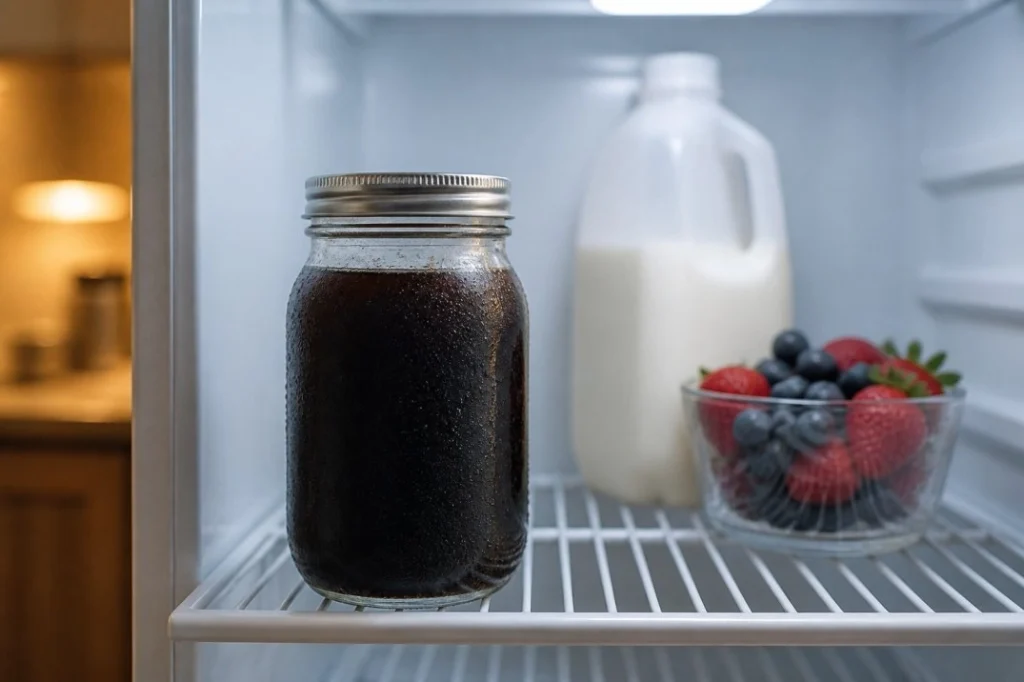
No. Cold storage does not remove caffeine either. If you brew a batch of iced coffee or cold brew and leave it in the refrigerator overnight, the caffeine is still there in the morning.
Refrigeration mostly slows down the changes that hurt flavor. It slows oxidation, and it keeps bacteria from growing. That is why coffee tastes noticeably better after one night in the fridge than after one afternoon on the counter — even though both cups hold the same caffeine.
Here is the practical version:
- Plain black coffee or cold brew: Covered in the fridge, it is at its best within a few days. Flavor is the limit, not caffeine.
- Coffee with milk or cream: Treat it like any dairy drink and use it within a day or two.
- Reheating chilled coffee: Fine for the caffeine, and usually disappointing for the taste. Heat brings back some of the off-flavors that cold storage was hiding.
Do Coffee Beans and Grounds Lose Caffeine Over Time?
This is where the answer gets more interesting, because there are two different “over time” stories here — and only one of them involves real caffeine loss.
Roasted beans in your kitchen: flavor fades, Caffeine does not
A bag of roasted coffee beans is a small package of fragile aromas. The National Coffee Association notes that roasted beans keep their peak freshness for about 1 to 3 weeks at room temperature, around 2 weeks refrigerated, and 3 to 4 months frozen. Ground coffee fades even faster — about 1 to 2 weeks at room temperature.
That timeline describes flavor, not caffeine. Roasted coffee does not lose caffeine in any meaningful amount over months in a pantry. It just stops tasting like itself. The beans go flat, the aroma disappears, and the coffee you brew tastes hollow and slightly papery.
You can see that the science backs this up. A 2024 study in Scientific Reports looked at caffeine in brewed coffee across different roast levels and found the differences between light and dark roasts were small and mostly explained by how much coffee you extract — not by caffeine disappearing somewhere along the way.
Green beans in a warehouse: the one place caffeine really drops
Here is the exception worth knowing about. Before coffee is roasted, it exists as a raw, pale, grassy-smelling seed called a green bean. Green beans are shipped and stored for long periods, sometimes a year or more.
A 2022 study published in Scientific Reports followed green coffee through 12 months of controlled storage at different temperatures and in different packaging. The researchers measured the caffeine and found a decrease of roughly 40% compared with the starting levels after a full year, with an average drop of about 20% after just 3 months.
Two details from that study are worth remembering:
- Temperature did not save the caffeine. Cold storage helped flavor, but caffeine fell at every temperature tested. The researchers pointed to the heat stability of caffeine to explain why temperature was not the deciding factor.
- Packaging mattered for flavor, not for caffeine. A follow-up 2023 study on green and roasted coffee storage found that beans stored at 20°C aged fastest and that packaging type shaped aroma and flavor more than anything else.
So if you have ever heard that “coffee loses caffeine over time,” this is almost certainly where that idea comes from. It is true — for unroasted beans sitting in storage for many months. It is not true for the roasted bag in your kitchen, because you will finish it long before a year passes.
Does Reheating or Boiling Coffee Destroy Caffeine?
No, and this is one of the most useful things to know, because it saves people from throwing out perfectly good coffee.
As we saw earlier, caffeine melts at about 455°F. Hot brewing uses water that is very hot but nowhere near that: even a full rolling boil only reaches 212°F. Reheating adds no new chemistry — it just warms the liquid back up.
That means:
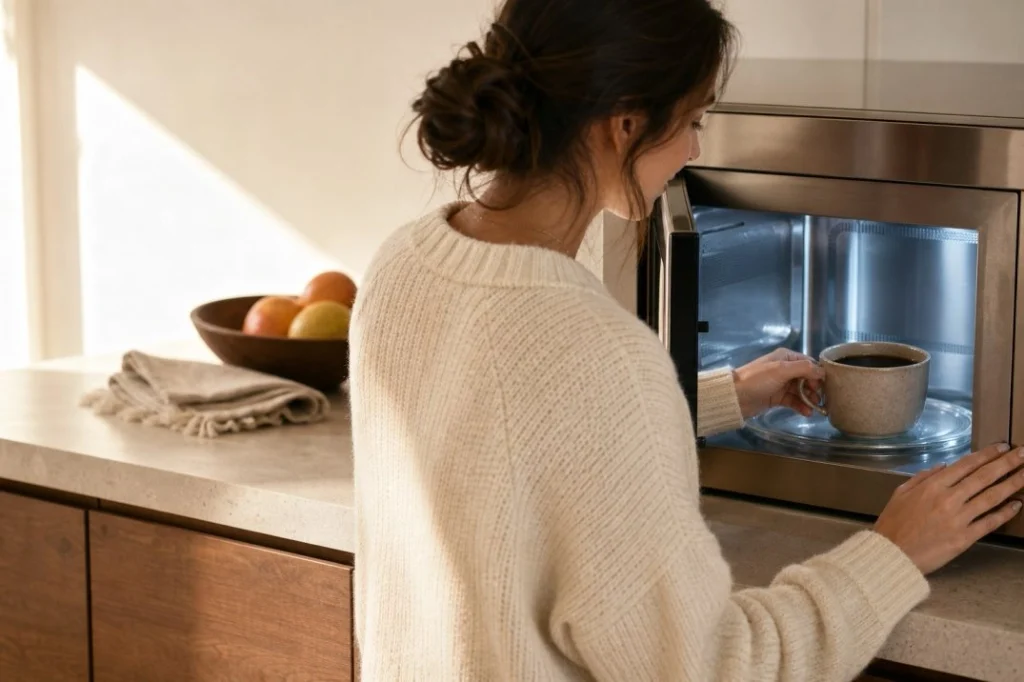
- Microwaving leftover coffee does not remove caffeine.
- Simmering coffee on the stove does not remove caffeine.
- Boiling water poured over grounds does not remove caffeine
What boiling and long reheating do is punish the flavor. Heat pushes off the last of the delicate aroma compounds and can make coffee taste bitter or burnt. So reheat gently, and drink it sooner rather than later. But do not reheat coffee expecting it to lose its kick — it will not.
Does Decaf Coffee Lose Caffeine Over Time?
Decaf does not quietly become caffeine-free as it ages, and it does not become stronger either. Whatever caffeine is in the beans when you buy them is more or less the caffeine you get months later.
That matters because decaf is not caffeine-free in the first place. The FDA states that decaf coffee typically contains 2 to 15 milligrams of caffeine in an 8-ounce cup, compared with roughly 95 milligrams in a regular cup.
So if you are sensitive to caffeine — or your doctor has asked you to cut back — the age of the coffee is not the variable to watch. The brand, the brewing method, and how much you drink are the things that matter.
Then Why Does Old Coffee Feel So Weak?
This is the heart of the question, and the honest answer is that your taste buds and your body are both telling you stories that are true — just not about caffeine.
1. Bitter fades before caffeine does. Fresh coffee has a mix of flavors: bright acidity, sweetness, and body. As coffee sits, the bright notes leave first, and what remains is flat and slightly bitter. That flatness reads as “weak” even though the caffeine is untouched.
2. Expectation shapes taste. If you take a sip expecting a jolt and get a dull, lukewarm mouthful, your brain registers disappointment. Studies on taste consistently show that what we expect changes what we perceive. Old coffee is not just weaker — it tastes weaker, which is a different experience.
3. Your tolerance may have moved. Harvard notes that caffeine stays in the blood for about 1.5 to 9.5 hours, and that regular drinkers build tolerance over time. If the same cup hits differently this week, the cup did not change. Your body did.
4. Timing changes how it lands. A cup on an empty stomach at 7 a.m. feels very different from the same cup after lunch. Food in your stomach slows how quickly caffeine is absorbed.
5. You may be comparing two different cups. A day-old mug was often brewed as a smaller or weaker batch to begin with. Before blaming time, check the ratio. A simple fix — a little more coffee per cup — solves more “weak coffee” complaints than any storage trick.
One more honest note: if you cut back on caffeine suddenly, you may feel tired, headachy, and foggy for a few days. Harvard notes those symptoms are strongest in the first few days and usually ease within about a week. That feeling is withdrawal, not weak coffee.
How to Store Coffee So It Tastes Strong for Longer
Since caffeine takes care of itself, storage is really a flavor project. These habits give you the biggest results for the least effort:
- Buy smaller amounts, more often. Two weeks of coffee bought fresh beats two months of coffee going stale.
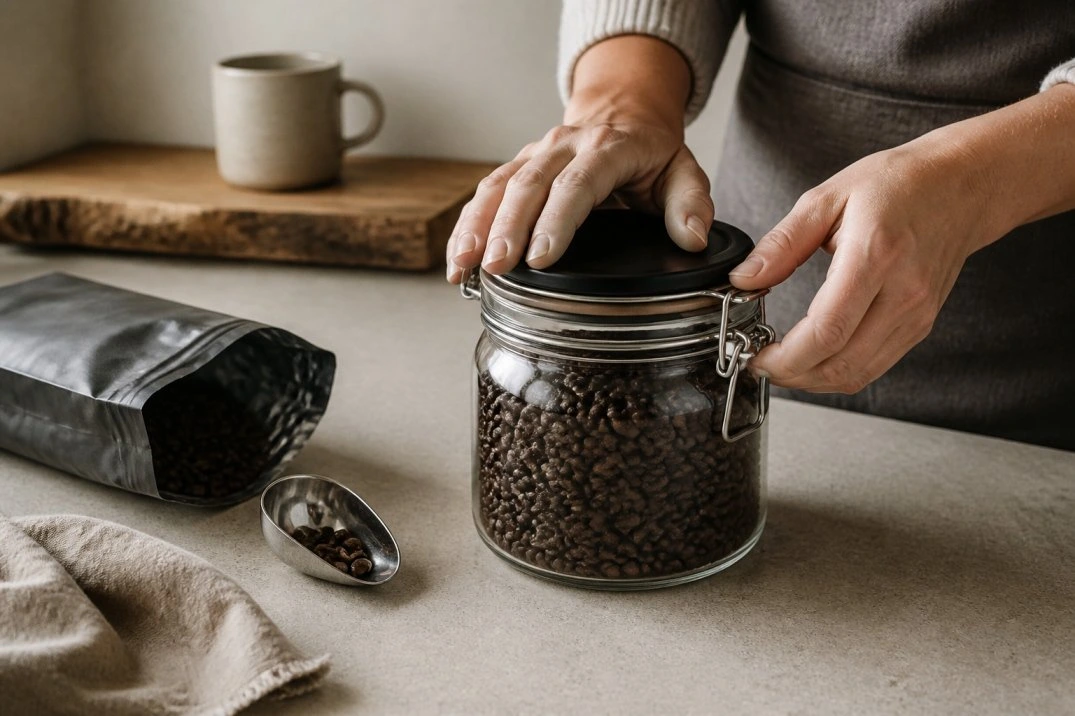
- Move beans into an airtight container. The bag they came in is built for shipping, not for long-term storage.
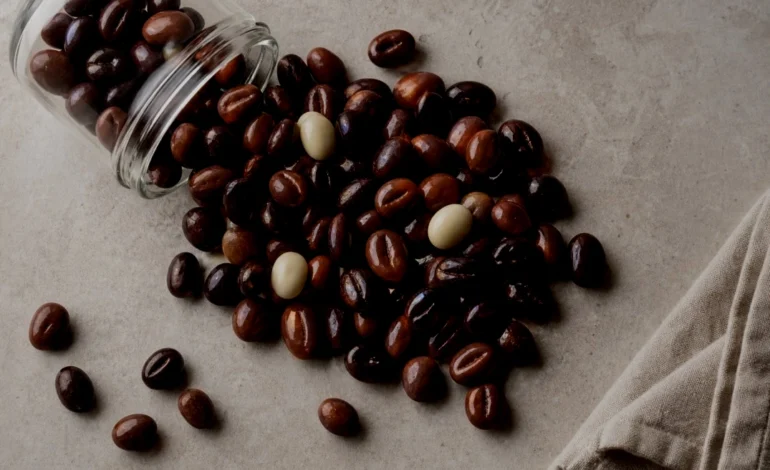
- Choose an opaque container. Light speeds up the reactions that flatten flavor. A clear jar of beans on the counter is decoration, not storage.
- Keep it cool and dark. Avoid the cabinet above the oven or dishwasher, and skip the sunny window sill.
- Grind right before you brew. Whole beans hold their flavor far longer than grounds. If you buy pre-ground, buy smaller bags.
- Freeze for the long haul. For coffee you will not finish in a few weeks, freeze it in an airtight container and take out only what you need for the week. Let it come to room temperature before opening to avoid condensation.
| Storage spot | Whole roasted beans | Ground coffee |
| Room temperature | 1 to 3 weeks | 1 to 2 weeks |
| Refrigerator | About 2 weeks | Not ideal |
| Freezer | 3 to 4 months | 1 to 2 months |
When Should You Actually Throw Coffee Out?
Coffee is more forgiving than most people think. The National Coffee Association notes that roasted coffee does not become unsafe just because it is old — unless it has been exposed to moisture and started growing mold.
Here is a simple way to decide:
- Smells like coffee and looks dry? Brew it. It may taste flat, but it is safe.
- Smells like damp cardboard or the basement, and the grounds clump? That is stale plus moisture. Toss it.
- Any visible mold, musty smell, or fuzzy spots? Throw it out. Do not brew it.
- Liquid coffee with dairy that sat out over 2 hours? Pour it out. That one is a safety rule, not a flavor rule.
- Black coffee in a sealed container in the fridge for a few days? Still fine. Just taste it first.
Frequently Asked Questions
Does coffee lose caffeine if you leave it out overnight?
No. A cup left out overnight keeps essentially all of its caffeine. It will taste stale and it will be cold, and if it contains milk or cream you should throw it away for safety. But the caffeine does not evaporate or break down while the mug sits there.
Does caffeine evaporate when coffee is boiled?
No. Caffeine needs around 455°F to melt and does not readily turn into a gas at room temperature. Boiling water tops out at 212°F. What boiling does remove is aroma, which is why boiled coffee tastes harsh even though its caffeine is intact.
Does reheating coffee remove caffeine?
No. Reheating coffee in a microwave or on the stove warms it to roughly 150°F to 200°F, far below the temperature at which caffeine breaks down. Reheating costs you flavor, not caffeine.
Does old coffee have less caffeine than fresh coffee?
Old roasted coffee has about the same caffeine as fresh roasted coffee. The difference you taste is a loss of aroma and body, not a loss of caffeine. The one exception is raw green coffee beans stored for many months before roasting, which a 2022 study found lost roughly 40% of their caffeine over 12 months.
Does freezing coffee affect the caffeine?
No. Freezing slows the flavor changes that make coffee taste old without touching caffeine. The keys are an airtight container and letting the coffee come to room temperature before you open it, so condensation does not form on the beans.
How long can brewed coffee sit out before it is unsafe?
The USDA recommends refrigerating perishable drinks within 2 hours, or within 1 hour if the room is above 90°F. Plain black coffee is more shelf-stable than coffee with milk or cream, but the same guideline is a sensible rule of thumb.
Final Words
If you came here wondering whether your coffee is getting weaker while it sits, here is the honest answer: it is not losing caffeine, but it is losing everything that makes it worth drinking.
Caffeine is one of the most stable things in your kitchen. It survives roasting, boiling, sitting out, reheating, and a night in the refrigerator. The only situation where coffee truly loses a large share of its caffeine is green coffee sitting in storage for many months before it is ever roasted — a warehouse problem, not a home problem.
So the next time you find a forgotten mug on your desk, you have a few good options. Heat it up and accept that it will taste flat. Pour it over ice and enjoy it cold. Or dump it out — not because the caffeine is gone, but because you deserve a better cup. Then take two minutes to move your beans into an airtight container and buy a little less coffee, a little more often. Your coffee will taste stronger, and the caffeine will take care of itself, just like it always has.
About This Guide
Every number in this article is traced to a named, checkable source. Nothing here is guesswork or folklore.
Caffeine levels in coffee and decaf, and daily intake guidance: the U.S. Food and Drug Administration and the Harvard T.H. Chan School of Public Health.
Coffee storage, freshness windows, and shelf life: the National Coffee Association
Caffeine loss in green coffee during long-term storage: Scientific Reports, 2022
Green and roasted coffee storage conditions: Scientific Reports, 2023.
Food safety time limits for drinks left out: the USDA Food Safety and Inspection Service
A note on the practical advice: the storage and reheating recommendations in this article reflect hands-on home testing — the same bag of beans split between an airtight container and an open bag, the same cold brew tasted on day one and day four — checked against the published research above.
Related Article : Do Coffee Beans Have Caffeine?
1 Comment
[…] Related Article: Does Coffee Lose Caffeine Over Time? […]