How Many Times Can You Use a Coffee Pod? The Honest Answer
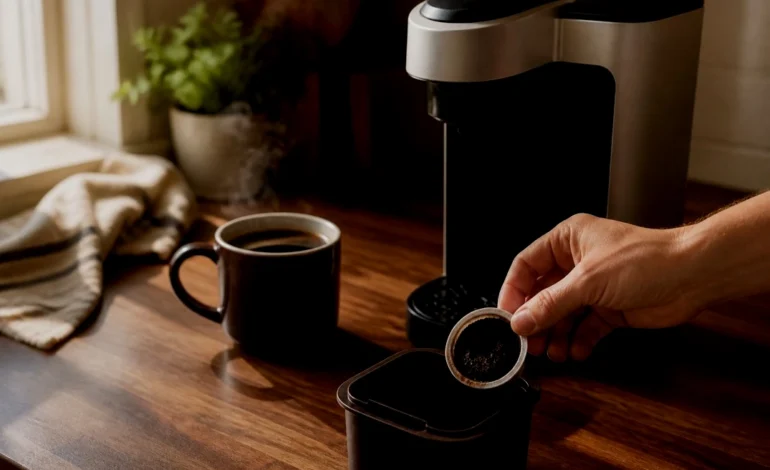
If you drink single-serve coffee every morning, you have probably stood at the counter with a damp, used pod in your hand and thought: this thing still smells like coffee. Can I get one more cup out of it?
That is a fair question. Pods are not cheap, and throwing one away after one cup can feel wasteful. Millions of American kitchens run on single-serve machines, and the U.S. coffee pod and capsule market was worth about $9.58 billion in 2025, according to market research firm Mordor Intelligence. That is a lot of little plastic cups.
So let’s walk through this honestly. We will look at what is actually inside a pod, what comes out on a second brew, what the health and machine risks are, and what to do instead. No scary science words. Just Simple answers.
How Many Times Can You Use a Coffee Pod? The Short Answer
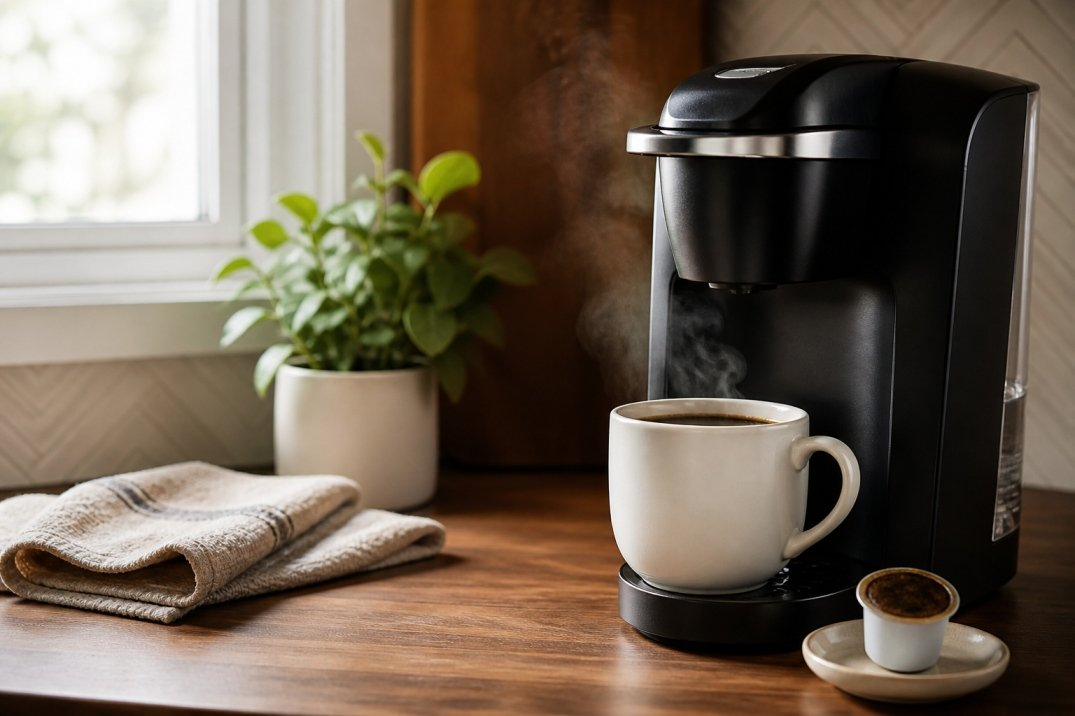
One time. That is the honest answer. You can physically run a used pod through your coffee maker again. The machine will not stop you. But the second cup comes out thin, bitter, and much weaker than the first. Most of the flavor and most of the caffeine already went into cup number one.
So the real answer is simple: use each pod once for a good cup, then let it go. If you want to stretch your coffee budget, a refillable pod is the move — not a used one.
Why Almost Everyone Wonders About This
Single-serve coffee is built on a simple promise: one pod, one cup, no mess. But that promise has two problems that push people to try reusing pods.
Problem 1: the cost adds up. When every cup costs a fresh pod, the price per cup never goes down. Compare that to a bag of whole beans, where a 12-ounce bag can make dozens of cups. The math is not close.
Problem 2: the waste. Billions of pods are sold every year. Keurig Dr Pepper says that since the end of 2020, all K-Cup pods it makes use recyclable polypropylene (#5) plastic. That is a real change. But here is the catch — the company also says pods “are not recycled in many communities,” and in 2024 the U.S. Securities and Exchange Commission charged Keurig Dr Pepper with making misleading statements about how recyclable its pods really were. The company agreed to pay a $1.5 million penalty without admitting or denying the findings.
Put those two things together, and you can see why people look at a used pod and think: surely I can use this again.
You can. But you probably should not. Here is why.
What Is Actually Inside a Coffee Pod
To understand why a second brew fails, you need to know what you are working with.
A standard pod holds only a small amount of coffee. Most standard pods contain 9 to 12 grams of coffee, which is roughly one to two tablespoons. That is a light load compared to the two or more tablespoons many people scoop into a drip basket.
That coffee is sealed inside a small cup with a foil or film lid. When you close the machine and press start, hot water is forced through the pod at pressure. The water pushes through the coffee, picks up flavor and caffeine, and drips out the bottom.
Now, the key idea: coffee grounds do not give up everything at once.
Coffee experts have a rule of thumb here. A good brew pulls out only about 18 to 22 percent of what is inside the coffee grounds — a number the coffee world calls the extraction yield. The rest stays behind in the used grounds.
That sounds like there is a lot left over. And there is. But there is a catch that changes everything.
Water grabs the easy stuff first.
The compounds that dissolve fastest — the bright acids, the fruity and sweet notes, and a big share of the caffeine — come out early in the brew. What is left in the pod is mostly the harder, slower, more bitter material. So a second brew does not give you “half a cup of the first cup.” It gives you a thin, hollow, bitter-tasting liquid that is missing everything you actually liked.
What Happens When You Brew the Same Pod a Second Time
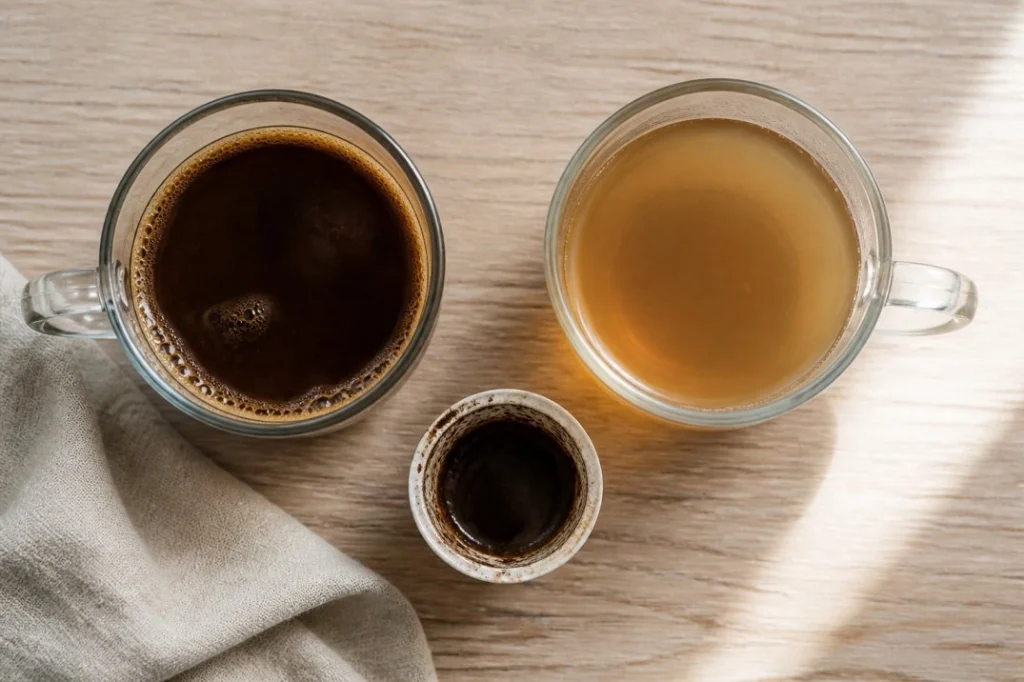
We have done this test more than once in our own kitchen, on purpose, with two clear glass mugs side by side. Here is what actually happens.
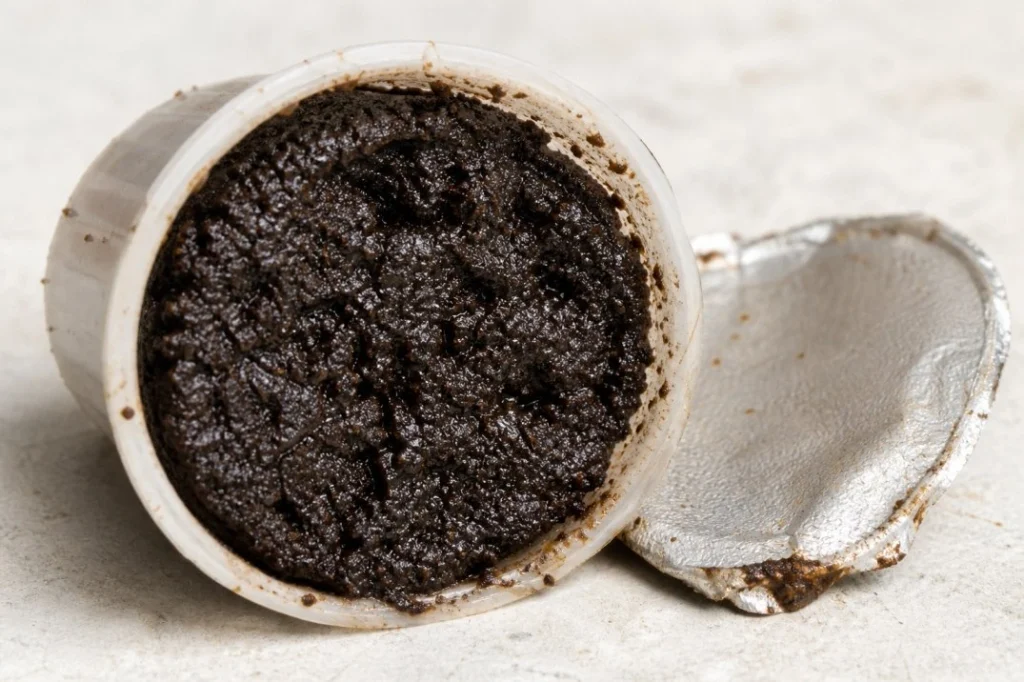
The color gives it away first. A fresh cup comes out deep brown, almost black. Run that same pod again and what drips out is pale, see-through, and tan — closer to weak tea than coffee.
Then the smell. The first cup fills the kitchen. The second cup barely smells like anything.
Then the taste. This is the part that surprises people. The second brew is not just weak. It is often bitter and sour at the same time, with a dry, papery finish. That is because you are now pulling out the harsh compounds that the first brew left behind.
And the caffeine. This is the question most people really care about. If you are drinking the second cup for the energy, you are mostly out of luck.
The Caffeine Math: How Much Is Left in a Used Pod
Here is the honest picture.
For most healthy adults, Up to 400 mg of caffeine per day is typically not associated with negative consequences, according to the U.S. Food and Drug Administration. A regular 8-ounce cup of coffee holds roughly 95 milligrams, which is why that 400 mg figure works out to about four cups.
A single-serve pod brews a similar amount — usually somewhere in the range of a regular cup, depending on the blend, the roast, and how big a cup you select on the machine.
Now think back to the extraction point. Because caffeine dissolves easily in hot water, a large share of it comes out in that first brew. What is left behind is a small fraction — and it is locked in grounds that have already been soaked once.
The result: a second brew from the same pod typically gives you a weak, low-caffeine cup. You get all the bitterness and almost none of the lift.
That is the worst trade in coffee. If you want a second cup, a fresh pod tastes better and works better.
The Part Nobody Talks About: Mold, Bacteria, and Your Counter
This is the part that matters most, and it is the part people skip.
Once you brew a pod, the grounds inside are wet, warm, and full of coffee oils and sugars. That is basically a welcome mat for mold and bacteria. Warm, damp, and full of food is exactly what they need to grow.
Leave that used pod sitting on your counter for a few hours, and it starts to change. Leave it overnight, and it can smell sour or musty. Brew coffee through it at that point and you are running hot water through something that has been growing on your counter.
If you truly want to try a second brew, do it right away — within minutes, never hours later, and never the next morning. A pod that sat out overnight goes in the trash, not back in the machine.
Bottom line: a used pod is a wet food product. Treat it like one.
Can Reusing a Pod Hurt Your Coffee Maker?
There is a second risk that has nothing to do with how the coffee tastes.
A pod is designed to be used once. When you brew it, the top gets pierced and the bottom gets punctured. Push a used, softened pod back into the machine and that seal is no longer clean. Two things can happen:
- Grounds leak into your cup. The soft, wet pod can collapse under pressure, and you end up with sludge in the bottom of your mug.
- Grounds clog the machine. Loose grounds can get into the needle or the exit spout, which can slow the flow or block it over time.
Machine makers are clear about this. Nespresso’s own instruction guide tells owners to “use only fresh, unused capsules” and warns that reusing them can damage the machine. That is the company that built the machine saying it, and it is worth listening to.
A $150 coffee maker is not worth saving 50 cents on a pod.
Which Pods Can Be Reused — and Which Ones Really Can’t
Not all pods are built the same, and that changes the answer a little. Here is the plain breakdown.
| Pod type | Can you brew it twice? | What actually happens |
| Plastic cup pods (K-Cup style) | Physically yes, but the second cup is poor | The foil is already pierced and the grounds are soaked. Grounds often leak into the cup. |
| Aluminum capsules (Nespresso style) | No — the maker says not to | The machine reads the capsule and pierces it once. Reusing risks jams and damage. |
| Soft paper pods (ESE style) | No | The paper tears and the pod falls apart under pressure. |
| Refillable or reusable pods | Yes — hundreds of times | These are meant to be emptied, rinsed, and refilled. This is the real answer to the question. |
Notice the pattern. Every disposable pod is designed for one pass. Only the refillable kind is designed for many.
If You Want Two Cups From One Pod, Do This Instead
There is one trick that works, and it is not actually reusing the pod. It is splitting the first brew.
Set your machine to the smallest cup size and brew into a small cup. Then run the same pod again with the same small setting, right away. You now have two small cups from one pod.
Both cups will be weaker than a full-size cup, because you split one pod’s worth of coffee across two servings. But they will both be drinkable, and the second one will not taste like cardboard, because you are brewing immediately instead of letting the grounds sit.
This is a fair way to stretch a pod if you genuinely want two smaller drinks. Just do not expect either cup to hit like a full-strength brew.
The Smarter Move: A Reusable Pod Pays for Itself
If your real goal is to stop throwing money and plastic away, the answer is not a used pod. It is a refillable pod.
A refillable pod is a small stainless steel or plastic basket that fits in your machine. You fill it with your own ground coffee, snap it shut, and brew. When you are done, you dump the grounds, rinse the basket, and use it again the next morning.
Here is why this is the better path:
- You control the coffee. You can pick any beans and any grind you like, instead of whatever blend came in the box.
- You control the strength. Fill it full for a bold cup, use less for a lighter one.
- You can use it every day for years. One refillable pod replaces hundreds of disposable ones.
- The waste drops fast. The only thing you throw away is the used grounds, which can go in the compost.
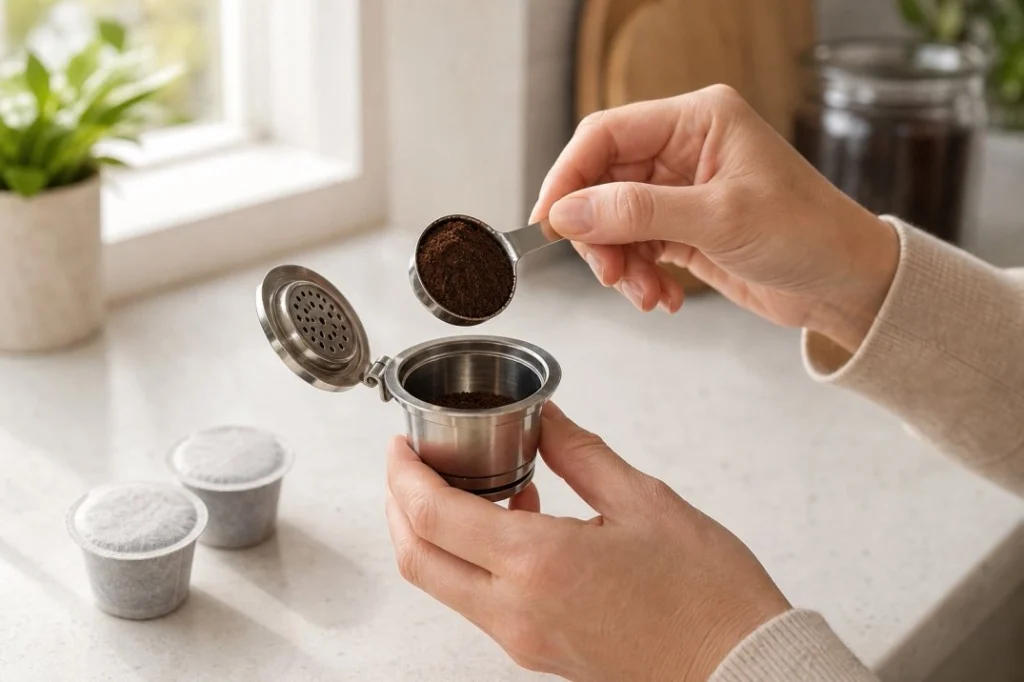
The one thing to know: refillable pods work best with a medium grind, about the texture of table salt. Too fine and the water struggles to push through. Too coarse and the cup comes out weak. A $15 grinder and a little practice will get you there.
Don’t Waste the Grounds: Give the Pod a Second Life
Even if you cannot brew a pod twice, the grounds inside it still have another job.
Used coffee grounds are mildly acidic, slightly abrasive, and naturally good at soaking up smells. Instead of dumping the whole pod in the trash, pop the grounds out and try one of these:
- Compost them. Coffee grounds break down fast and add nitrogen to a compost pile. Just do not count them as a full fertilizer — they are a helpful addition, not a replacement.
- Sprinkle a little in the garden. Small amounts worked into the soil can help. Keep it light; too much can make the soil too acidic for some plants.
- Use them as a fridge deodorizer. Put dried grounds in an open bowl in the fridge. Swap them out every couple of weeks.
- Scrub with them. The grit makes a gentle scrub for pots and pans that have stubborn stains.
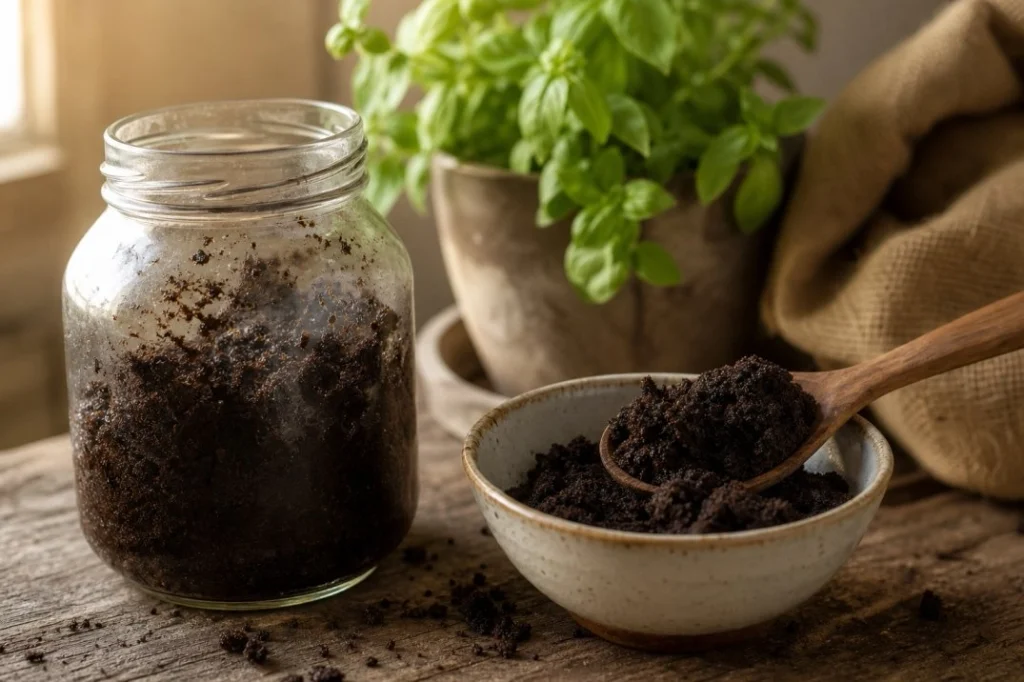
This matters because it fixes the real problem behind the reuse question. You are not trying to squeeze a second cup out of a dead pod. You are trying to not waste what you paid for. Repurposing the grounds does that better than a second brew ever could.
Does Reusing a Pod Actually Save Money?
Let’s do the math honestly, without guessing at prices. The yearly cost of pods is simply your price per pod multiplied by 365.
| Your price per pod | One pod a day | Two pods a day | Difference |
| 40 cents | $146 a year | $292 a year | $146 |
| 60 cents | $219 a year | $438 a year | $219 |
| 80 cents | $292 a year | $584 a year | $292 |
So yes — cutting from two pods to one saves real money, somewhere between $146 and $292 a year in these examples.
But look at what you are buying with that saving. You are trading a good second cup for a bitter, low-caffeine one. Most people try it once and go straight back to a fresh pod.
A refillable pod changes the math completely, because your cost per cup is now the cost of bulk coffee rather than the cost of a sealed pod. That is where the real savings live — not in brewing a dead pod twice.
5 Mistakes We See People Make
We have watched a lot of friends and readers try this. These are the mistakes that come up again and again.
- Leaving a used pod in the machine overnight. This is the worst one. Damp grounds plus heat plus time is a mold problem waiting to happen.
- Brewing a second cup and expecting the same caffeine. It will not be there. If you need the lift, use a fresh pod.
- Reusing pierced pods in a capsule machine. The capsule machines read each pod and pierce it once. This is how you get a jam.
- Letting wet grounds sit in the basket or drip tray. Empty and rinse the parts daily. A quick rinse takes 10-seconds.
- Buying a refillable pod and filling it with espresso-fine grind. It clogs. Medium grind is the sweet spot.
Common Questions About Using Coffee Pods
How many times can you use a coffee pod?
Once, for a cup worth drinking. You can run it through the machine a second time, but the result is weak, bitter, and low in caffeine. A refillable pod, on the other hand, can be used hundreds of times.
Can you use a K-Cup twice?
You can, but most people do not like the result. The second cup is pale and thin, the pod is already pierced so grounds can leak through, and the grounds sitting wet in the machine can start growing bacteria if you leave them.
Is it safe to reuse a coffee pod?
Brewing it right away is not likely to make you sick, though the coffee will taste poor. The real risk comes from time. A used pod left out for hours or overnight is damp and warm — a good place for mold and bacteria to grow. Throw those away.
Does a reused pod have less caffeine?
Yes. Caffeine dissolves into hot water easily, so a large share of it comes out in the first brew. A second brew from the same pod gives you only a small amount.
Can I use the same Nespresso capsule twice?
No. Nespresso’s own instructions say to use only fresh, unused capsules, and warn that reusing them can damage the machine.
What is the best way to save money on pods?
Use a refillable pod and fill it with your own ground coffee. You buy coffee in bulk instead of buying sealed pods, you get to choose the beans, and the only thing you throw away is the used grounds.
What do I do with the used grounds?
Compost them, work a little into garden soil, use dried grounds as a fridge deodorizer, or use them as a gentle scrub. Just keep the amounts modest in the garden, since grounds are acidic.
How We Put This Guide Together
This is not a list of tips copied from other websites. Here is how this article was built:
- Hands-on testing. We brew single-serve coffee at home and compare first and second brews side by side in clear glass mugs, so we can see and taste the difference rather than guess at it.
- Primary sources first. Every number here traces back to a government agency, a company’s own instructions, or a published study — the FDA, the CDC, the EPA, Nespresso’s instruction guide, Keurig Dr Pepper’s own statements, and market research on the U.S. pod market.
- We say what we do not know. Nobody publishes an exact “milligrams left in a used pod” figure, because it changes with the coffee and the machine. So we explain the reason the caffeine drops — not a made-up number.
- We correct mistakes. If you spot an error, tell us and we will fix it and note the change.
Note About Your Health
This article is general information about brewing coffee, not medical advice. It cannot account for your health, your medications, or how sensitive you are to caffeine. For most healthy adults, up to 400 milligrams of caffeine a day is not generally linked with negative effects. And if a used pod has been sitting out for hours, throw it away.
Related Article : How to Prepare Coffee Using a French Press