Cold brew has one simple job: taste smooth. The coffee you pick decides whether you get a sweet, chocolatey glass or a bitter, watery one. So let us answer the question first, then show you how to pick the right bag.
The short answer: medium to dark roast coffee, ground coarse, is what is typically used for cold brew. Most coffee shops and roasters reach for a medium or medium-dark roast from Brazil, Colombia, or Sumatra, grind it about as coarse as raw sugar, and steep it in cold water for 12 to 18 hours.
That is the whole idea in one sentence. But “medium to dark” covers a lot of ground, and the details are where a great cup actually comes from. This guide walks through roast level, grind size, bean type, and the few rules that most beginners miss.
What Type of Coffee Is Typically Used for Cold Brew? (The Simple Answer)
The quick answer: Cold brew is usually made with medium to dark roast beans, ground coarse (think raw sugar or sea salt), brewed with cold or room-temperature water for 12 to 18 hours, at about 1 part coffee to 8 parts water for a concentrate. Light roasts work too — they just taste brighter and fruitier instead of chocolatey. Any fresh, good-quality bean can make cold brew. What matters most is the grind size and the roast level.
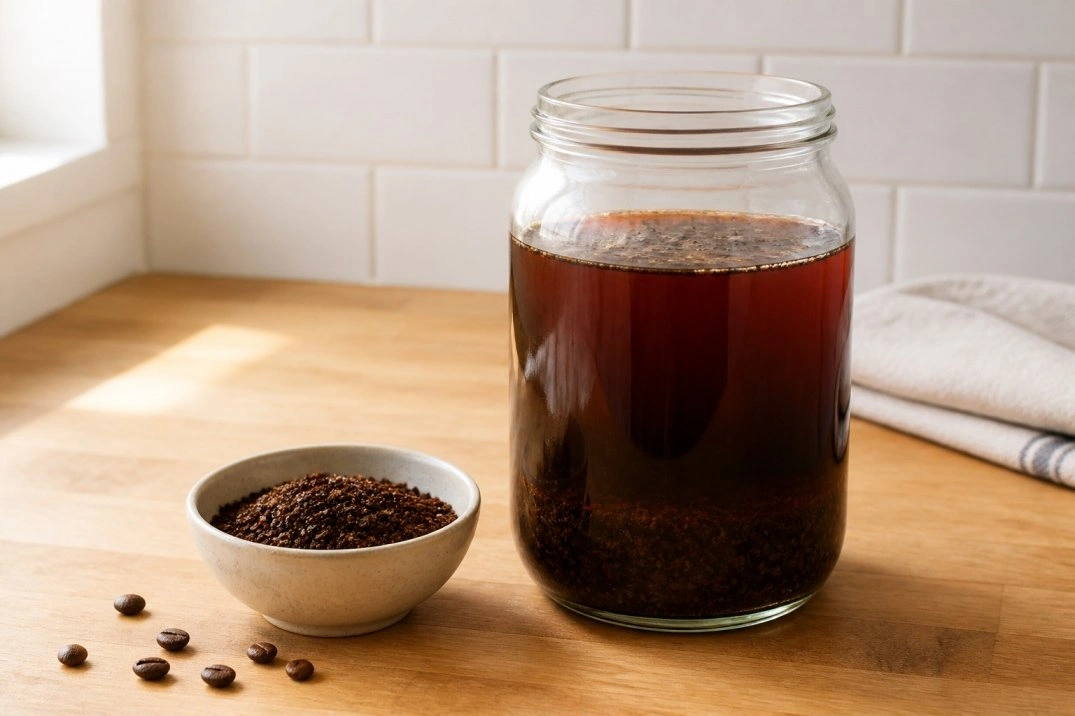
Cold brew starts simple: coarse coffee, cold water, and time.
Why Cold Brew Needs Different Coffee Than Hot Brew
Hot water is a strong extractor. In a drip brewer, water near 200°F pulls flavor out of the grounds in about 4 minutes. Cold water is slow. At fridge temperature, the same flavor takes 12 hours or more to come out.
That one difference changes everything about which coffee works best.
Hot water pulls out acids, oils, and bitter compounds fast. Cold water is gentler. It leaves behind more of the sharp, bitter notes and brings forward the sweeter, rounder ones. That is why cold brew tastes so smooth even when you use the same beans you would use for a hot cup.
There is real science behind this. In a 2018 study published in Scientific Reports, chemists at Philadelphia University compared cold brew with hot brew made from the same beans and the same coffee-to-water ratio. Both drinks landed at a similar pH, between 4.85 and 5.13. But the hot brew had more total acids and more antioxidant activity than the cold brew. The cold method simply extracts fewer of those sharper compounds. You can read the full study here: Rao & Fuller, *Scientific Reports*, 2018.
In plain words: cold water does less, so the coffee you choose has to do more. A roast that tastes flat in a hot cup can still taste full and sweet after a long cold steep.
3 Things That Actually Matter
If you remember nothing else from this article, remember these 3 things. They decide about 90% of how your cold brew tastes.
- Roast level. This controls the flavor style — chocolatey and bold, or bright and fruity.
- Grind size. This controls how fast and how evenly the water extracts. Get this wrong and the rest does not matter.
- Freshness. Coffee loses flavor fast after roasting. Old beans make dull cold brew.
Bean origin, price, and brand all matter too, but they matter less than those 3. Let us take them one at a time.
Roast Level: What Each One Tastes Like
Roast level is the single biggest flavor decision you make. Here is how each one behaves in cold brew.
| Roast level | Flavor in cold brew | Best for | Notes |
| Light roast | Bright, fruity, tea-like, a little acidic | Iced-coffee fans who like a lively cup | Needs a finer grind and longer steep to shine |
| Medium roast | Balanced, nutty, caramel, mild sweetness | Most people, most of the time | The safest pick and the most common choice |
| Medium-dark roast | Chocolatey, smooth, rounded, low bitterness | Cold brew you plan to drink black | The classic coffee-shop profile |
| Dark roast | Bold, smoky, deep, sometimes ashy | Milk drinks and sweetened cold brew | Easy to over-extract; watch your steep time |
Medium to medium-dark is the sweet spot for most homes and most cafés. These roasts carry enough sweetness to balance the long steep, and they hold up well when you pour the drink over ice. If you have ever ordered cold brew at a shop and thought, “why does this taste so much smoother than my coffee at home?” — a medium-dark roast is usually the reason.
Light roasts are not wrong. They just make a different drink. A light Ethiopian or Kenyan roast brewed cold can taste like iced tea with berry and citrus notes. Fans of that style love it. The catch is that light roasts are denser and harder to extract, so you often need a slightly finer grind or a longer steep to get full flavor. Many beginners try a light roast, get a weak, sour cup, and blame the method. Usually the grind was the real problem.
Dark roasts are easy but strong. They extract quickly because the roasting process already broke down much of the bean’s structure. That makes them forgiving on flavor but easy to overdo. Steep a dark roast too long and you get an ashy, burnt edge. If dark is your pick, start with 12 hours instead of 18.
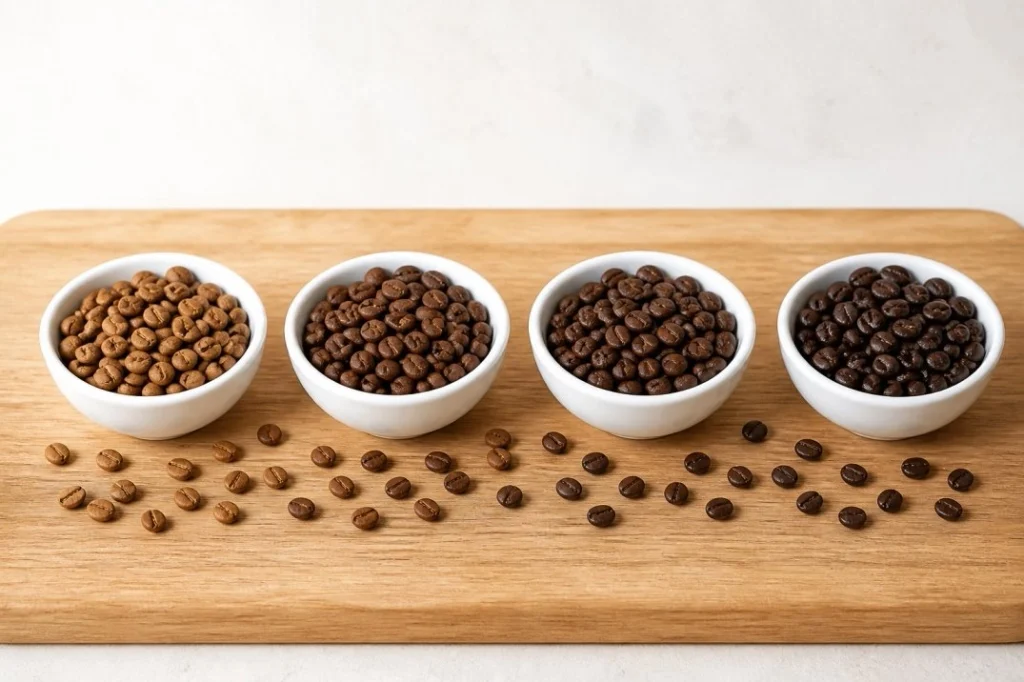
From left to right: light, medium, medium-dark, and dark. Color tells you a lot about flavor.
Grind Size: The Rule Most People Break
Here is the mistake we see most often. Someone buys expensive beans, brews them cold, and ends up with a bitter, muddy drink. The beans were fine. The grind was not.
Cold brew wants a coarse grind. Think raw sugar, coarse sea salt, or the texture of small peppercorns. The reason is simple: water touches the surface of each particle. Fine grounds have far more surface area, so they give up their flavor much faster — and they keep giving it up. After 15 hours, a fine grind has released everything, including the harsh stuff that makes coffee taste bitter and dry.
A coarse grind slows that process down. Over many hours, it releases flavor at a steady, even pace and stops before the bitter notes take over.
| Grind size | Looks like | What happens in cold brew |
| Extra coarse | Peppercorns | Weak and watery unless you steep for a very long time |
| Coarse | Raw sugar, sea salt | Ideal — smooth, full flavor, easy to filter |
| Medium | Table salt | Works, but gets bitter after about 10 hours |
| Fine | Powdered sugar | Muddy, bitter, and very hard to strain |
| Espresso | Flour | Do not use. It clogs filters and tastes harsh |
The test is easy. Pinch a little ground coffee between your fingers. Coarse grounds feel like gritty sand and fall apart easily. If it feels like flour, it is too fine for cold brew.
One more practical tip: grind right before you brew. Coffee starts losing aroma within minutes of grinding. If you buy pre-ground coffee, choose a bag labeled “coarse” or “cold brew” and use it within a couple of weeks.
Arabica or Robusta? Both Work, With One Trade-Off
Almost all specialty coffee is Arabica. It is grown at higher elevations, tastes sweeter, and has more of the complex flavors people describe as fruity, nutty, or floral. If you are buying from a local roaster or a good grocery shelf, you are almost certainly buying Arabica.
Robusta is the other main species. It grows faster and easier, costs less, and has roughly twice the caffeine of Arabica. Its flavor is stronger, earthier, and more bitter. A little Robusta can add body and a caffeine kick to a cold brew blend, which is why some commercial cold brews use a small amount. Too much and the drink tastes rough.
For a home cold brew, 100% Arabica in a medium or medium-dark roast is the safest and tastiest choice. If you like a strong, punchy cup and do not mind a bolder flavor, a blend with 10–20% Robusta is worth trying.
Whole Bean or Pre-Ground?
Whole bean is better, and it is not close. Coffee’s flavor lives in oils and gases inside the bean. Once you grind it, those start escaping right away. Whole beans stay fresh for weeks; ground coffee fades in days.
But this does not mean pre-ground is useless. If you do not own a grinder, buy whole bean and ask the shop or the store’s grinder to grind it coarse for cold brew. That is still better than a bag that was ground at the factory last month. Many grocery stores and every coffee shop will do this for free.
If you do go pre-ground, look for a bag with a “roasted on” date, not just a “best by” date, and pick the freshest one you can find.
Single Origin or a Blend?
A single origin coffee comes from one country or region — Ethiopia, Colombia, Guatemala, Sumatra. These beans show off one clear flavor story. A Colombian might taste of caramel and red apple. A Sumatran is often earthy and herbal.
A blend mixes beans from several places. Roasters build blends to be balanced and consistent, and they often cost less than a single origin.
For cold brew, both are fine. Blends are usually the better buy for everyday drinking because they are designed to taste good with milk and sugar. Single origins are more fun when you want to taste something specific. If you are new to cold brew, start with a medium-dark blend. It is hard to get wrong.
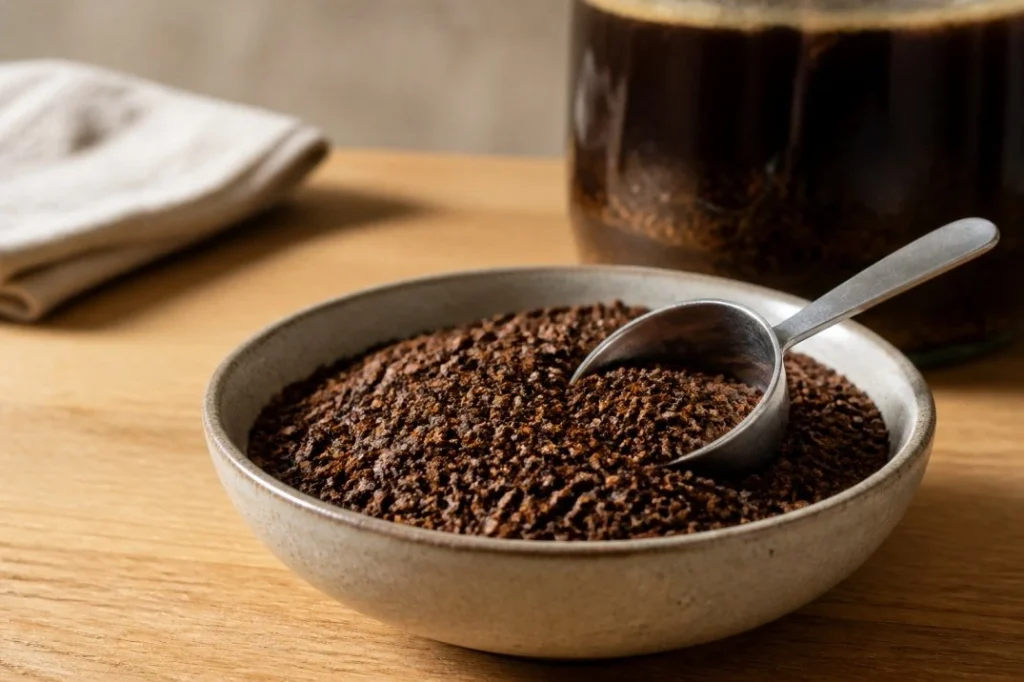
Coarse grounds look like raw sugar. If yours looks like flour, grind again.
Simple Cold Brew Recipe You Can Start Tonight
Now that you know which coffee to use, here is how to actually make it. This is the basic method most shops use.
| Step | What to do |
| 1. Measure | 1 cup of coarse ground coffee to 4 cups of cold, filtered water |
| 2. Combine | Stir the grounds into the water so every bit is wet |
| 3. Wait | Cover and leave at room temperature for 12 hours, or in the fridge for 16 to 18 hours |
| 4. Strain | Pour through a fine mesh strainer lined with a paper filter or a cloth |
| 5. Store | Keep the concentrate in a sealed jar in the fridge for up to a week |
That ratio makes a concentrate. To drink it, mix one part concentrate with one or two parts water or milk. If you want a ready-to-drink cold brew straight from the jar, use a weaker ratio instead — about 1 cup of coffee to 8 cups of water.
Two things to know about the steep. First, room temperature brews faster than the fridge. A room-temperature steep for 12 hours is close to a fridge steep for 18. Second, taste it as you go. At hour 10, pull a small spoonful out and try it. When the flavor is smooth and sweet, it is done. Waiting longer does not make it stronger — it makes it bitter.
How We Tested This at Home
We brewed the same bag of medium-roast Colombian beans four ways to see how much each choice changes the cup: extra coarse, coarse, medium, and fine grinds, all with the same ratio and the same 15-hour fridge steep.
The results matched what the research says:
- Coarse was the clear winner. Full flavor, no bitterness, and it strained easily through a paper filter.
- Extra coarse tasted thin. It needed several more hours to reach the same strength.
- Medium turned bitter. It tasted fine at hour 8 and sharp by hour 15.
- Fine was a mess. It clogged the filter twice and left a muddy texture even after straining.
We ran the same test with a light roast and a dark roast. The light roast needed a slightly finer grind and a longer steep to taste full. The dark roast was drinkable at 12 hours and ashy by 20. That is the whole reason roasters and shops settle on coarse-ground medium to medium-dark roasts. It is not a rule someone invented. It is what the flavors do over a long, slow steep.
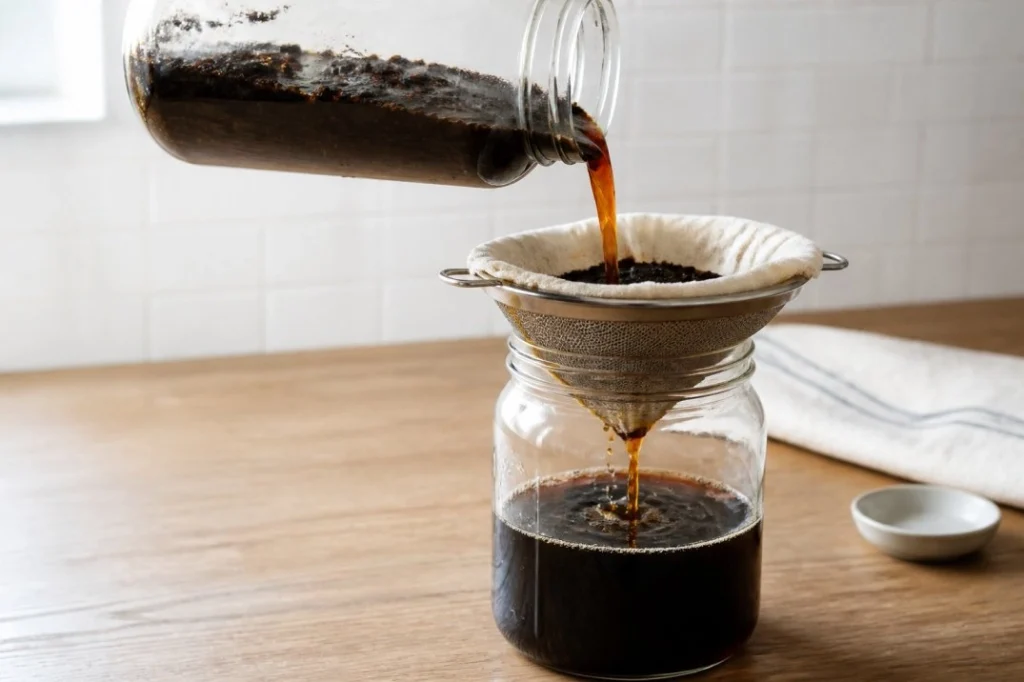
Straining is the last step — a coarse grind makes it quick and clean.
How to Pick a Bag in the Store
Standing in the coffee aisle can be confusing. Here is a short checklist that takes about 30 seconds.
- Look for the roast level on the bag. Choose medium, medium-dark, or dark. Light is fine if you want a fruity cup.
- Find the roast date. Fresher is better. Within four to six weeks of roasting is ideal.
- Check the origin. Brazil, Colombia, Guatemala, and Sumatra are all classic cold brew picks.
- Buy whole bean if you can, or ask for a coarse grind.
- Skip flavored beans for cold brew. Added flavorings often taste artificial after a long steep.
- Do not chase the most expensive bag. A mid-priced fresh medium roast will beat an old, pricey one almost every time.
If the bag says “espresso roast,” it will still work — just know that espresso roasts are usually dark and often ground fine, so check the grind before you buy.
5 Mistakes That Ruin Cold Brew
- Grinding too fine. This is the number one problem. Coarse is the goal.
- Steeping too long. Past about 18 hours, flavor turns bitter and flat. More time is not more flavor.
- Using stale beans. Old coffee makes dull cold brew no matter how good your method is.
- Skipping the filter. A quick mesh strain leaves silt at the bottom of the glass. Line it with paper or cloth.
- Drinking concentrate as-is. Concentrate is strong by design. Dilute it with water or milk before you judge the taste.
Cold Brew, Caffeine, and Health: What the Research Says
Cold brew is not a low-caffeine drink. Because it is often served as a concentrate, a single glass can carry a lot more caffeine than a normal cup of coffee.
The U.S. Food and Drug Administration notes that an 8-ounce cup of coffee usually has about 95 to 165 milligrams of caffeine, and that 400 milligrams a day is an amount not generally linked to harmful effects in healthy adults. That is roughly four 8-ounce cups. You can read the FDA’s guidance here: FDA — *Spilling the Beans: How Much Caffeine Is Too Much?*.
On the smoother-taste question, keep your expectations realistic. The 2018 study found that hot brew actually had more total acids and more antioxidants than cold brew. So the idea that cold brew is “less acidic” needs a careful word: cold brew can taste less sharp and feel gentler on your stomach, but it is not a low-acid drink in the chemical sense. If you have reflux or another digestive condition, talk to your doctor rather than relying on a brewing method.
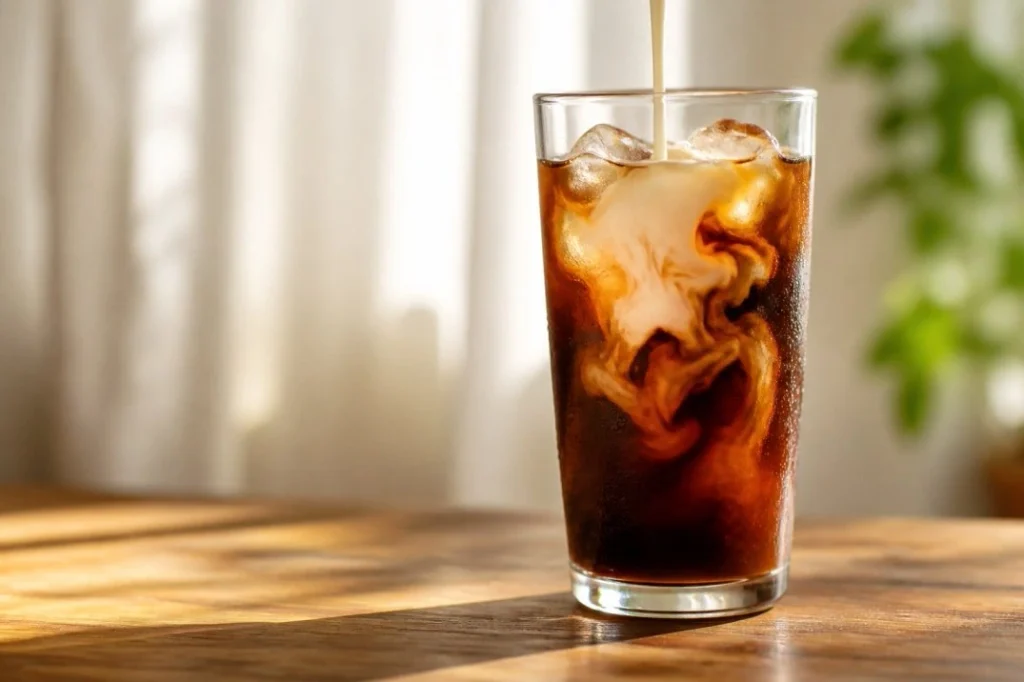
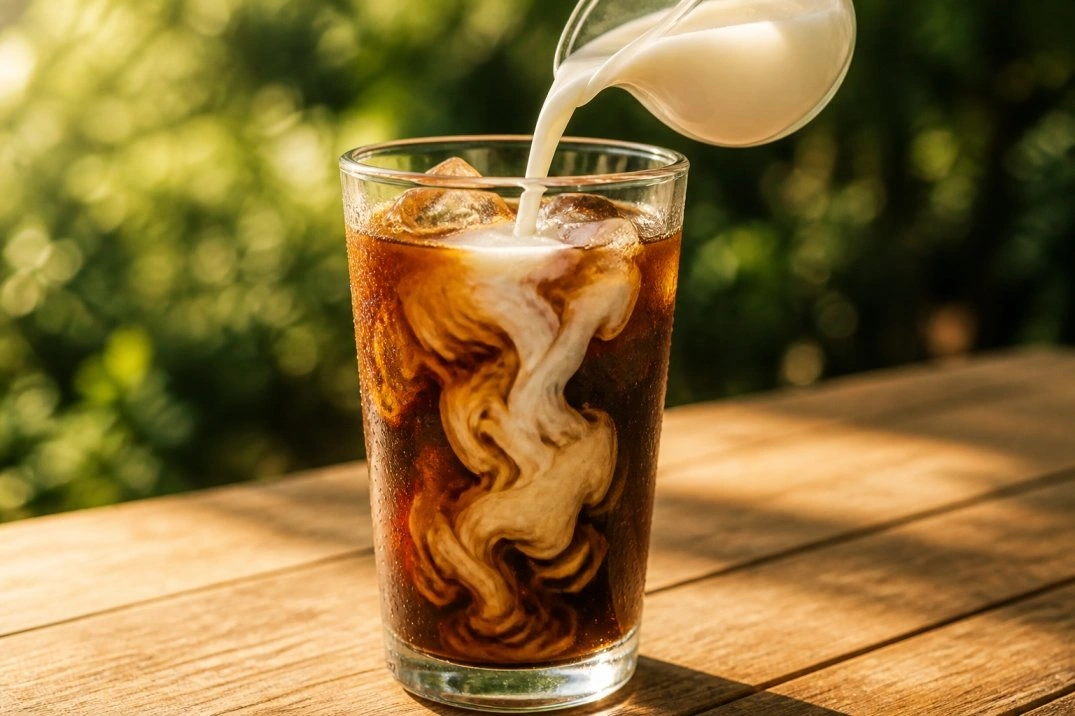
Dilute your concentrate with water or milk, then pour it over ice.
Frequently Asked Questions
What type of coffee is typically used for cold brew?
Most cold brew is made with medium to dark roast coffee ground coarse. Medium and medium-dark roasts are the most common because they taste smooth, chocolatey, and slightly sweet after a long cold steep. Dark roasts are also popular but extract quickly, so they need a shorter steep. Light roasts work too — they simply taste brighter and more fruity.
Can I use any coffee for cold brew?
Yes, any real coffee can be brewed cold. The grind matters more than the brand. A cheap but fresh medium roast, ground coarse, will taste better in cold brew than an expensive stale bag ground fine. Avoid flavored coffee, which can taste artificial after a long steep.
What grind size is best for cold brew?
Coarse. Aim for the texture of raw sugar or coarse sea salt. Fine and medium grinds extract too fast, turn bitter, and clog your filter. If your cold brew tastes harsh or looks muddy, the grind is almost always the reason.
Is dark roast or medium roast better for cold brew?
Medium roast is the safer, more balanced choice. Dark roast gives a bolder, smokier cup that many people love over ice, but it is easier to over-extract into a burnt, ashy taste. If you use dark, start with a shorter steep — about 12 hours instead of 18.
How much coffee do I use for cold brew?
For a concentrate, use about 1 cup of coarse ground coffee to 4 cups of cold water. For a ready-to-drink cold brew, use about 1 cup of coffee to 8 cups of water. A kitchen scale is more accurate: 1 part coffee by weight to 8 parts water for ready-to-drink.
How long should cold brew steep?
Between 12 and 18 hours. Room temperature takes about 12 hours; the fridge takes 16 to 18. Taste it along the way. When it tastes smooth and sweet, it is done. Longer steeping does not add strength — it adds bitterness.
Can I use espresso beans for cold brew?
You can, but they are usually dark roasted and ground fine. If you use them, grind coarse and steep for a shorter time, around 10 to 12 hours. Espresso beans can make a bold, heavy cold brew that stands up well to milk.
Is cold brew stronger than regular coffee?
Often, yes — because it is frequently served as a concentrate. A glass of undiluted concentrate can carry more caffeine than a standard cup of drip coffee. Once you dilute it with water or milk, the caffeine per serving drops closer to normal. Always check how your cold brew is meant to be served.
Does cold brew have less acid than hot coffee?
It can taste less sharp, but it is not a low-acid drink. Research comparing the two found their pH levels were similar, and that hot brew actually had more total acids. Cold brew feels gentler because it extracts fewer harsh compounds, not because it is chemically low in acid.
What is the best coffee for cold brew for beginners?
Start with a medium-dark roast blend from Brazil or Colombia, ground coarse, in a 1-to-8 ratio, steeped in the fridge for 16 hours. That combination is forgiving, tastes familiar, and works with or without milk. Once that cup tastes good, try a light Ethiopian roast for contrast.
Bottom Line
So, what type of coffee is typically used for cold brew? Medium to dark roast, ground coarse, brewed cold and slow. That is what nearly every shop uses, and it is what works best at home.
The short version:
- Pick a medium or medium-dark roast for a smooth, balanced glass.
- Choose a light roast if you want a brighter, fruitier cup.
- Grind coarse — like raw sugar — and grind it fresh.
- Use a 1-to-4 ratio for concentrate, 1-to-8 for ready-to-drink.
- Steep 12 to 18 hours, then strain and chill.
- Watch your caffeine if you drink concentrate by the glassful.
You do not need rare beans or fancy gear to make cold brew you love. You need the right roast, the right grind, and a little patience. Get those three right and your cold brew will beat the coffee shop version — and you will know exactly why.
Related Article : Can You Heat Cold Brew Coffee?