There is a moment almost every coffee drinker has, usually somewhere around the second cup, when a strange question floats up: if caffeine comes from coffee beans, and a cup of coffee is really just beans plus hot water, then How Much Caffeine Is in a Single Coffee Bean?
It sounds like a simple question. It is not. And the honest answer is that a lot of websites get it badly wrong — sometimes by a factor of four or five.
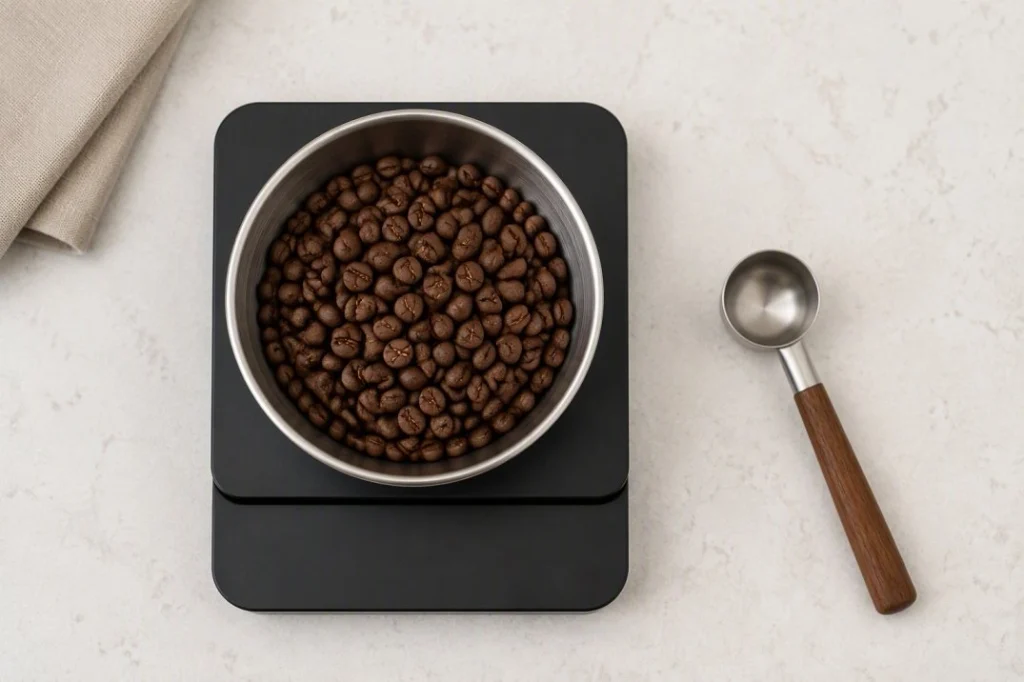
I have spent years weighing beans on a 0.01-gram scale, pulling shots, brewing pour-overs, and chasing down the research behind the numbers. In this guide you will get the real figure, the Simple math behind it.and — most importantly — what all of it means for the coffee you drink every morning.
No complicated science. Just clear numbers you can check yourself in about two minutes.
Short Answer: Caffeine in One Coffee Bean
A single roasted coffee bean contains about 1.2 to 1.9 mg of caffeine if it is an Arabica bean, and roughly 2.2 to 2.9 mg if it is a Robusta bean — about double.
That is a very small amount. A standard 8-ounce cup of home-brewed drip coffee holds roughly 95 to 100 mg, which is the caffeine from about 60 to 70 Arabica beans.
You would need to eat roughly 250 to 330 Arabica beans to reach the 400 mg daily limit the FDA considers safe for most healthy adults.
Here are the numbers that actually hold up to scrutiny:
| Bean type | Caffeine by weight | Typical bean weight | Caffeine per single bean |
| Arabica (most specialty coffee) | 1.2% – 1.5% | about 0.11 – 0.15 g | about 1.2 – 1.9 mg |
| Robusta (most instant and espresso blends) | 2.2% – 2.7% | about 0.12 – 0.15 g | about 2.2 – 2.9 mg |
So the practical headline is simple:
- One Arabica bean ≈ 1.5 mg of caffeine.
- One Robusta bean ≈ 2.5 mg of caffeine.
- Robusta carries roughly double the caffeine of Arabica
To put 1.5 mg in perspective: it is about one sixtieth of a single cup of drip coffee. A cup of coffee is not one bean’s worth of caffeine. It is dozens of beans working together, steeped into water.
One more thing worth saying up front: these are averages. Real beans vary. A single bean from your bag might hold 1.2 mg or closer to 2 mg. The number is a range, not a fixed value — and any source that gives you one precise figure without a range is oversimplifying.
Why One Bean Holds So Little Caffeine
Caffeine is not sprinkled onto the outside of a coffee bean. It is built into the bean’s tissue while the fruit is still growing on the tree, where it works as a natural pesticide that protects the plant from insects. The plant makes it for its own survival, and we borrow it.
That caffeine is measured as a percentage of the bean’s total weight. And coffee beans are genuinely small — which is the whole story.
Here is the arithmetic, step by step, so you can follow it:
- Weigh the bean: A typical roasted Arabica bean weighs about 0.13 grams, or 130 milligrams. Published coffee-industry references put the average at roughly 132.5 mg per bean, with a normal range of about 0.1 to 0.2 grams.
- Find the caffeine percentage. Arabica beans run about 1.2% to 1.5% caffeine by weight, depending on variety, origin, and growing conditions.
- Multiply. 130 mg × 1.3% ≈ 1.7 mg of caffeine in that one bean.
That is the entire calculation. A coffee bean is only about 1.3% caffeine. The other 98.7% is fiber, oils, sugars, acids, and water — which is exactly why a single bean barely registers on your body.
Green beans versus roasted beans: caffeine percentages are usually quoted on a dry-weight basis, so the figure stays roughly stable through roasting even as the bean loses moisture and becomes lighter. This matters in the next section, but the short version is that roasting does not remove meaningful caffeine.
Arabica vs. Robusta: Where the Real Difference Lives
If you want to know how much caffeine is in a coffee bean, the most important question is not how dark it was roasted or where it was grown. It is what species it is.
Arabica (Coffea arabica) is the bean behind almost all specialty coffee — the sweet, fruity, floral cups you find at a good local roaster. It contains about 1.2% to 1.5% caffeine by weight.
Robusta (Coffea canephora) is a tougher, hardier plant. It grows at lower altitudes, resists disease better, and produces more caffeine — typically 2.2% to 2.7% by weight.
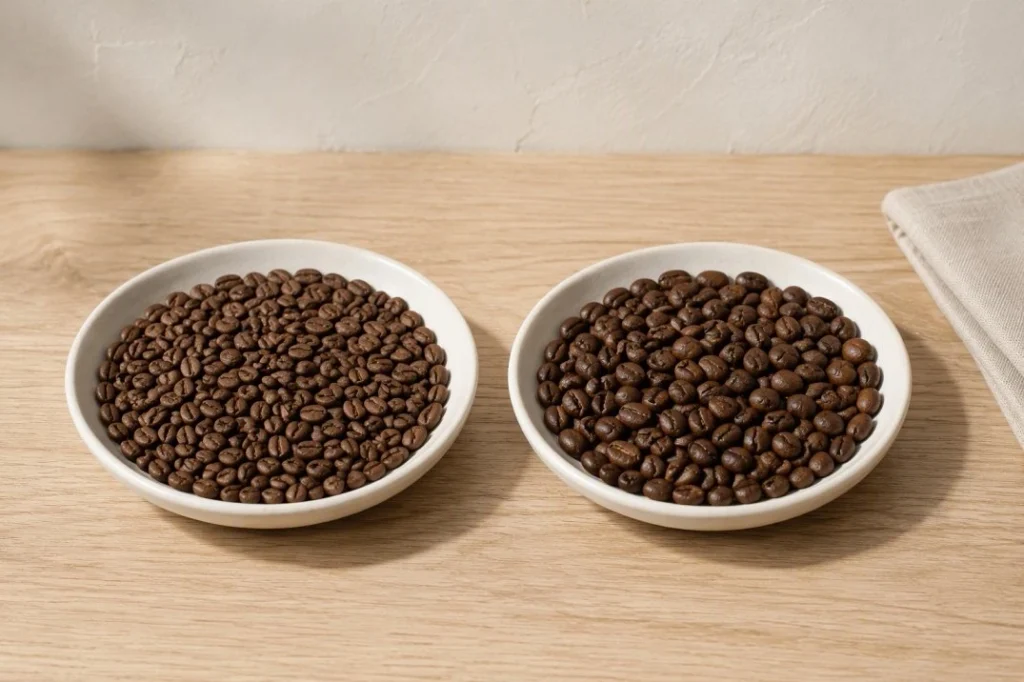
You can see in image above, Arabica beans (left) are smaller, flatter, and oval. Robusta beans (right) are rounder and larger — and carry roughly twice the caffeine.
Why the gap exists. Robusta evolved in lower, warmer, more pest-heavy regions, and more caffeine means better chemical defense for the plant. Those same defensive compounds are also why Robusta tastes harsher and more bitter. It is not a flaw — it is the chemistry doing its job. It is also why traditional Italian espresso blends use Robusta as a supporting player rather than the star, adding body and a thick crema without letting the bitterness take over.
The practical takeaway: if you are chasing caffeine, Robusta wins. If you are chasing flavor, Arabica usually wins.
How Many Coffee Beans Are in One Cup of Coffee?
This is the question that actually matters, because nobody drinks single beans.
A standard 8-ounce cup of drip coffee is brewed from roughly 7 to 10 grams of ground coffee. At an average bean weight of 0.13 grams, that is about 55 to 75 beans per cup. Because brewing pulls out most — but not all — of the caffeine, you end up with roughly 95 to 100 mg in the mug, which is right in line with what the FDA use when they describe a “cup of coffee.”
Here is how common drinks compare:
| Drink | Coffee used | Beans (approx.) | Caffeine |
| Single espresso shot (1 oz) | 7 – 9 g | 55 – 70 | ~63 mg |
| Drip coffee (8 oz) | 7 – 10 g | 55 – 75 | ~95 – 100 mg |
| French press (8 oz) | 10 – 12 g | 75 – 90 | ~95 – 120 mg |
| Cold brew (8 oz) | 15 – 20 g | 115 – 155 | ~150 – 200 mg |
| Decaf drip (8 oz) | 7 – 10 g | 55 – 75 | ~2 – 5 mg |
Notice cold brew. It uses far more coffee per ounce of water than drip does, which is exactly why it can hit you harder than a normal cup even though the caffeine comes from identical beans. Bean count alone does not decide how much caffeine reaches you — the brew method decides how much of it actually makes it into the water.
6 Things That Really Change the Number
- Species. Arabica versus Robusta is the single biggest factor — roughly a two-times difference in caffeine per bean.
- Bean size. Bigger beans weigh more, so they hold more caffeine per bean. A large peaberry or a big Maragogype bean carries more total caffeine than a small one, even at the same caffeine percentage.
- Growing conditions. Altitude, rainfall, soil, and shade all shift caffeine levels a little. Beans grown slowly at high altitude in cooler air tend to develop more flavor and slightly less caffeine.
- Roast level. Less than almost everyone assumes — see the next section, because this is the most misunderstood factor of all.
- Brew method. Caffeine is very water-soluble and is one of the first things to dissolve out of the grounds. Longer contact time, hotter water, and a finer grind all pull more caffeine into your cup. That is why a four-minute French press and a 25-second espresso shot made from the same beans give you different numbers.
- Freshness and storage. Coffee slowly loses its aromatics as it ages, but caffeine is a stable molecule. An old bean still delivers caffeine. It just tastes flat and dull.
Does Dark Roast Have More Caffeine? (No — Here Is Why)
This is the most stubborn myth in coffee, and it survives because it feels true.
Dark roast coffee tastes stronger and more intense, so most people assume it holds more caffeine. It does not. Roasting barely touches caffeine at all. Caffeine is a stable molecule that survives roasting temperatures easily, so a light roast bean and a dark roast bean contain almost the same caffeine per bean.
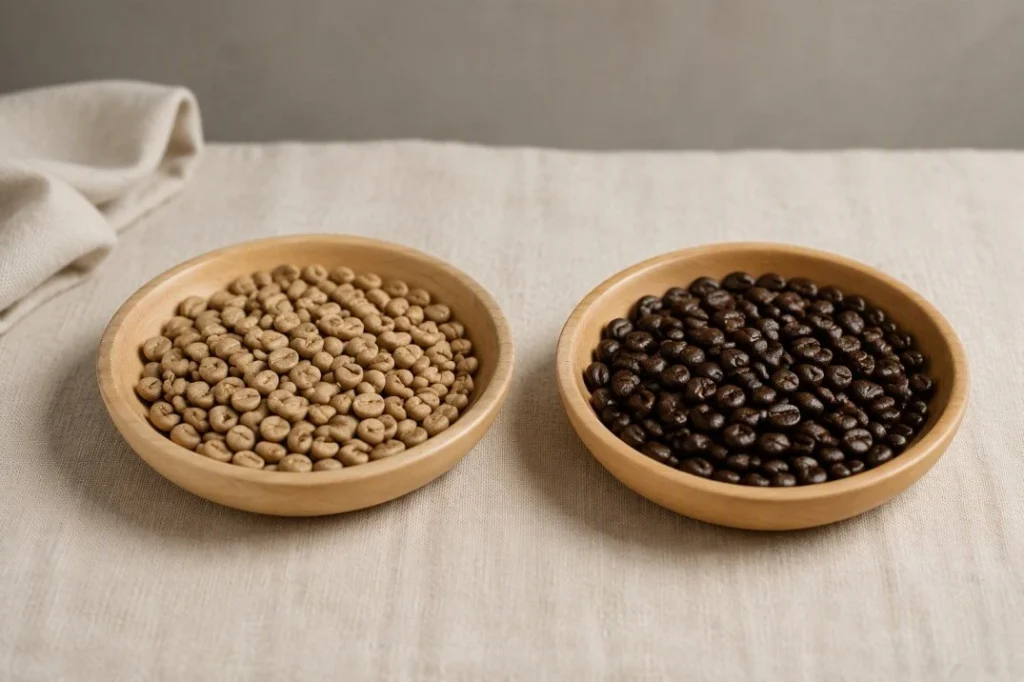
There are two small caveats that keep the myth alive, so let us be precise about them:
- By weight, lighter roasts win slightly. Roasting burns off mass, so a dark roast bean is lighter than that same bean was at a light roast. If you measure by the scoop — which is what most people actually do — a lighter roast packs more bean mass, and therefore slightly more caffeine, into the same volume.
- By bean count, it is essentially a tie. One dark bean and one light bean land within a hair of each other on caffeine.
So when a coffee shop tells you their dark roast is “stronger,” they mean it tastes bolder and more bitter. They do not mean it has more caffeine in it.
Do Decaf Beans Still Have Caffeine?
Yes. Decaffeination removes most of the caffeine, not all of it, and it usually happens before roasting.
Standards vary, but decaffeinated coffee generally must have 97% or more of its caffeine removed to carry the label. In practice, an 8-ounce cup of decaf lands somewhere around 2 to 5 mg. That is genuinely low — but it is not zero. If you drink five cups of decaf in a day, you are still taking in a small amount of caffeine, which matters if you are cutting back.
How Much Caffeine Is Safe in a Day?
The U.S. Food and Drug Administration advises healthy adults to keep total caffeine intake to about 400 mg per day — roughly four or five cups of home-brewed coffee.
To put that in bean terms: 400 mg is roughly 250 to 330 Arabica beans eaten whole. It is also about 160 Robusta beans.
A few cautions that matter if you are using this guide to make real decisions:
- Eating beans is not the same as drinking coffee. Whole beans are hard to chew and digest, and the caffeine arrives more slowly and less completely than it does from a brewed cup. Eating hundreds of beans would also mean a lot of fiber and oil, which tends to upset your stomach long before caffeine becomes the problem.
- Caffeine is not one-size-fits-all. Sensitivity varies widely based on genetics, medications, and how much you normally drink. People who are pregnant or breastfeeding, and people with heart conditions, high blood pressure, anxiety disorders, or sleep problems, should talk with a healthcare professional about their own limit.
This article is educational and is not medical advice. If you are unsure where your own limit sits, ask a professional rather than guessing from a blog post — including this one.
What This Means for Your Morning Cup
Three practical takeaways you can use today:
1. Blame the brew, not the bean. One bean contributes about 1.5 mg. If your coffee feels too strong, the levers to pull are how much ground coffee you use, how long you brew it, and how much you drink — not which single bean you picked.
2. Switch species, not roast. Want less caffeine without changing your routine? Choose an Arabica-forward bean or a single-origin Arabica. Want more? Look for a blend with Robusta in it. Changing the roast level will change the taste far more than the caffeine.
3. Measure if it matters to you. A cheap kitchen scale that reads to 0.1 grams will teach you more about your caffeine intake in one week than any label will. Weigh your coffee, note the number, and you will know exactly where you stand.
Frequently Asked Questions
How Much Caffeine Is in a Single Coffee Bean?
About 1.2 to 1.9 mg in an Arabica bean and about 2.2 to 2.9 mg in a Robusta bean.
Is there more caffeine in dark roast beans?
No. Roast level barely changes caffeine per bean. Dark roast only tastes stronger and more bitter.
How many coffee beans are in one cup of coffee?
Roughly 55 to 75 beans for a standard 8-ounce cup of drip coffee, which works out to about 95 to 100 mg of caffeine.
Do bigger coffee beans have more caffeine?
Yes, usually. A heavier bean holds more caffeine even at the same caffeine percentage, simply because there is more bean there to hold it.
Can you get caffeine from eating coffee beans?
Yes, though the effect is milder and slower than drinking brewed coffee. Reaching the FDA’s 400 mg daily limit would take roughly 250 to 330 whole Arabica beans, which is not recommended.
How much caffeine is in a single espresso bean?
A “single espresso” is a drink, not a bean. One shot of about 1 ounce is brewed from roughly 55 to 70 beans and typically contains about 63 mg of caffeine.
About This Guide
Who wrote it
Author: William Johnson — William is a lifelong coffee lover and home brewer who has spent years testing beans, grinders, and brew methods in a regular kitchen, and writes easy, honest coffee guides for everyday readers.
How we research
We do not guess. Every number in this guide comes from trusted public sources or from simple math that we show step by step. We also tell you clearly what is an estimate. The per-bean caffeine numbers are calculated from average bean weight and average caffeine share. If you spot something that looks wrong, please tell us and we will check it.
A word on safety
This article is educational and is not medical advice. Talk with a healthcare professional about your own caffeine intake.
Related Article: Does Coffee Lose Caffeine Over Time?