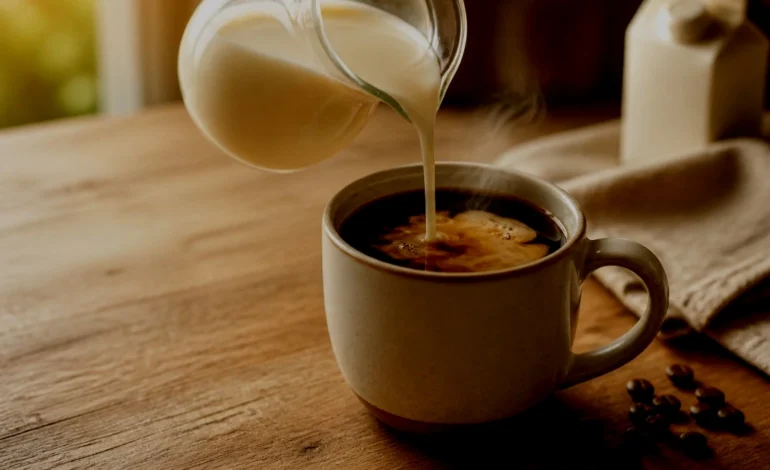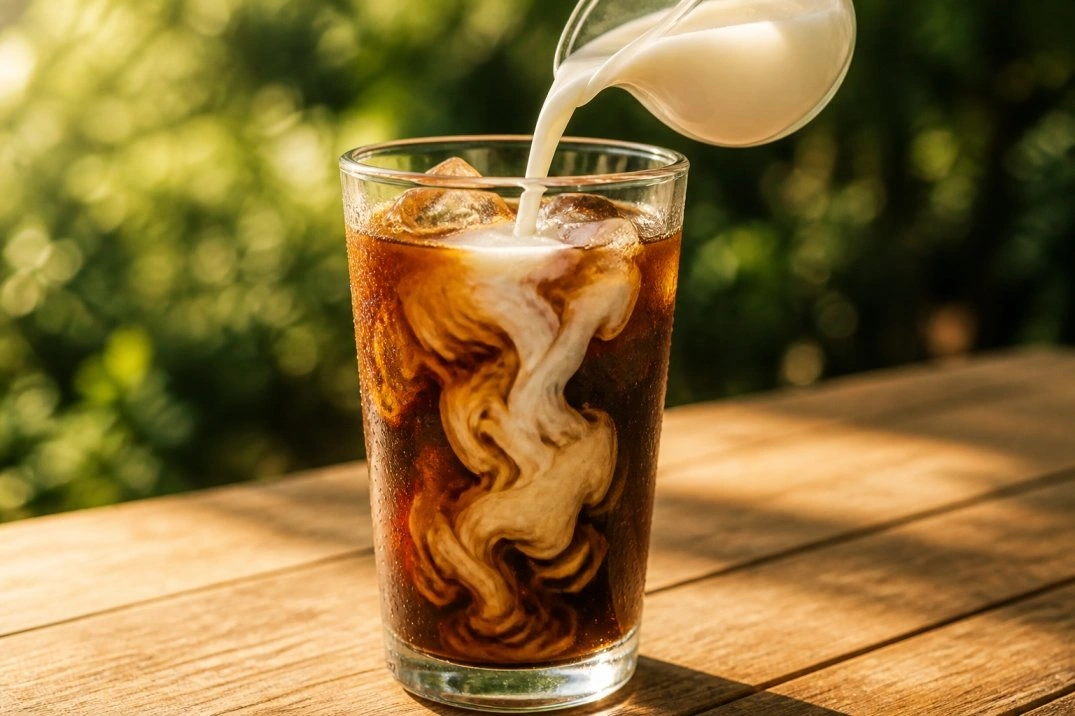
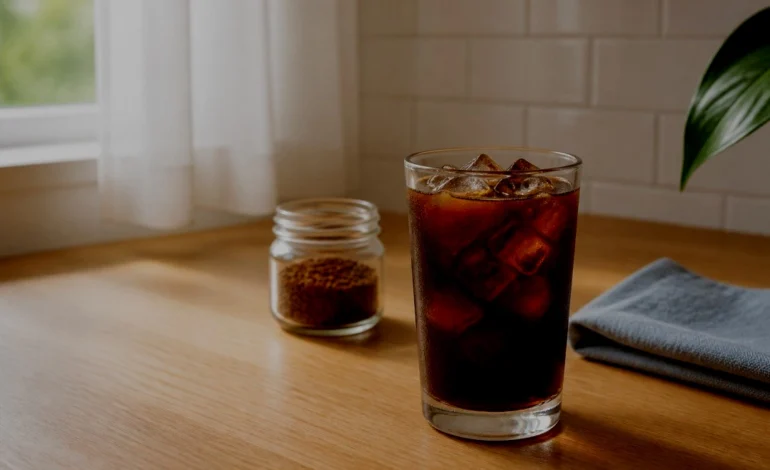
It’s a hot afternoon. You want coffee, but the idea of boiling water and sipping something steaming makes you tired just thinking about it. You look at the jar of instant coffee on your counter and wonder: Can you Make instant coffee with cold water?
The answer is yes. Not “sort of,” and not “only if you’re desperate.” Plain cold water from your tap works, and it can make a genuinely good glass of coffee. You just need to know a few small things first.
This guide covers the whole thing: why instant coffee dissolves in cold water at all, how long it really takes, how much to use, how to stop clumps, how cold compares to hot, and six cold drinks you can make in about two minutes.
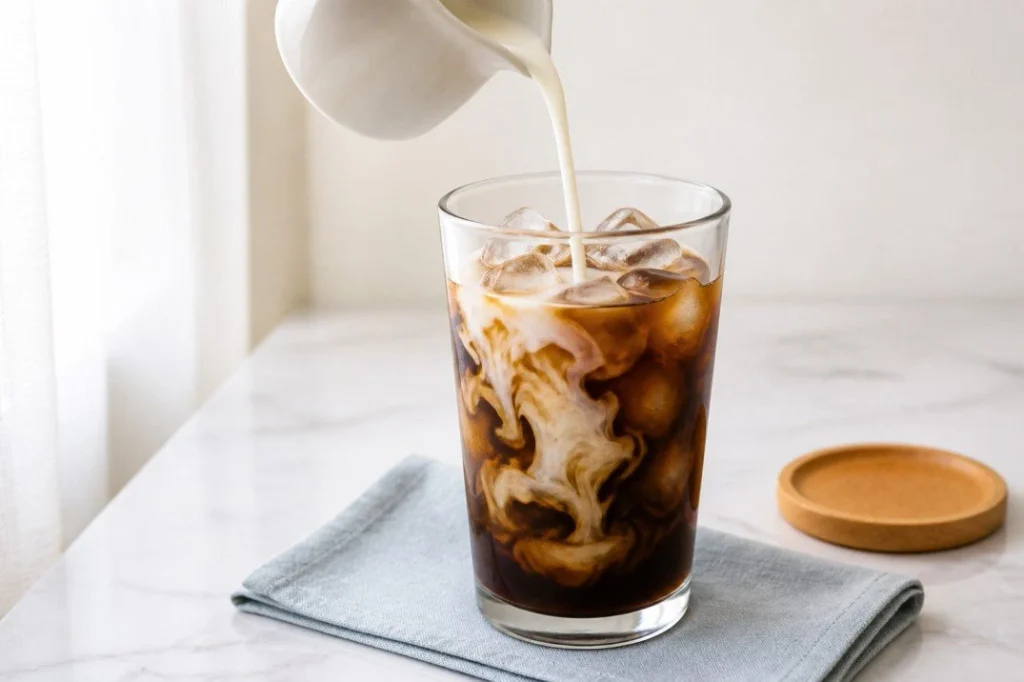
Quick answer: Yes. Instant coffee is already-brewed coffee that has been dried, so it dissolves in cold water just as well as hot water — it just takes longer and needs more stirring. Make a smooth paste with two tablespoons of cold water first, then add the rest, and stir for 30 to 60 seconds. The caffeine stays exactly the same.
The Short Answer: Yes, and It Works Better Than You Think
Instant coffee is made to dissolve. That is its whole job.
Unlike ground coffee, which has to sit and soak for minutes, instant coffee is already brewed coffee that has been dried into powder or granules. When you add water, you are not brewing anything. You are simply dissolving something that is already finished.
Because of that, the temperature of the water matters much less than most people assume. Hot water dissolves it faster. Cold water dissolves it slower. Either way, you end up with coffee in your glass.
Here is the part that surprises people. The official standard for soluble coffee used by the U.S. Department of Agriculture states that instant coffee must “fully dissolve in hot or cold water with constant stirring.” That is the actual written requirement. Cold water is built into the rule, not treated as a mistake.
So the real question is not “can you,” but “how do you do it well.” That is what the rest of this guide is about.
Why Instant Coffee Dissolves in Cold Water at All
Instant coffee goes through its brewing step in a factory, not in your kitchen.
Coffee beans are roasted, ground, and brewed with hot water at the factory. The result is a strong liquid coffee. Then the water is taken back out, either by spraying the liquid into hot air, which is called spray drying, or by freezing it and pulling the ice out in a vacuum, which is called freeze drying. What is left behind is coffee that is solid but still dissolves the moment it touches water again.
That is why a spoonful of instant coffee in cold water behaves the way it does. You are not pulling flavor out of anything. You are putting finished coffee back into water.
Cold water still works because dissolving depends on two things: temperature and movement. Warm water moves faster at the tiny level, so it breaks the granules down quickly. Cold water moves slower, so it needs help. That help is stirring. Stir a cold glass for 30-60 seconds and you will get the same dissolved coffee you would get from a hot cup.
There is one honest trade-off. Cold water is slower at pulling out the last little bits, and it does not release smell into the air the way hot water does. So a cold instant coffee tastes a bit flatter than a hot one made with the same scoop. You can fix most of that with the tips further down this article.
What Cold Water Changes, and What It Doesn’t
This is worth being clear about, because there is a lot of guessing on the internet.
What changes:
- Speed. Cold water takes longer. Expect 30 to 60 seconds of stirring instead of 10 to 15.
- Smell. Hot water sends coffee smell into the air, and that smell is a huge part of how coffee tastes. Cold water keeps those smells locked in the liquid, so the drink feels quieter.
- Sweetness. Cold dulls how strongly you notice sweetness and smell. Your coffee is not actually less sweet. Your mouth is just reading it differently.
- Clumping. Cold water is worse at soaking into dry pockets of powder, so clumps happen more often.
What does not change:
- Caffeine. The caffeine in your glass comes from the powder you scooped, not from the water temperature. Cold water does not remove caffeine or add it.
- Coffee solids. Given enough stirring, cold water dissolves the same amount of coffee that hot water does.
- Safety. Instant coffee made with cold water is perfectly safe to drink.
This lines up with what happens in the wider coffee world. Researchers studying cold coffee found that cold water does extract coffee. It simply moves more slowly and reaches its balance point after hours instead of seconds. The full study is published in Scientific Reports. With instant coffee, the slow part has already been done for you at the factory, so cold water finishes the job in under a minute.
How to Make Instant Coffee With Cold Water: Step by Step
This is the whole method. It takes about two minutes and needs nothing more than a glass, a spoon, and cold water.
Step 1: Put the Coffee In First, Then Add a Little Water
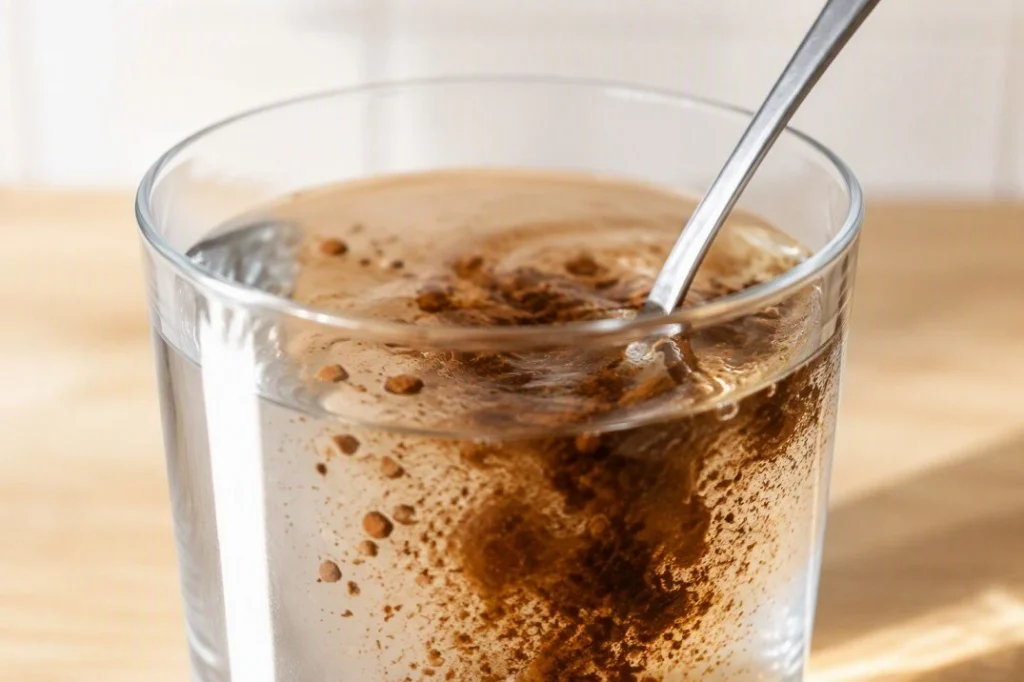
Spoon your instant coffee into an empty glass. Then add just 2-3 tablespoons of cold water, enough to cover the powder.
Stir this small amount into a smooth, dark paste before you add the rest. This single step prevents almost every clump problem. If you dump powder on top of a full glass of cold water, some of it will float and stick together no matter how hard you stir.
Step 2: Stir the Paste Until It Looks Smooth
10-15 seconds is usually enough. You should see a dark, even liquid with no dry spots. If you still see little islands of powder, add one more tablespoon of water and keep going.
Step 3: Fill the Glass and Stir Again
Now add the rest of your cold water, about 8 ounces in total for a standard mug-sized serving. Stir for another 20 to 30 seconds.
Step 4: Give It Those Extra Seconds
This is the step most people skip. Cold water dissolves slowly, so a few extra stirs make a real difference. If you want to be sure, let the glass sit for a minute and stir once more. Any remaining grit will smooth out.
Step 5: Add Ice Last, Not First
Ice goes in at the end. If you build the drink over ice, the ice starts melting while you stir, and you end up with watery coffee. Make the coffee first, then drop the ice in.
Step 6: Wait a Beat Before You Drink
Cold coffee needs a few seconds for the flavor to settle. Take a small sip, then adjust. Most people find they want slightly more coffee than they would use for a hot cup, because cold dulls the taste.
Right Ratio for Cold Instant Coffee
The right amount depends on how strong you like it, but here is a simple starting chart. These numbers are for 8 ounces of cold water, which is a standard mug or a small glass.
| How You Like It | Instant Coffee | Cold Water | Notes |
| Light and easy | 1 teaspoon | 8 oz | Closest to tea strength |
| Standard cup | 1 to 1.5 teaspoons | 8 oz | Matches a normal instant coffee serving |
| Strong | 2 teaspoons | 8 oz | Best if you add milk or ice |
| Iced latte base | 2 to 3 teaspoons | 4 oz | Then top with 4 oz of cold milk |
| Very strong | 3 teaspoons | 8 oz | Good for pouring over a lot of ice |
One thing to keep in mind: instant coffee companies design their scoop for hot water, where flavor hits harder. When you go cold, you may want to nudge the amount up by about a quarter to a third. You can always add more water to fix a drink that is too strong, so start on the stronger side.
Cold Water vs Hot Water: A Simple Comparison
| Comparison | Hot Water | Cold Water |
| Dissolve time | 10 to 15 seconds | 30 to 60 seconds |
| Clumping risk | Low | Higher |
| Smell and aroma | Strong | Mild |
| Perceived sweetness | Fuller | Duller |
| Caffeine | Same | Same |
| Best for | A normal hot cup | Iced drinks, summer, travel |
| Worst part | You have to wait for the kettle | You have to stir more |
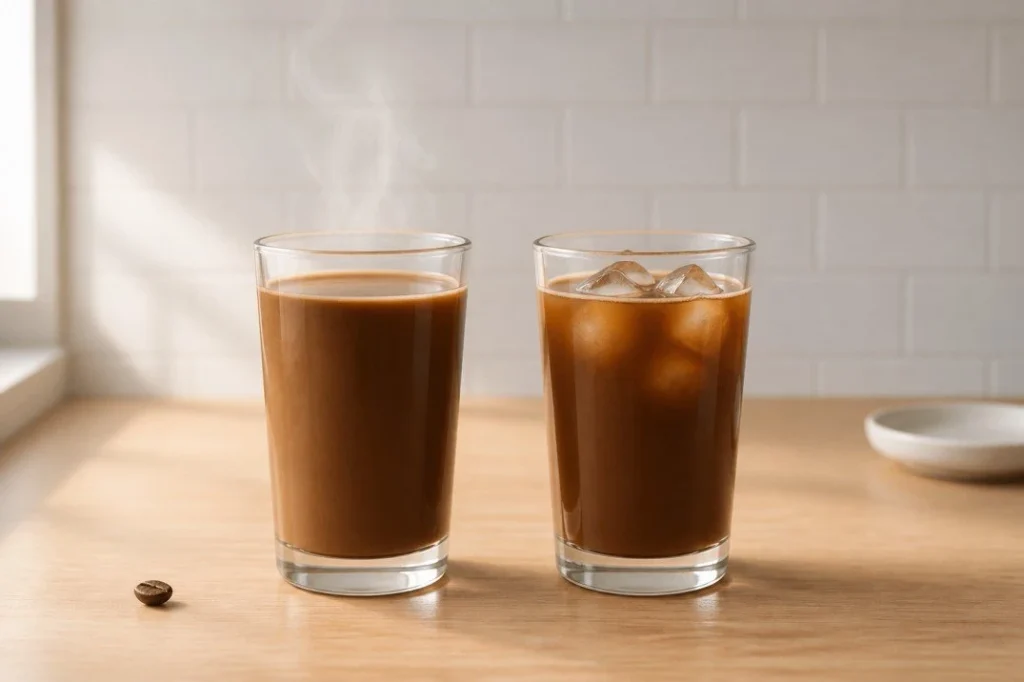
The short version: hot water is faster and smells better. Cold water is more convenient and better for iced drinks.
5 Fixes for the Most Common Problems
1. Your Coffee has Clumps
You added too much water too fast. Next time, make a paste with two tablespoons of water first, stir it smooth, then add the rest. A fork works slightly better than a spoon here, because it breaks up dry pockets.
2. It Tastes Weak and Watery
Use more coffee, not less water. A common mistake is adding water until the glass “looks dark enough,” which usually means you have over-diluted it. Measure the water first, then adjust the coffee.
3. It tastes flat or dull
That is cold water’s main weakness. Add a small pinch of salt, a few drops of vanilla, or a thin strip of orange peel. A tiny amount of salt does not make coffee salty. It makes the coffee taste more like coffee.
4. There is grit at the bottom
Some instant coffees, especially very fine powders, leave a little sediment behind. Stir longer, or switch brands. Freeze-dried granules tend to dissolve more cleanly than fine spray-dried powder.
5. It tastes bitter
Instant coffee bitterness usually comes from using too much, not from the water. Pull back to one teaspoon and taste before adding more. If you are sensitive to bitter flavors, a splash of milk covers a lot of it.
6 Cold Instant Coffee Drinks You Can Make in 2 Minutes
Once your coffee is dissolved, you can build almost anything on top of it.

1. Simple iced instant coffee. Cold water, ice, done. This is the basic version.
2. Iced instant latte. Dissolve two teaspoons in four ounces of cold water, then add four ounces of cold milk over ice. Stir once. This is the closest thing to a coffee shop iced latte you can make at home.
3. Instant cold brew style. Use a darker roast instant coffee and double the normal amount, with 10 ounces of cold water. The stronger mix tastes closer to a cold brew. It will not be identical, since real cold brew steeps for hours, but it is a good stand-in.
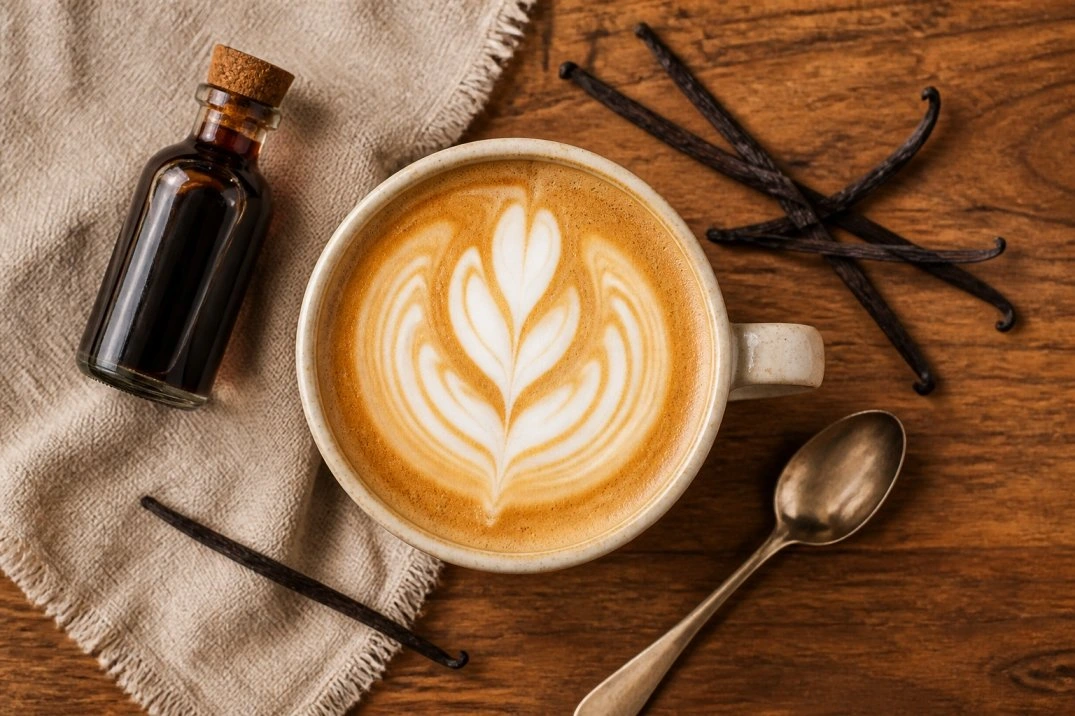
4. Vanilla iced coffee. Add a quarter teaspoon of vanilla extract and a spoonful of milk to a standard glass.
5. Iced mocha. Stir one teaspoon of cocoa powder into your coffee paste before you add the rest of the water. It takes a little extra stirring, but it works.
6. Sparkling iced coffee. Dissolve two teaspoons in two ounces of cold water, then pour it over ice in a tall glass and top it with cold sparkling water. It sounds strange and tastes surprisingly good, bright and fizzy.
Does Cold Water Change the Caffeine?
No. This is one of the most common questions, and the answer is simple. Caffeine comes from the coffee powder, not from the water.
An 8-ounce cup of instant coffee has about 62 milligrams of caffeine, according to the caffeine chart published by Mayo Clinic. That number does not move because you used cold water. Use the same scoop and you get the same caffeine. Decaf instant coffee is much lower, at around 2 milligrams in 8 ounces.
For most healthy adults, up to 400 milligrams of caffeine a day is considered safe, according to the U.S. Food and Drug Administration. That works out to roughly six 8-ounce cups of instant coffee. A review of caffeine safety research reached the same 400-milligram figure for healthy adults, published through the National Library of Medicine.
One small caution. Because cold coffee goes down fast and easy, it is easy to drink more of it than you would of a hot cup. If you are watching your caffeine, count the glasses, not just the mugs.
Is Cold Instant Coffee Easier on Your Stomach?
Some people find cold coffee more comfortable than hot coffee. Others notice no difference at all.
Here is the honest state of it. Caffeine itself can increase the amount of acid your stomach releases, and that can cause heartburn or an upset stomach in some people, according to MedlinePlus. Cold water does not change how much caffeine is in your glass, so it does not change that effect.
What cold coffee may help with is the temperature. Hot liquids can feel harsh on a sensitive stomach or a sore throat. A cold drink simply feels gentler going down for many people.
Frequently Asked Questions
Can you make instant coffee with cold water?
Yes. Cold water dissolves instant coffee fully if you stir it for 30 to 60 seconds. The U.S. Department of Agriculture’s soluble coffee standard actually requires instant coffee to dissolve in hot or cold water with constant stirring.
Does instant coffee dissolve in cold milk?
It does, but more slowly than in water, and clumps are more likely. The easiest method is to dissolve the coffee in a small amount of cold water first, then stir in the milk.
Can you use ice water?
Yes, though it will take longer and you may see a few stubborn granules. Use regular cold water to dissolve the coffee, then add the ice at the end.
Is cold instant coffee the same as cold brew?
No. Cold brew is ground coffee steeped in cold water for many hours. Instant coffee is already-brewed coffee that has been dried. Cold instant coffee is much faster to make, but it tastes lighter and less rounded than real cold brew.
Why does my instant coffee clump in cold water?
Dry powder traps air, and cold water cannot soak into those air pockets as quickly as hot water can. Make a paste with a small amount of water first, stir it smooth, and then add the rest.
How much caffeine is in cold instant coffee?
About 62 milligrams in an 8-ounce glass, the same as a hot cup made with the same scoop. Cold water does not change the caffeine level.
Can I drink cold instant coffee every day?
Yes, as long as you keep your total caffeine under about 400 milligrams a day, the level the FDA cites as safe for most healthy adults. That is roughly six 8-ounce glasses of instant coffee.
Final Thoughts
You can absolutely make instant coffee with cold water, and it takes less than two minutes. The trick is simple. Make a paste with a small splash of water, stir it smooth, add the rest, and then stir a bit longer than you think you need to.
Cold water is slower and quieter than hot water. It does not release much smell, and it dulls sweetness a little. But it never touches the caffeine, it never changes the coffee itself, and on a hot day it makes a better drink than anything you would have to boil.
Try the basic version once, taste it, and then adjust. Add a pinch of salt. Use a little more coffee. Pour it over ice at the end, not the beginning. Small changes, big difference.
One last note on quality. If your cold instant coffee tastes genuinely bad, the water is probably not the problem. The powder usually is. Buy a better jar, and the same two-minute method will taste like a completely different drink. Happy Brewing!
Related Article : Can You Heat Cold Brew Coffee?
Related Article : How Long Is Coffee Good for in the Fridge?