



Have you ever stood at your coffee maker holding a carton of heavy whipping cream and asked: can I actually put this in my coffee? Maybe you bought it for a recipe, maybe a keto friend swears by it, or maybe you are just tired of sugary creamers and want something real.
You are not alone — this is one of the most asked coffee questions in America, and for good reason. Heavy cream makes coffee taste rich, smooth, and almost dessert-like. And the answer is simple: yes, you can absolutely put heavy whipping cream in coffee. In fact, millions of Americans do it every single morning.

But before you pour, there are a few things worth knowing — like how much to use, how many calories you are adding, whether it will curdle, and how it compares to half-and-half or your favorite flavored creamer. This easy guide answers all of that, step by step.
The quick answer: Yes, you can put heavy whipping cream in coffee. Most people add 1 to 2 tablespoons to an 8-ounce cup. It makes the coffee creamy and smooth with almost no sugar and very few carbs, which is why it is so popular with low-carb and keto dieters. Heavy cream is high in calories and fat though, so it is best to treat it as an occasional treat or to measure it, not to pour it freely.
What Exactly Is Heavy Whipping Cream?
Before we go further, let’s make sure we are talking about the same thing. Heavy whipping cream — sometimes labeled just “heavy cream” — is the thick, rich cream that rises to the top of fresh milk. The dairy industry separates it out and sells it in cartons next to the milk and half-and-half.
The name tells you a lot about the fat. By law in the United States, cream sold as “heavy whipping cream” must contain at least 36% milk fat. Regular “whipping cream” has a little less, about 30% to 36%. Compare that to half-and-half, which is only about 10.5% to 18% fat, or whole milk, which is just over 3%. That big difference in fat is exactly why heavy cream tastes so rich and pours so thick.
Heavy whipping cream and “heavy cream” mean nearly the same thing — the two names are basically interchangeable at the store.
Heavy cream must stay refrigerated. An unopened carton lasts for weeks, but once you open it, plan to use it within about a week to ten days. It is fresh dairy, so it can spoil — give it a sniff before you pour. If it smells sour or looks lumpy, toss it and grab a fresh carton.
Is It Good in Coffee? The Honest Answer
Short answer: yes, and for most people it tastes amazing. Heavy cream does two wonderful things to a cup of coffee.
It makes coffee feel thick, velvety, and smooth, and it adds a natural, slightly sweet cream flavor with no added sugar. Many people say a splash makes coffee taste like a fancy coffee shop drink — without the fancy price.
As more Americans cut back on sugar and try low-carb eating, heavy cream has become the go-to coffee add-in — all the creamy taste of a creamer, minus the sugar rush.
Why People Love Heavy Cream in Coffee (and Why You Might Too)
Still on the fence? Here are the top reasons Americans are switching from creamers to heavy cream:
- It has almost no sugar. A tablespoon of heavy cream has less than half a gram of carbs and no added sugar. Most flavored coffee creamers pack several teaspoons of sugar into just one serving. Heavy cream gives you the creamy taste without the sweet spike.
- It is keto and low-carb friendly. With nearly zero carbs per spoonful, it is a perfect fit for keto, paleo, and other low-carb lifestyles.
- It makes coffee taste rich and creamy. The high fat content coats your tongue and smooths out bitter notes far better than milk or half-and-half.
- It keeps you full longer. Fat digests slowly, so a splash can help you feel satisfied until lunch — and snack less.
- It has simple ingredients. Real heavy cream is just cream — no corn syrup, no artificial flavor, no long list of chemicals.
- It is versatile. The same carton works in coffee, eggs, sauces, or desserts — not a single-use buy.
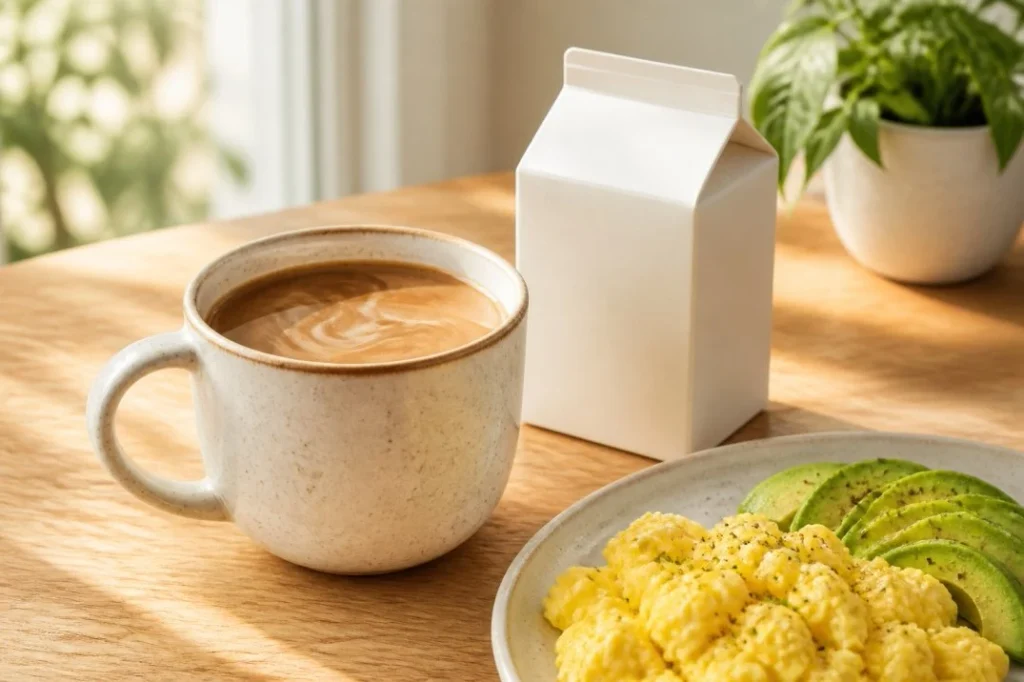
Heavy Cream vs. Half-and-Half vs. Milk: Calories at a Glance
Let’s talk numbers, because this is where most people get surprised. Heavy cream is delicious, but it is also the most calorie-dense option you can pour into a mug. Here is how the most common coffee add-ins compare, based on one tablespoon — the typical serving size:
| Add-in (1 tablespoon) | Calories | Fat | Carbs (sugar) |
| Heavy whipping cream | About 52 | About 5.5 g | Less than 0.5 g |
| Light cream | About 29 | About 2.9 g | About 0.5 g |
| Half-and-half | About 20 | About 1.7 g | About 0.6 g |
| Whole milk | About 9 | About 0.5 g | About 0.5 g |
| Sweet coffee creamer | About 30–35 | About 1.5 g | About 5 g (all sugar) |
These figures come from the official food database run by the United States Department of Agriculture, the USDA FoodData Central, which lists the exact nutrition for heavy cream, half-and-half, and every other dairy product you can buy.
The takeaway: heavy cream gives the most richness and the fewest carbs per spoonful — but also the most calories. One tablespoon is small, about the size of your thumb, yet it carries roughly 50 calories. Three unmeasured pours add about 150. That matters if you are watching your weight.
Are There Any Downsides? What to Keep in Mind
Heavy cream is not “bad,” but it is rich. A few honest notes before you make it a daily habit:
The calories add up fast. Most people do not pour one tablespoon. They pour a generous glug — sometimes two or three tablespoons. Do that twice a day, and you have added 200 to 300 calories to your day without really noticing. If your goal is weight loss, this can quietly undo your progress.
It is high in saturated fat. About two-thirds of the fat in heavy cream is saturated fat. Health experts, including the American Heart Association, recommend limiting saturated fat to support heart health, since eating too much of it can raise blood cholesterol. For most healthy people, a splash in coffee is fine — just keep the rest of your day’s fat in mind. To understand why, read how the Harvard T.H. Chan School of Public Health explains saturated and unsaturated fats in Simple language.
It is not lactose-free. Heavy cream has less lactose than milk, so some mildly sensitive people handle it fine. But if you are truly lactose intolerant, it can still upset your stomach — try a lactose-free cream or a plant-based option like coconut or oat creamer.
It can make coffee heavy. Some people find that cream makes their stomach feel overly full, especially on an empty stomach. Start with a small amount and see how your body feels.
None of this means you should avoid heavy cream — it means moderation matters. Treat it as a rich treat, not a free pass, and if you have heart disease, high cholesterol, or other health conditions, ask your doctor or a registered dietitian what is right for you. For balanced-eating basics, the USDA’s nutrition.gov is a great free resource.
Will Heavy Cream Curdle in Hot Coffee?
This is the question everyone worries about, and the good news is simple: heavy cream rarely curdles in coffee. It is one of the most stable dairy products you can add to a hot drink. Here is why.
Curdling happens when the protein in dairy clumps together. Milk and half-and-half have more protein and less fat, so the heat and acid in coffee can make them separate into ugly little curds. Heavy cream is the opposite — it is mostly fat, with very little protein. That high fat content protects it, so it blends into hot coffee smoothly instead of breaking apart.
Can it still go wrong? Yes, in a few rare situations:
- Your coffee is extremely hot or boiling. Very high heat can stress any dairy, so let your coffee cool a minute first.
- Your coffee is very acidic. Some light roasts and certain beans are more acidic than others. Acid is what makes dairy curdle, so a super acidic cup is the most likely to cause trouble.
- Your cream is close to expiring. Cream that is starting to sour is more likely to separate, so use fresh.
- You pour the coffee into the cream instead of the other way around. Adding hot coffee slowly to cream can shock it; pouring cream into coffee, then stirring, is much gentler.

How to Put Heavy Cream in Coffee: Step by Step
Ready to try it? Here is the foolproof way to get a perfect cup every time:
- Brew your coffee as usual. Drip, pour-over, French press, or even instant — heavy cream works with all of them.
- Let the coffee cool just a little. Wait about a minute after brewing so the coffee is hot but not boiling.
- Pour your coffee into your mug first. Always add the cream to the coffee, not the coffee to the cream.
- Start small. Pour in about 1 tablespoon — roughly half an ice cream scoop, or just a modest splash.
- Stir well. Give it a good stir so the cream spreads through the whole cup instead of floating on top.
- Taste, then adjust. Too weak? Add another half or full tablespoon. Some people love two in a big mug, but it is easier to add more than to take it out.
First-timer tip: if you drink your coffee black, start with half a tablespoon. The change is bigger than you expect, and you can always add more.
Whipped Cream or Stirred Cream? Which Is Better in Coffee?
Here is a fun fact: the same carton of heavy whipping cream can go into your coffee two different ways — poured in liquid, or whipped into fluffy clouds first. Both are delicious, but they give you very different drinks.
Stirred-in cream is the everyday choice. A splash makes the whole cup creamy, and the flavor blends evenly from the first sip to the last. This is what most people mean when they ask about putting heavy cream in coffee.
Whipped cream on top is the special-occasion choice. A dollop of freshly whipped cream floating on hot coffee slowly melts into the cup, giving you a creamy top layer that you spoon or sip through. It looks beautiful, and it turns plain coffee into something that feels like a treat. For a sugar-free version, you can whip heavy cream with a little vanilla and a zero-calorie sweetener, or just enjoy it unsweetened.
Which is “better”? Honestly, it depends on your mood. Stirred cream gives you a consistent, smooth cup. Whipped cream gives you the experience — and a drink that photographs beautifully. You can even do both: a splash stirred in for body plus a small dollop on top.
Hot Coffee or Iced Coffee — Does It Matter?
Heavy cream works in both, and each way has its own charm.
In hot coffee, heavy cream melts instantly and gives you that rich, diner-style cup. It also cools your coffee slightly, which is a bonus if you tend to burn your tongue in the morning.
In iced coffee and cold brew, heavy cream is gorgeous. When you pour it over ice, it sinks and swirls through the dark coffee in ribbons — equal parts delicious and pretty. Cold brew is especially smooth and low in acid, so it pairs beautifully with cream.
One small warning for iced coffee: cold makes cream thicker and slower to blend. Stir it well, or pour the cream in before the ice, so you do not end up with pure coffee first and pure cream at the end.

Is Heavy Cream in Coffee Keto?
Yes, heavy cream fits keto perfectly. A tablespoon has less than half a gram of carbs, so it will not knock you out of ketosis. It is one of the most recommended add-ins in the keto community. Many people also blend it with butter and a little MCT oil for an energy-packed cup.
Frequently Asked Questions
How much heavy whipping cream should I put in coffee?
Most people use 1 to 2 tablespoons per 8-ounce cup. Start with 1 tablespoon, taste it, and add more only if you want a richer cup. Remember that every extra tablespoon adds about 50 calories, so measure it if you are counting.
Can you put heavy whipping cream in hot coffee without it curdling?
Yes. Heavy cream has very little protein and lots of fat, so it is far less likely to curdle than milk or half-and-half. Let your coffee cool for about a minute after brewing, pour the cream into the coffee, and stir. Only very hot or very acidic coffee is likely to cause problems.
Is heavy cream healthier than coffee creamer?
In most ways, yes. Heavy cream has no added sugar, no corn syrup, and no artificial ingredients — just cream. Most store-bought coffee creamers are mostly water, sugar, and oil. Heavy cream is higher in calories and saturated fat, so it is not “free,” but ingredient-wise it is a much more natural choice.
Can I use heavy whipping cream instead of milk in coffee?
Absolutely. Just remember that heavy cream is about five times richer than whole milk. If you usually use milk, start with a smaller splash of cream — you will likely need less than you think to get the same creamy feel.
Is heavy cream in coffee good for weight loss?
It can help in two ways: it adds almost no sugar or carbs, and the fat can keep you full longer, which may stop you from snacking later. But heavy cream is calorie-dense, so it only helps if you measure it. A splash is fine; an unmeasured pour can add hundreds of calories a day.
Bottom Line
So, can you put heavy whipping cream in coffee? Yes — and done the right way, it is one of the most delicious things you can add to a cup.
Use about a tablespoon per mug, add it after your coffee has cooled slightly, stir well, and enjoy. It will make your coffee taste rich and smooth with almost no sugar — a fantastic swap if you are cutting back on sweet creamers or following a low-carb lifestyle.
Just keep the bigger picture in mind: heavy cream is high in calories and saturated fat, so it works best measured, not free-poured. The USDA’s MyPlate guide is a helpful reminder that dairy fits a healthy diet — in the right portion sizes.
Whether you stir it in on a quiet Tuesday morning or whip it up for a weekend treat, heavy cream turns an ordinary cup of coffee into something special. Try it once, and you will understand why so many Americans have made it their morning secret. Happy Brewing!
Related Topic : How Long Can Coffee Creamer Be Left Out?


1 Comment
[…] Related Topics: Can You Put Heavy Whipping Cream in Coffee? […]