Picture this: it’s early morning, your coffee is brewing, and you’re craving something sweet and cozy – but the flavored syrups at the store are full of sugar and cost a small fortune. Then you spot that little bottle of vanilla extract in your baking cabinet. Can you put vanilla extract in coffee?
The answer is a big, happy yes. Vanilla extract is one of the easiest, cheapest, and tastiest ways to dress up your daily cup. In this guide, we’ll show you exactly how to use it, how much to add, and why it might just become your new favorite coffee hack. Grab your mug and let’s get started!
We’ll cover the simple steps to add vanilla to your coffee, the best amount to use for your taste buds, and a few easy recipes you can try tonight. We’ll also answer the questions people ask most, like whether it adds sugar, whether it’s safe, and how it compares to the syrups you see at the store. By the end, you’ll never look at your coffee the same way again.
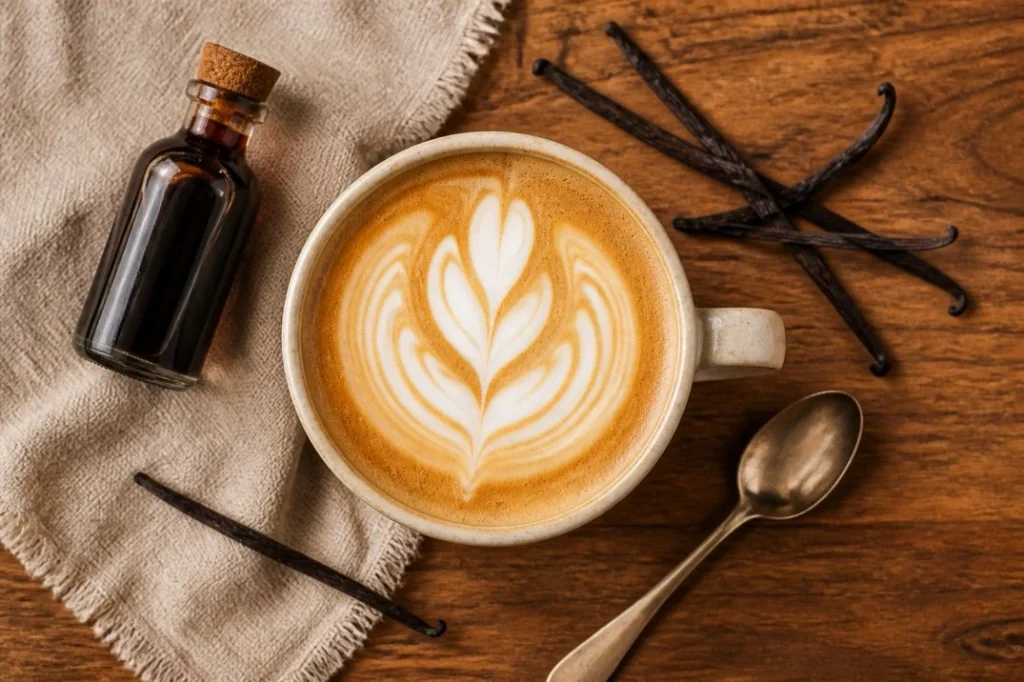
The Short Answer: Yes, You Can!
The short answer is yes – you can absolutely put vanilla extract in coffee. It’s safe, it tastes great, and millions of home coffee lovers do it every day. A few drops of vanilla extract can turn a plain cup of joe into something that tastes like it came from a fancy coffee shop.
Best of all, you don’t need any special tools or skills. If you can pour, you can make vanilla coffee. And the flavor it adds is warm, sweet-smelling, and rich – the kind of taste that makes you slow down and enjoy the moment.
What Is Vanilla Extract, Anyway?
Before we dive in, let’s take a quick look at what’s actually in that little brown bottle.
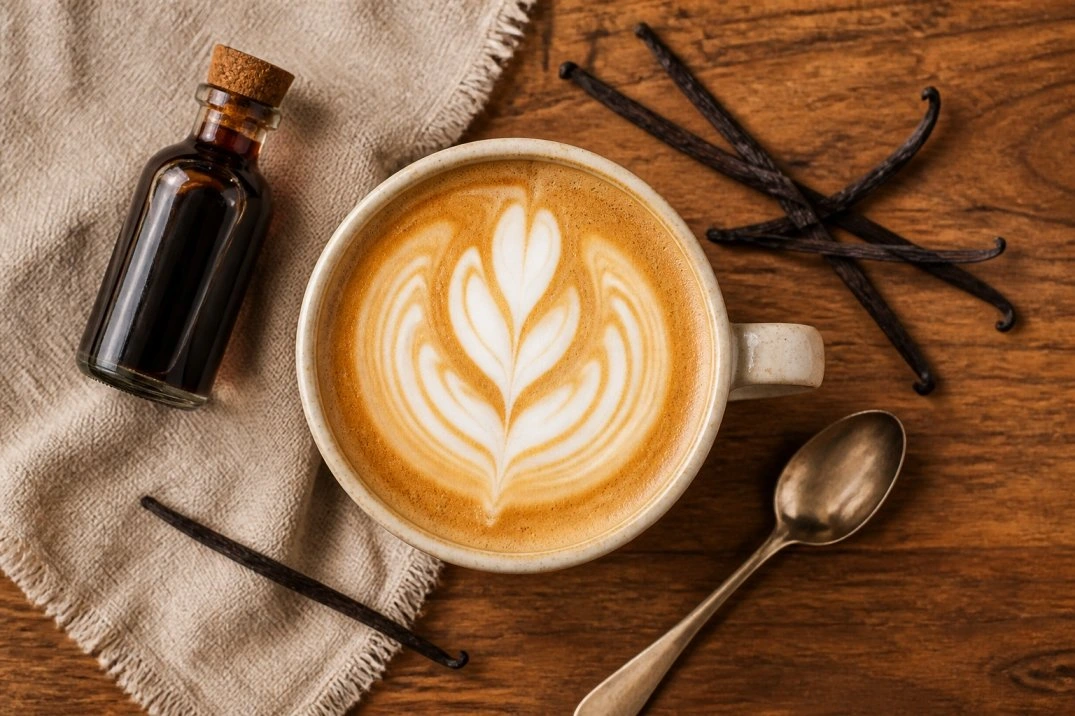
Vanilla extract is made by soaking vanilla beans in alcohol and water for several months. This process pulls out all the wonderful flavors from the beans, creating a dark liquid that’s packed with that sweet, creamy vanilla taste we all love.
There are a few types you’ll see at the store:
- Pure vanilla extract: Made from real vanilla beans. This is the good stuff – rich, smooth, and full of flavor.
- Imitation vanilla extract: Made with lab-made vanilla flavoring. It’s cheaper and still tastes fine, but the flavor is not quite as deep.
- Vanilla flavoring: a lighter, often water-based version that’s less strong.
For coffee, either pure or imitation extract will work. Pure vanilla extract gives you the best taste, but if you’re on a budget, imitation vanilla will still make your coffee taste great.
You can find vanilla extract in the baking aisle of any grocery store, right next to the other flavorings. It usually comes in small bottles, and a little goes a long way. Keep it in a cool, dark spot like your pantry or a cabinet, and it will stay fresh for years. There’s really no wrong way to use it – as long as you don’t spill the whole bottle into your mug!
Why Vanilla and Coffee Are a Perfect Match
There’s a reason vanilla is one of the most popular coffee flavors in the world. The two tastes just work together.
Coffee is bold, bitter, and strong. Vanilla is soft, sweet, and smooth. When you add them together, the vanilla gently softens the bitterness of the coffee while adding a warm, cozy aroma. The result is a cup that feels balanced, smooth, and a little bit fancy – without any of the work.
Think about it: vanilla lattes, vanilla cold brews, and vanilla cappuccinos are on the menu at nearly every coffee shop in America. That’s because people can’t get enough of the combo. And with vanilla extract, you can make the same drink at home for pennies.
Here’s a fun way to think about it: that vanilla latte you grab on your way to work costs five dollars or more. The same drink made at home with a splash of vanilla extract costs less than a dollar. Once you taste how good the homemade version is, the coffee shop price tag starts to feel a little silly.
The Good Stuff: Why You’ll Love Adding Vanilla Extract to Coffee
Still on the fence? Here are some of the best reasons to try it:
- It’s sugar-free: vanilla extract has almost no sugar, so you get the sweet taste without the sugar crash.
- It’s nearly calorie-free: a few drops add almost zero calories to your cup.
- It’s cheap: one bottle costs a few bucks and lasts for months.
- It’s fast: no mixing, no heating, and no fancy equipment. Just add a few drops and stir.
- It’s versatile: it works in hot coffee, iced coffee, cold brew, lattes, and even baking recipes.
- It lasts forever: vanilla extract doesn’t go bad. It keeps its flavor for years.
- It lets you skip the syrup: store-bought syrups are loaded with sugar and preservatives. Vanilla extract gives you a cleaner, simpler option.
If you’re trying to cut back on sugar or just want a healthier way to flavor your coffee, vanilla extract is a fantastic choice.
How to Add Vanilla Extract to Your Coffee (Step by Step)
Adding vanilla extract to coffee is easy, but a little know-how makes it even better. Here’s the simple way to do it:
- Brew your coffee just like you always do. Any kind works – drip, pour-over, French press, or instant.
- Pour your coffee into your favorite mug.
- Add a small splash of milk, cream, or your favorite milk alternative if you like. This helps bring out the vanilla flavor.
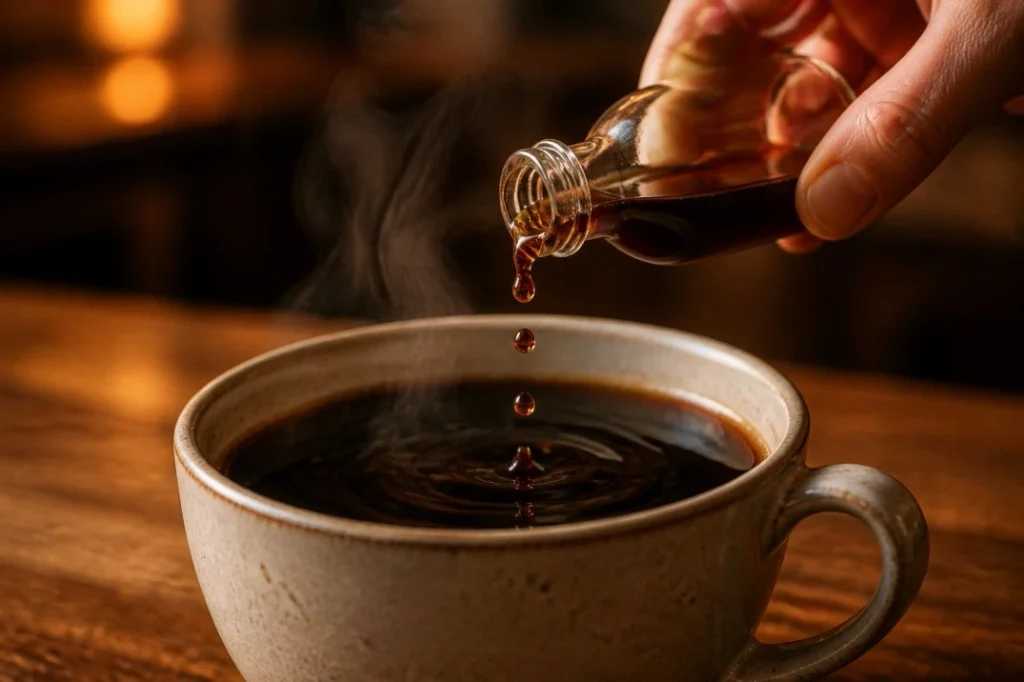
- Add 1/4 to 1/2 teaspoon of vanilla extract to your mug. Start with less – you can always add more.
- Stir well and take a taste. If you want a stronger vanilla kick, add a few more drops.
- Sweeten to taste with sugar, honey, or your favorite sweetener if you want it sweeter.
That’s it! You now have a delicious cup of vanilla coffee made right in your own kitchen.
How Much Vanilla Extract Should You Use?
The perfect amount comes down to your taste, but here’s a good starting point:
- 1/4 teaspoon per cup: a light, gentle vanilla flavor.
- 1/2 teaspoon per cup: a clear, noticeable vanilla taste that most people love.
- 3/4 to 1 teaspoon per cup: a strong, dessert-like vanilla flavor.
A little goes a long way with vanilla extract. It’s very strong, so it’s always smarter to start small and add more if you need it. You can’t take vanilla out of coffee, but you can always add more.
Best Ways to Enjoy Vanilla Coffee
One of the best things about vanilla extract is that it works in every kind of coffee drink. Here are some popular ways to enjoy it:
Hot Coffee
This is the classic. Add vanilla extract to your morning drip coffee with a splash of cream, and you’ve got a cozy, comforting cup that feels like a hug in a mug.
Iced Coffee
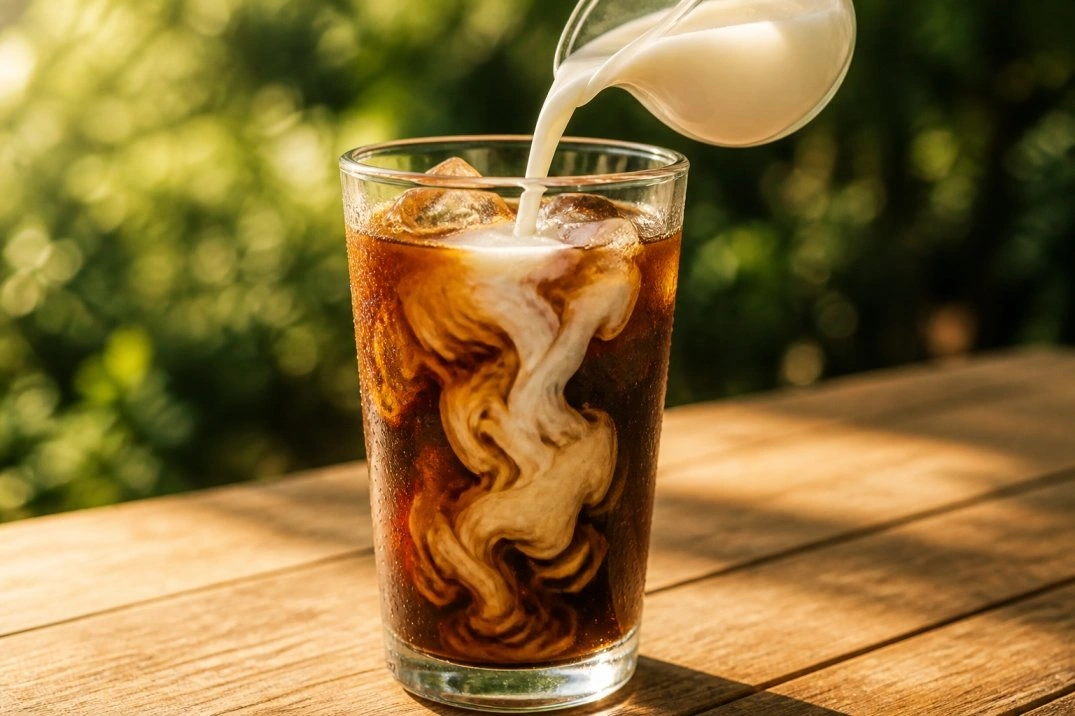
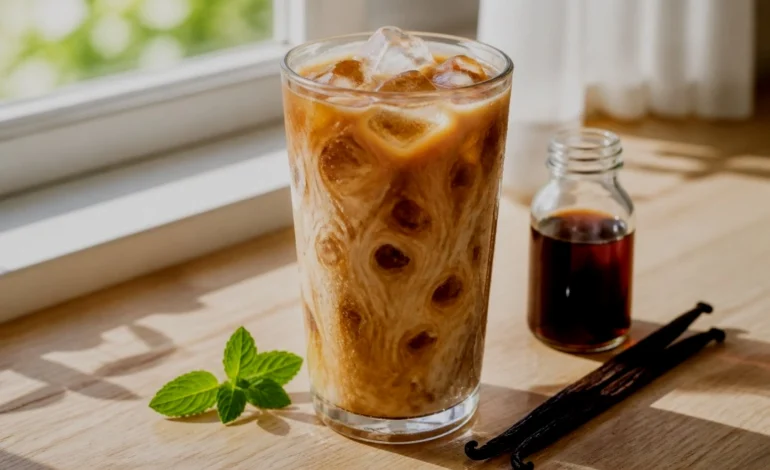
Vanilla extract shines in iced coffee. The cold temperature actually helps the vanilla flavor come through nice and clear. Add a few drops to your iced coffee with milk and ice, and you’ll have a drink that rivals any coffee shop version.
Cold Brew
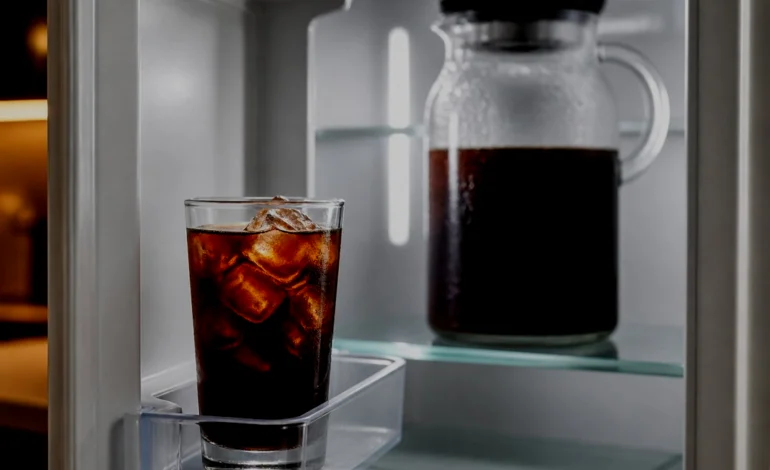
Cold brew is already smooth and low in bitterness, so a little vanilla makes it even better. Stir in 1/2 teaspoon per glass, add a splash of milk, and enjoy.
Coffee With Milk Alternatives
Vanilla extract pairs wonderfully with oat milk, almond milk, and coconut milk. These milks already have a slightly sweet, nutty taste, and vanilla makes them feel even creamier. Just add your drops to the cup before pouring in the milk, give it a stir, and you’ve got a plant-based vanilla coffee that tastes like a treat.
Vanilla Latte at Home
Want a real treat? Make a quick vanilla latte:
- Brew a strong cup of coffee or espresso.
- Add 1/2 teaspoon of vanilla extract.
- Heat up your milk and froth it if you can.
- Pour the milk over the coffee and enjoy your homemade vanilla latte.
It tastes almost exactly like the one from the coffee shop, but it costs just a fraction of the price.
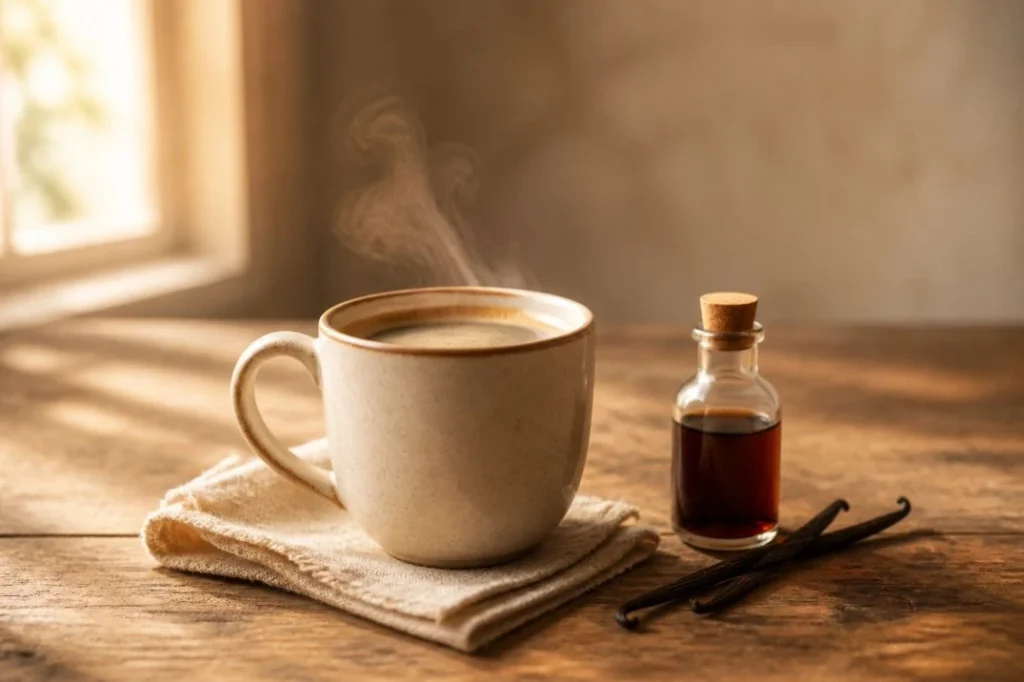
Vanilla Extract vs. Vanilla Syrup vs. Vanilla Beans
You might be wondering: why use extract when there are vanilla syrups and vanilla beans? Let’s compare.
| Option | What It Is | Sugar and Calories | Best For |
| Vanilla extract | Beans soaked in alcohol and water. Strong, pure vanilla flavor. | Almost no sugar or calories | Everyday coffee and healthy options |
| Vanilla syrup | Sweet sugar syrup with vanilla flavoring. | Lots of sugar, about 40-60 calories per pump | Sweet, dessert-style drinks |
| Vanilla beans | Whole dried vanilla pods. | No sugar or calories | Baking and special treats |
The bottom line: if you want the flavor without the sugar, vanilla extract is the winner. Syrup is great when you want a sweeter, dessert-like drink, and beans are best saved for baking projects when you want to impress.
Wait – Is There Alcohol in Vanilla Extract?
Yes, real vanilla extract contains alcohol. That’s how the vanilla flavor is pulled out of the beans. But don’t worry – it’s a tiny amount.
When you add a few drops to a hot cup of coffee, most of the alcohol evaporates almost immediately because of the heat. And even in iced coffee, the amount you’d get from a few drops is far too small to have any effect. You won’t get a buzz, and it won’t taste like alcohol. All you’ll taste is sweet, warm vanilla.
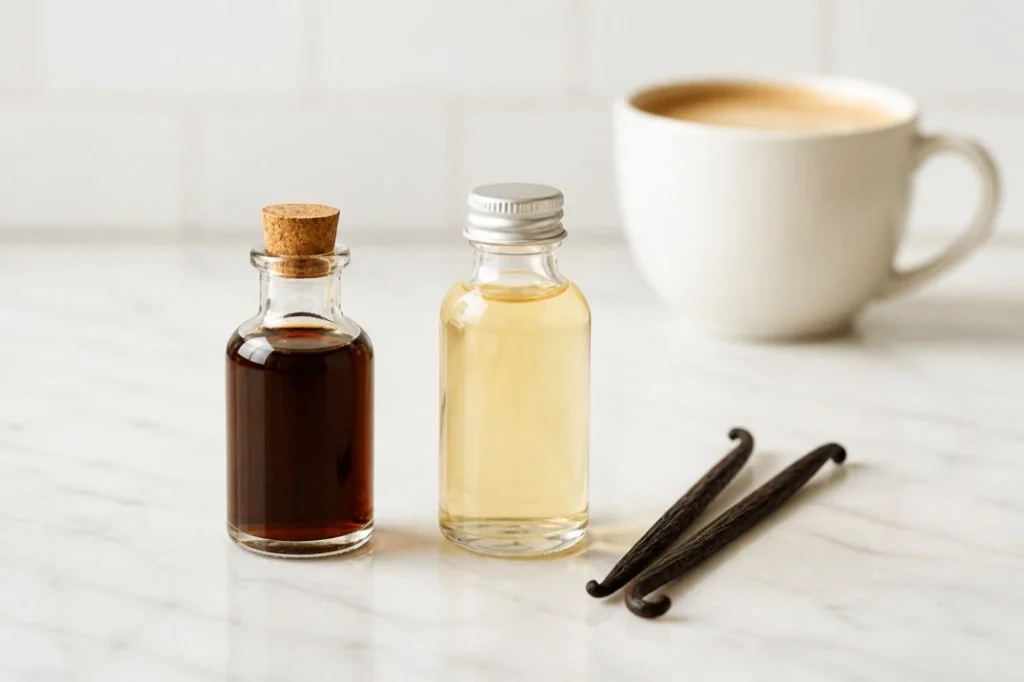
If you’re still worried – for example, if you’re pregnant or avoiding alcohol for any reason – you can look for alcohol-free vanilla extract. It’s made with glycerin instead of alcohol and works just as well in coffee.
Does Vanilla Extract Add Sugar or Calories?
This is one of the biggest selling points of vanilla extract: it’s basically free of sugar and calories.
A typical serving (about 1/2 teaspoon) of pure vanilla extract has zero grams of sugar and only about 12 calories – and most of that is from the alcohol, which mostly cooks off in hot coffee. Compare that to a single pump of vanilla syrup, which can pack in 40 to 60 calories and 10 or more grams of sugar. It’s a no-brainer for anyone watching their sugar intake.
What About Vanilla Powder and Vanilla Bean Paste?
You might spot two other vanilla options in the baking aisle: vanilla powder and vanilla bean paste. Vanilla powder is made from ground-up dried vanilla beans. It has no alcohol and no sugar, and it dissolves easily in coffee – though you’ll need a bit more of it than liquid extract. Vanilla bean paste is a thick paste that includes the tiny black seeds from the bean. It adds a strong vanilla taste with beautiful little specks, but it does contain some sugar.
For most people, plain vanilla extract is the simplest and best choice for coffee. The powder is a nice backup if you’re out of extract, and the paste is fun for special occasions when you want to show off those pretty vanilla seeds.
3 Easy Vanilla Coffee Recipes to Try
Ready to put your new trick to work? Here are 3 simple recipes you can make in minutes
Recipe 1 – Simple Vanilla Coffee
- 1 cup of hot brewed coffee
- 1/2 teaspoon vanilla extract
- 2 tablespoons of milk or cream
- Sweetener of your choice (optional)
Add everything to your mug, stir, and enjoy. This is the perfect everyday vanilla coffee.
Recipe 2 – Iced Vanilla Coffee
- 1 cup of chilled coffee or cold brew
- 1/2 teaspoon vanilla extract
- 1/4 cup of milk
- Ice cubes
- A little sugar or honey if you like it sweet
Fill a tall glass with ice, pour in the coffee and milk, add the vanilla extract, and stir. Refreshing and delicious.
Recipe 3 – Cozy Vanilla Latte
- 1 shot of espresso or 1/2 cup of strong coffee
- 1/2 teaspoon vanilla extract
- 3/4 cup of milk, heated and frothed
Mix the vanilla into the hot coffee, pour in the frothed milk, and top with a little cinnamon if you’re feeling fancy. Cafe vibes at home.
A Few Quick Tips (and What to Avoid)
- Start small: vanilla extract is strong. Begin with 1/4 teaspoon and build up.
- Use pure extract for the best flavor: it costs a little more, but the taste is worth it.
- Stir well: make sure the vanilla is fully mixed in so you don’t get a strong sip at the end.
- Skip bottles with tons of added sugar: those are basically syrup, not extract. Check the label.
- Don’t pour in the whole bottle: we know it smells amazing, but a little really does go a long way.
- Buy a small bottle first: if you’re new to vanilla coffee, a small bottle lets you test the waters without spending much.
- Pair it with cinnamon or nutmeg: a tiny pinch of spice takes vanilla coffee to a whole new level.
Frequently Asked Questions
Can you put vanilla extract in coffee?
Yes, absolutely. It’s safe, easy, and makes your coffee taste delicious. Just add 1/4 to 1/2 teaspoon per cup and stir.
Is vanilla extract good for you?
It’s a great lower-sugar option compared to flavored syrups. It has almost no sugar or calories, and it gives your coffee a rich flavor without the junk.
Can I use vanilla extract in cold coffee?
Yes, it works great in iced coffee and cold brew. Just stir it in well with your milk so it blends evenly.
How much vanilla extract should I put in coffee?
Start with 1/4 teaspoon per cup. If you want a stronger vanilla taste, work your way up to 1/2 teaspoon.
What’s the difference between vanilla extract and vanilla syrup?
Vanilla extract is a strong, sugar-free flavoring made from real vanilla beans. Vanilla syrup is a sweet, sugary syrup. Use extract for flavor without sugar, and syrup when you want a sweeter, dessert-style drink.
Does vanilla extract make coffee creamy?
Vanilla extract adds flavor and aroma, not creaminess. For a creamy, smooth feel, pair it with milk, cream, or your favorite milk alternative.
Final Thoughts
So, can you put vanilla extract in coffee? Yes, you can – and you really should give it a try. It’s one of the simplest, cheapest, and tastiest ways to upgrade your daily cup. Whether you like your coffee hot, iced, or blended into a latte, a little vanilla makes everything better.
Next time you’re standing in front of your coffee maker, reach for that little bottle of vanilla extract. You might never go back to plain coffee again. Try it once – with your favorite mug, your favorite beans, and just a few drops of vanilla – and we think you’ll be hooked. Happy brewing!
Related Article : Can You Put Hot Coffee in a Glass Cup?

1 Comment
[…] Related Article : Can You Put Vanilla Extract in Coffee? […]